How Many Implants Do You Really Need for Stable Dentures?

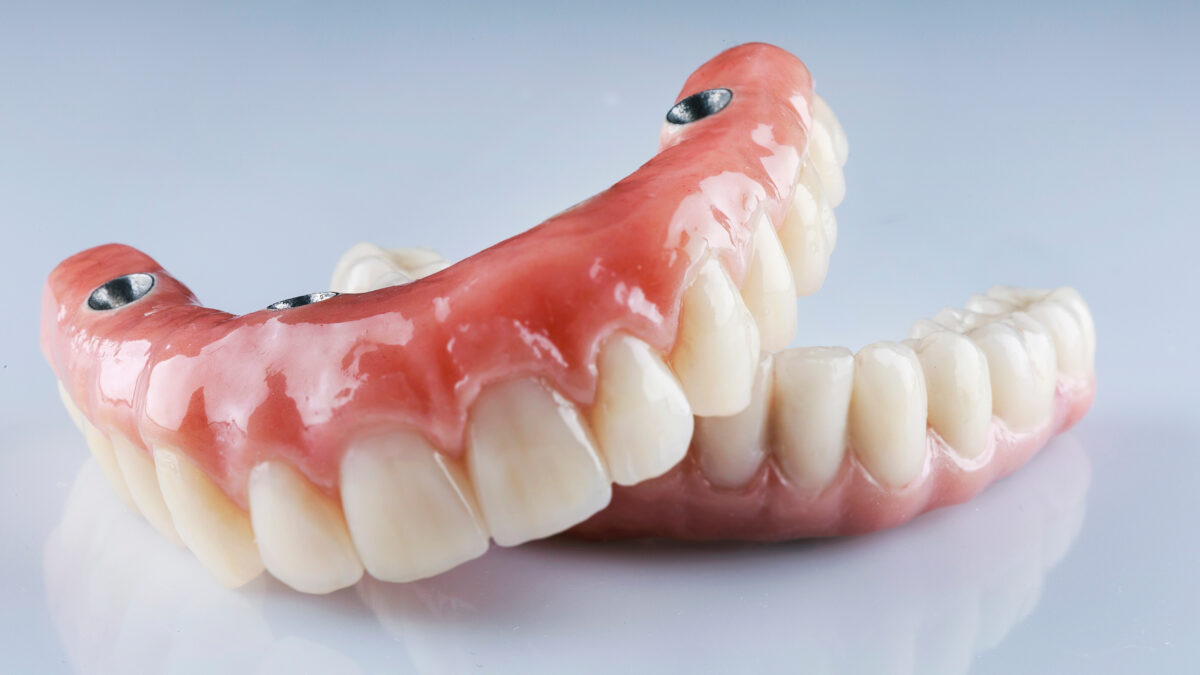
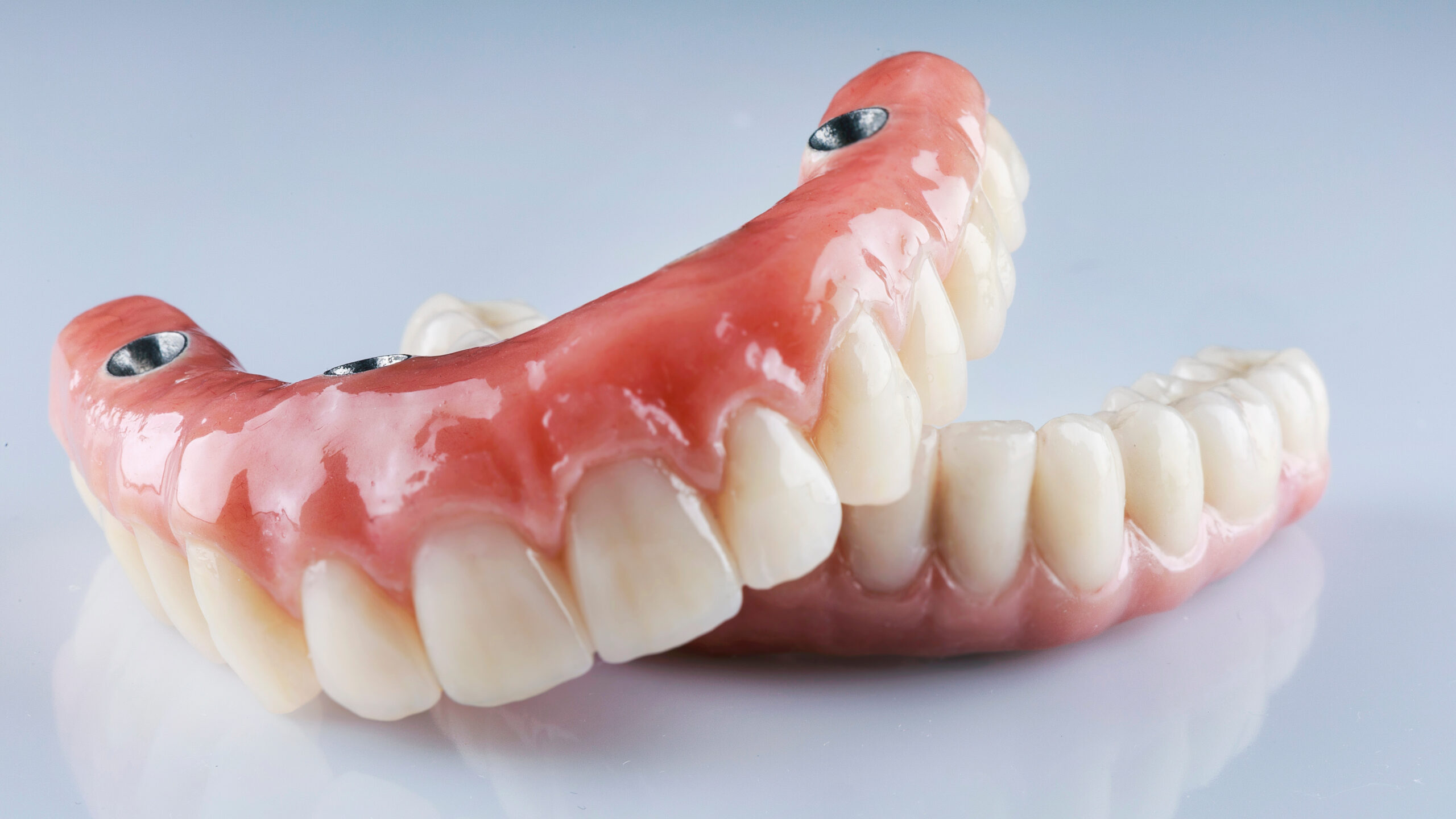
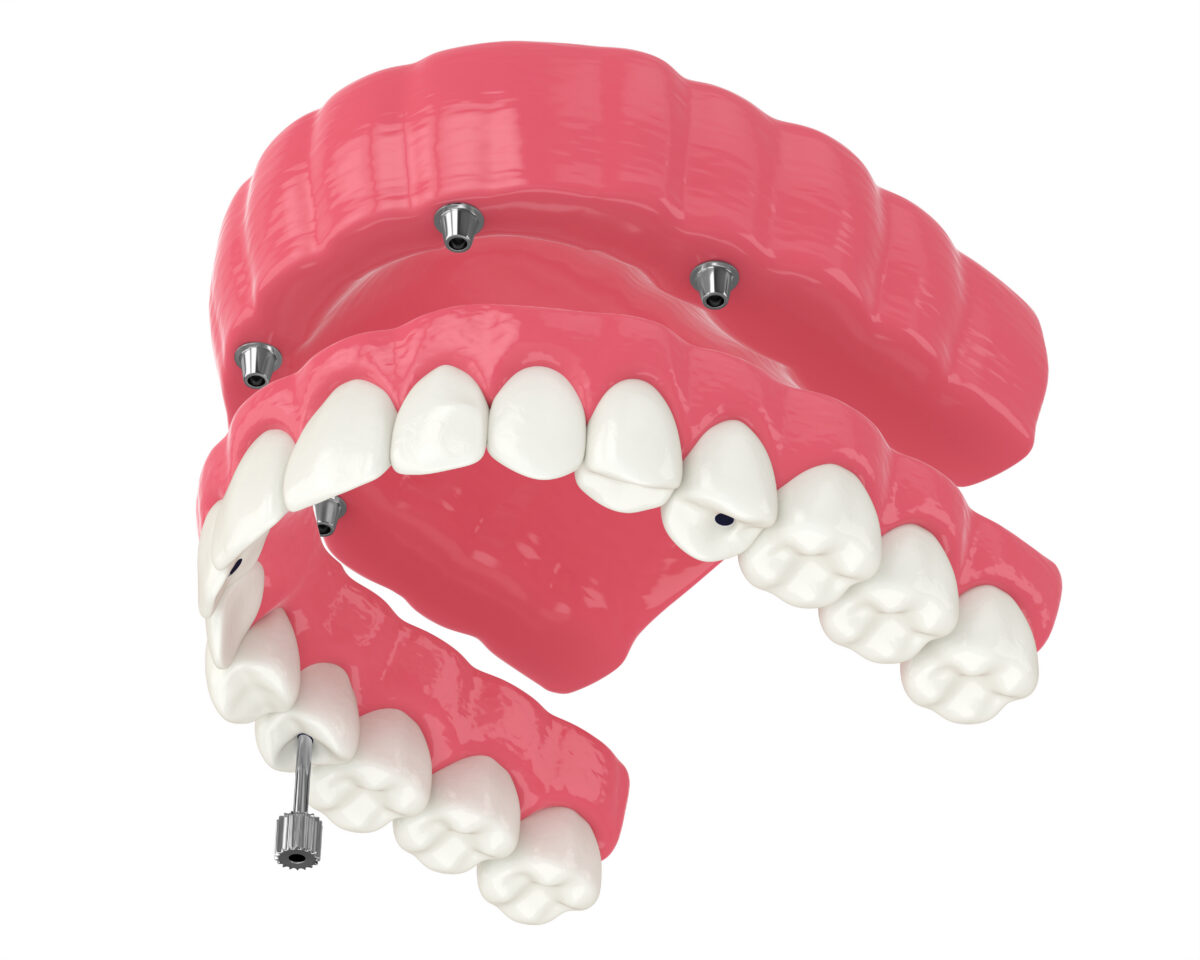
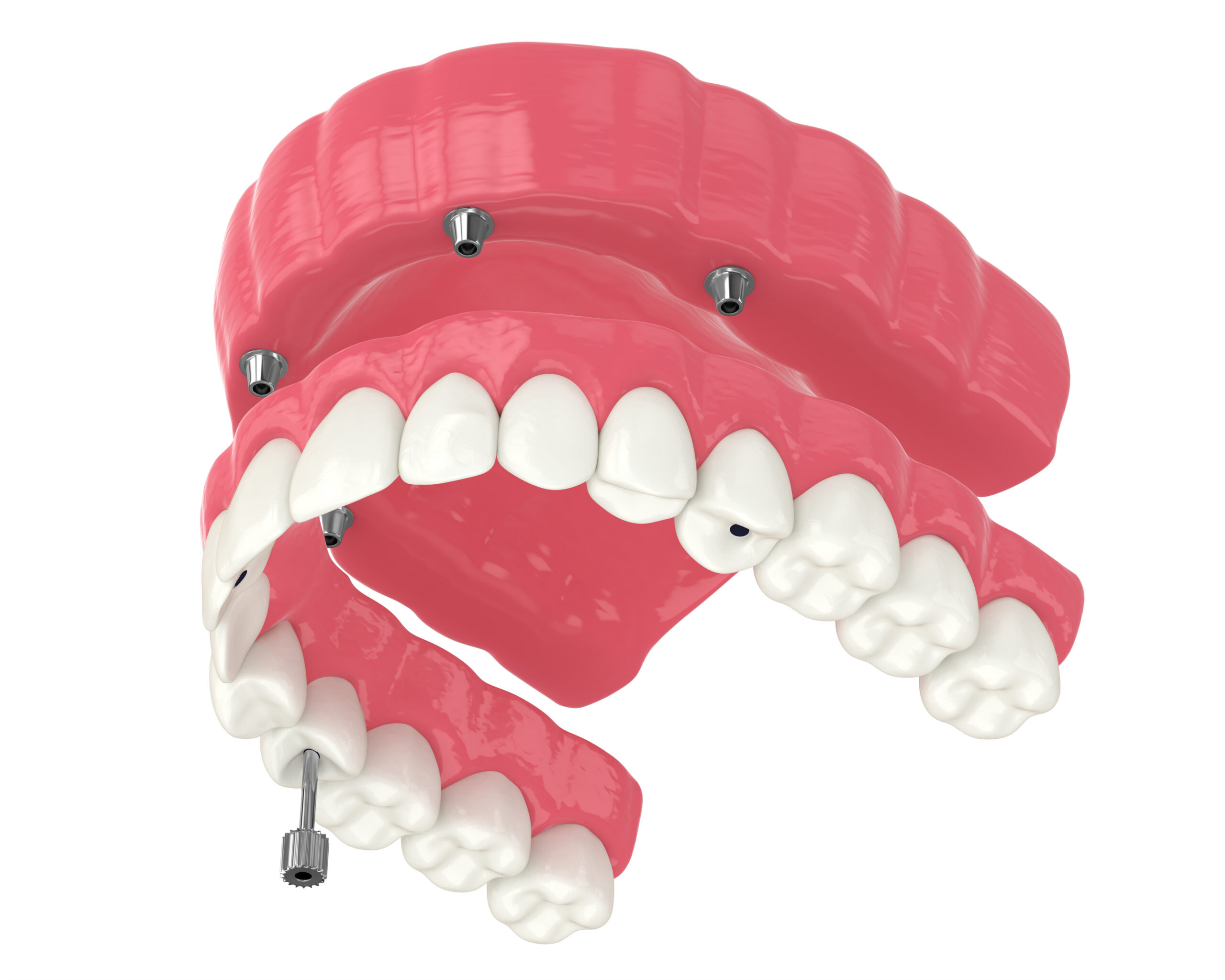
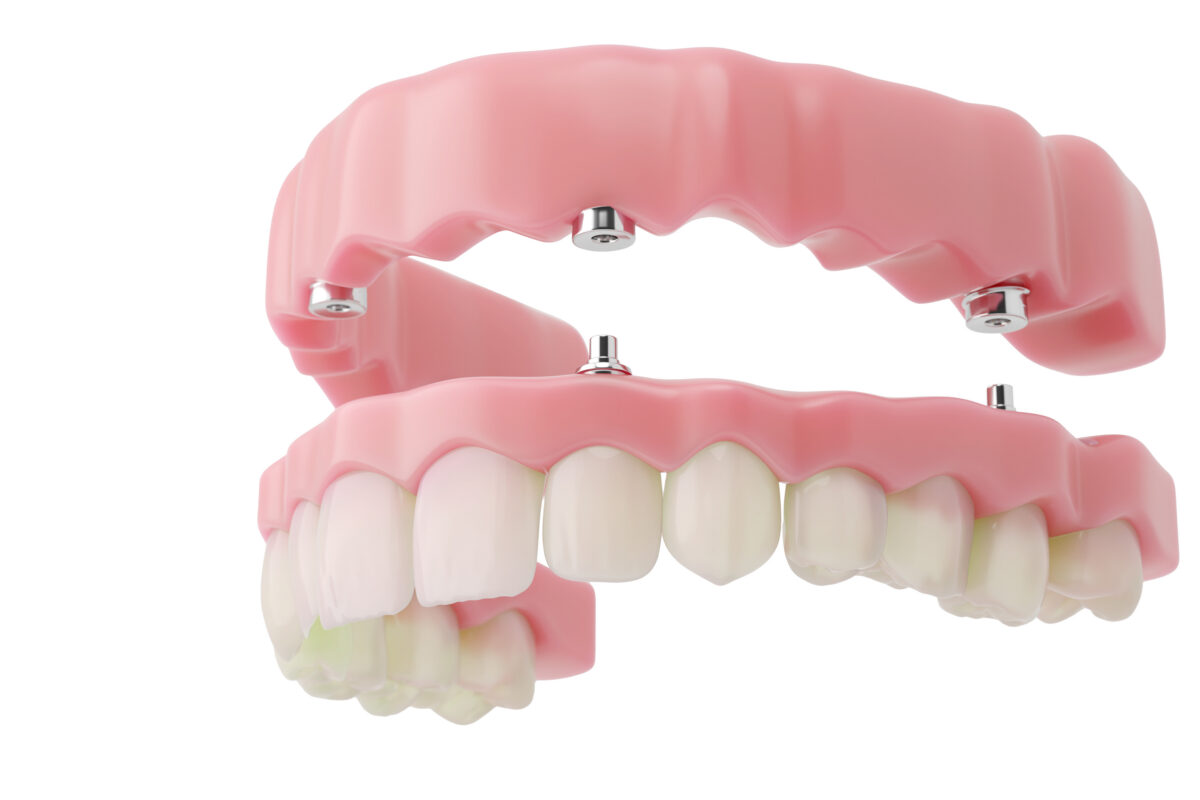
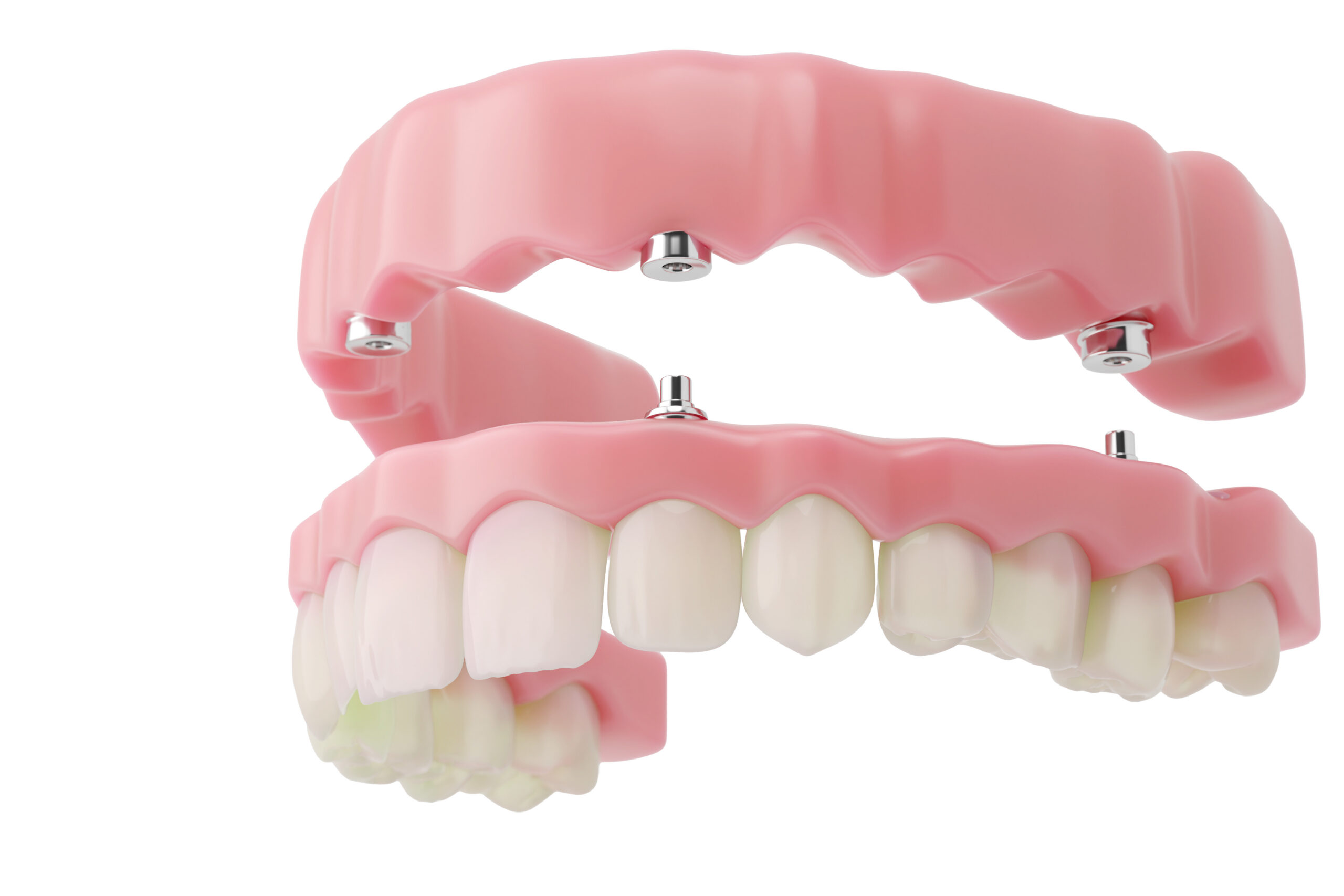
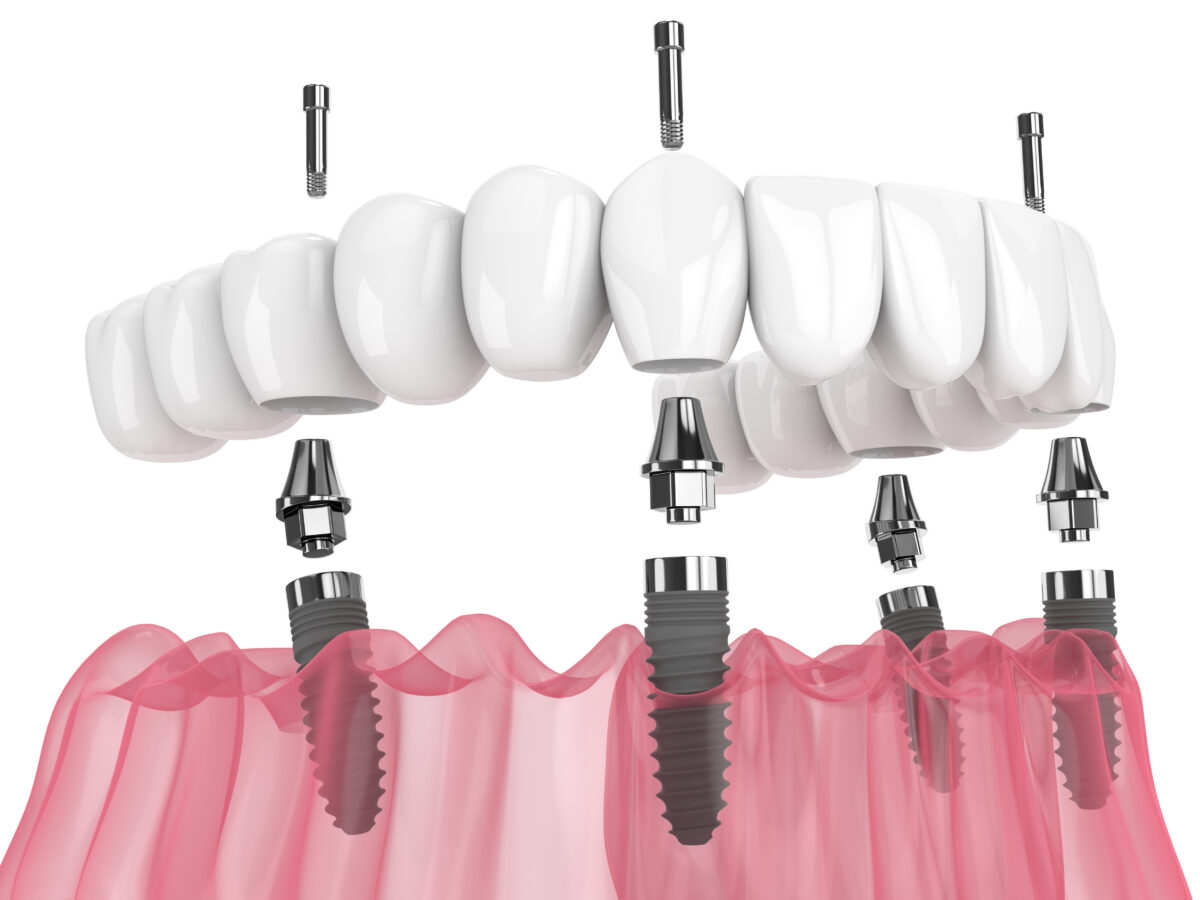
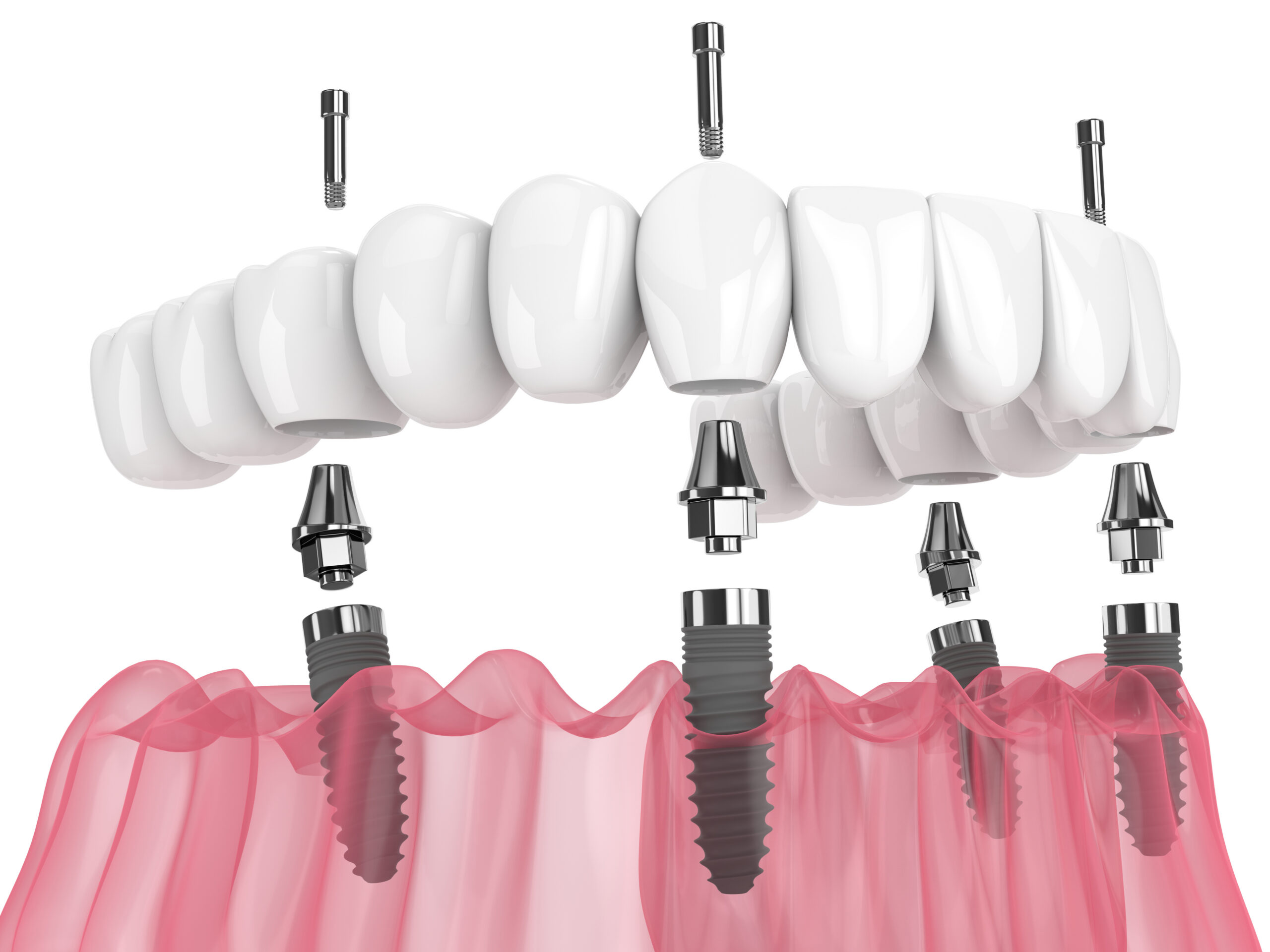
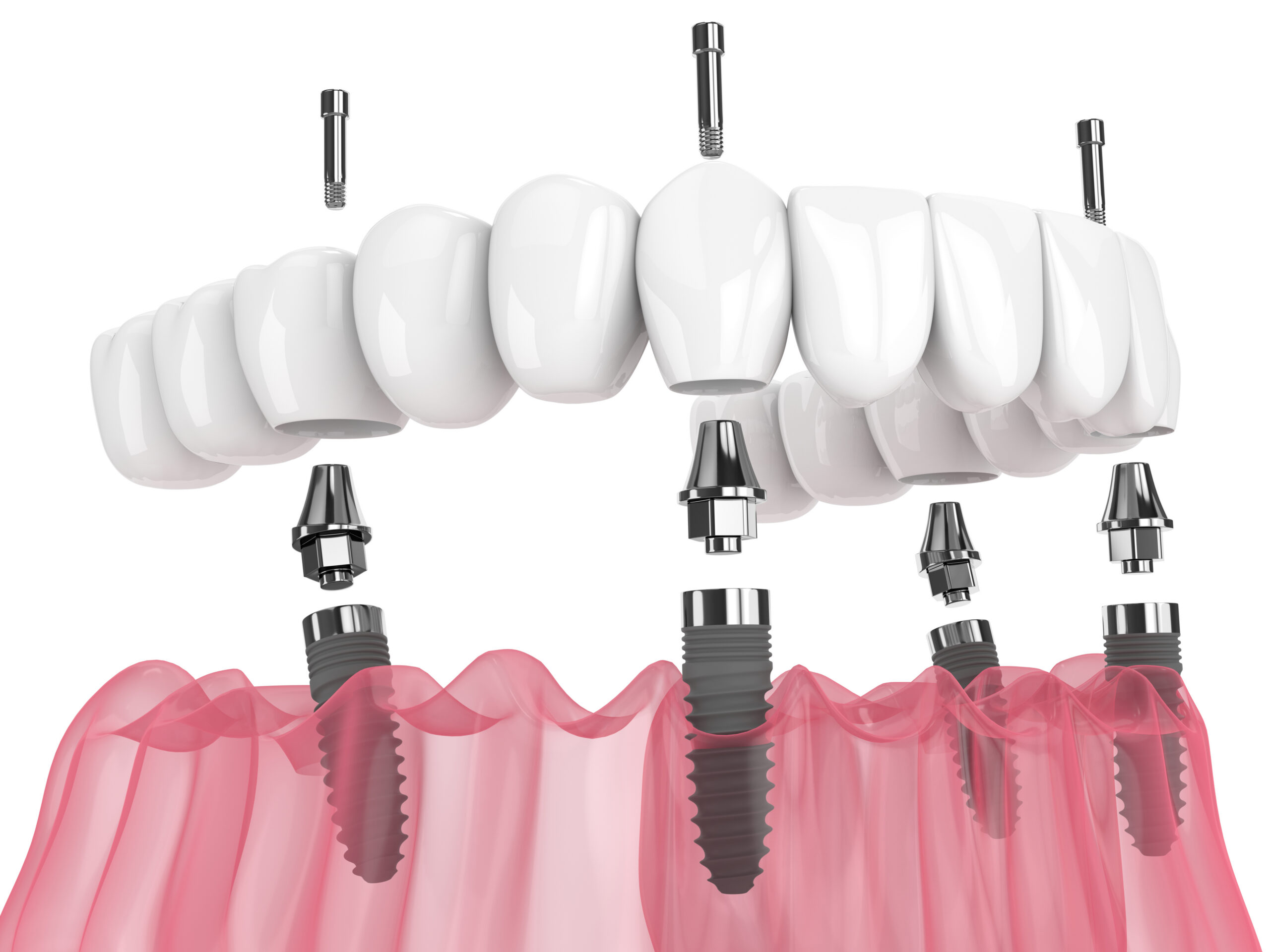
composition of dental prostheses on a white background, for fixation on four implants

A denture that shifts while you eat, slips when you laugh, or clicks when you speak stops feeling like a solution and becomes a problem you manage rather than one you’ve solved. For patients living with that frustration, implant-supported dentures offer a real way forward. One of the first questions people ask is also one of the most important: how many implants do you actually need to make the denture stable, comfortable, and worth the investment?

At Atlas Dental Specialists in Pittsburgh, implant-supported dentures are genuinely a core part of what Dr. Nicholas Mangini and Dr. Mara Mangini do. They work through this decision with patients across both Pittsburgh locations regularly, and the honest answer is that the right implant count is not the same for everyone. If you have been exploring implant-supported dentures as an option, a few key factors will shape the recommendation you receive, and understanding those factors before your consultation makes the whole conversation more productive.

Why Implant Count Actually Matters

Not all implant-supported dentures are built the same. A denture anchored to implants is held in place by attachments that snap or clip onto the implants beneath it. The more implants supporting the denture, the more evenly the force is distributed when you chew, speak, and bite. But more implants don’t automatically mean better results for every patient, and fewer implants don’t automatically mean instability.

The Case for Two Implants

For the lower jaw, two implants have long been considered a reliable baseline. Research published in Evidence-Based Dentistry found that mandibular overdentures supported by at least two implants are widely recommended as standard treatment, with strong patient satisfaction outcomes regardless of the number of implants. In many cases, two well-placed implants on the bottom arch provide the stability patients need to eat, speak, and function comfortably without the full commitment of a fixed restoration. This is exactly the kind of outcome Dr. Nicholas Mangini sees regularly in patients who start with two implants on the lower arch and are genuinely happy with the results. For a focused look at this approach, see our post on why two implants may be all you need for a lower denture.

When Four or More Makes Sense

The upper jaw presents different challenges. Bone density tends to be lower, and the natural suction that helps upper dentures stay in place disappears once implants alter the denture’s fit. Because of that, four implants are typically recommended for upper arch overdentures to achieve comparable stability. Patients with significant bone loss, those who chew with considerable force, or those who want the most secure retention possible may also be better candidates for four implants, regardless of which arch is involved.

Infographic: How Many Implants Are Needed for Stable Dentures

The Hybrid Approach Worth Knowing About

One option that doesn’t get discussed enough is the combination approach: implant-supported on the bottom, conventional on the top. This works well for patients who want meaningful improvement in stability without undergoing implant placement on both arches at once. Many patients who take this route start by stabilizing the lower denture, the arch where slipping tends to be most disruptive, and live comfortably that way for years. Some eventually decide to add upper implants after experiencing how much the lower implants have improved their quality of life.

This is something the team at Atlas Dental Specialists has seen firsthand. Understanding the full spectrum of options, from snap-in dentures to all-on-x, helps patients make a decision they’ll actually stick with long term. Patients who are weighing whether to make the transition from traditional dentures to implants often find that a staged approach takes the pressure off the decision.

What Goes Into the Recommendation

So what actually determines how many implants a patient needs? A few factors shape that answer:

  • Bone volume and density: More available bone gives more options; limited bone may require a bone graft before implant placement or influence the number that can be placed safely.
  • Which arch is being treated: The lower jaw typically does well with two implants; the upper jaw generally benefits from four.
  • Existing denture fit: Patients coming in with poorly fitting dentures may have more bone loss to account for than those transitioning earlier.
  • Personal goals and lifestyle: A patient who is highly active or eats a varied diet may benefit from more implant support; someone with modest functional demands may find two implants sufficient.

The recommendation at Atlas Dental Specialists always starts with a thorough evaluation of all of these factors, not a one-size-fits-all number. Knowing how to care for implant-supported dentures long-term is also part of the conversation from the start.

Talk to Atlas Dental Specialists About Your Options

If you’re trying to figure out whether two implants, four implants, or something in between is right for your situation, the most useful thing you can do is have that conversation with a prosthodontist who handles these cases regularly. At Atlas Dental Specialists, Dr. Nicholas Mangini and Dr. Mara Mangini bring deep experience in dental implant restorations across both Pittsburgh locations, and they tailor every recommendation to the individual patient in front of them.

Reach out through the contact form to schedule a consultation and get a clear picture of what implant-supported dentures would actually look like for you.

Frequently Asked Questions About Implants for Stable Dentures

How many implants do I need for a lower denture?

For most patients, two implants in the lower jaw are enough to significantly improve denture stability. Research supports two implants as the standard baseline for mandibular overdentures, with strong patient satisfaction outcomes. Some patients benefit from four implants depending on bone density, lifestyle, and personal goals, but two is a well-established starting point that works well for many people.

Why do upper dentures typically require more implants than lower ones?

The upper jaw generally has lower bone density than the lower jaw, and the natural suction that helps a conventional upper denture stay in place no longer works once implants change the denture’s fit. Four implants are typically recommended for upper arch overdentures to achieve the same level of stability that two implants can provide in the lower arch.

Can I still get implants if I have significant bone loss?

Bone loss does not necessarily rule out implant-supported dentures, but it does affect planning. Some patients require a bone graft before implants can be placed, and the extent of available bone may influence how many implants can be positioned safely. A thorough evaluation that includes imaging is the only way to determine what options are realistic for a specific case.

What is the difference between a snap-in denture and a fixed All-on-4?

A snap-in denture is a removable prosthesis that attaches to implants using clip or ball-type attachments and can be taken out for cleaning. All-on-4 is a fixed arch that is permanently anchored to four implants and can only be removed by a dental professional. Both offer significantly more stability than conventional dentures, but they differ in maintenance requirements and how they feel during daily function.

Is it possible to start with fewer implants and add more later?

In many cases, yes. Some patients begin with two implants on the lower arch and later decide to add more for additional stability, or eventually pursue upper arch implants after seeing how much the lower stabilization improved their daily experience. A staged approach can make the overall commitment feel more manageable and allows patients to evaluate results before deciding whether to proceed further.
How to Maintain Your Bright Smile After Professional Teeth Whitening

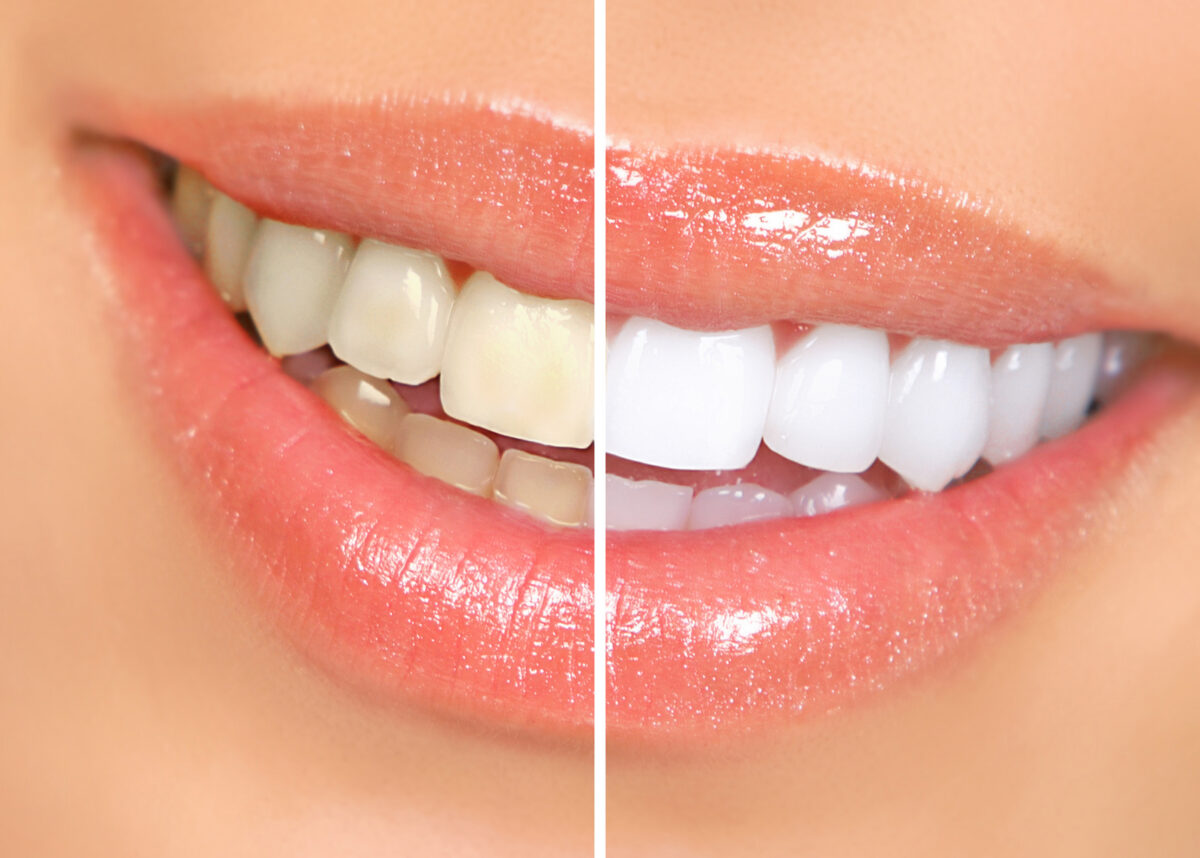
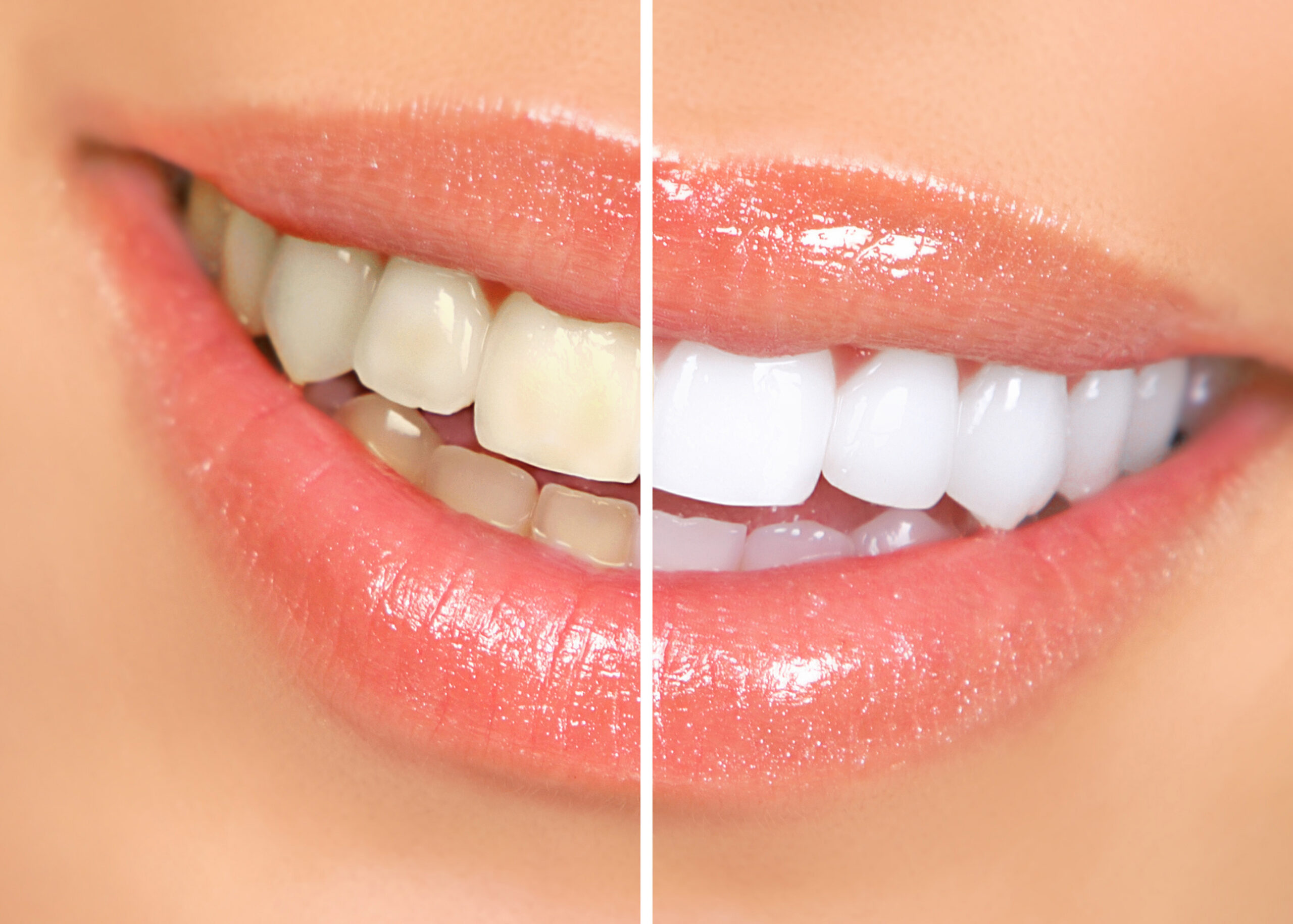
Mouth and teeth before and after whiteningYou finally did it. You walked out of the dentist’s office with a noticeably brighter smile, and you want it to stay that way. The good news is that with a few consistent habits, professional whitening results can last far longer than most people expect.
At Atlas Dental Specialists, Dr. Mara Mangini helps patients in Pittsburgh achieve and maintain their whitening results with guidance tailored to each person’s lifestyle. Professional teeth whitening delivers results that over-the-counter products simply cannot match, and protecting that investment does not require an overhaul of your daily routine. A few targeted adjustments go a long way.

What Causes Whitening Results to Fade?

Understanding what works against your results is the first step toward keeping them. Teeth naturally pick up pigment from the foods and drinks you consume, and the enamel is most vulnerable to new staining in the 48 hours immediately following a whitening treatment. That short window matters more than most people realize.

The Foods and Drinks to Watch

Coffee, tea, red wine, and dark sodas are the most common culprits. Berries, tomato-based sauces, soy sauce, and other deeply pigmented foods can also contribute to gradual discoloration over time. Tobacco use accelerates staining significantly and works against whitening results faster than almost anything else. Limiting these items, especially in the days right after whitening, makes a real difference in how long your results hold.

How Surface Stains Build Over Time

Staining is not always dramatic or sudden. It tends to happen gradually, which is why patients sometimes do not notice the shift until they compare photos or return for a follow-up visit. Research published in Medicina found that whitening outcomes showed measurable color stability over a six-month observation period, with daily habits playing a meaningful role in how well results were maintained. That finding reinforces what most dental professionals already tell their patients: the effort you put in after whitening matters as much as the treatment itself.

-

Daily Habits That Help Preserve Your Results

Consistency is what separates patients who hold onto their results for a year or more from those who notice fading within a few months. The habits below are easy to integrate and make a meaningful difference.

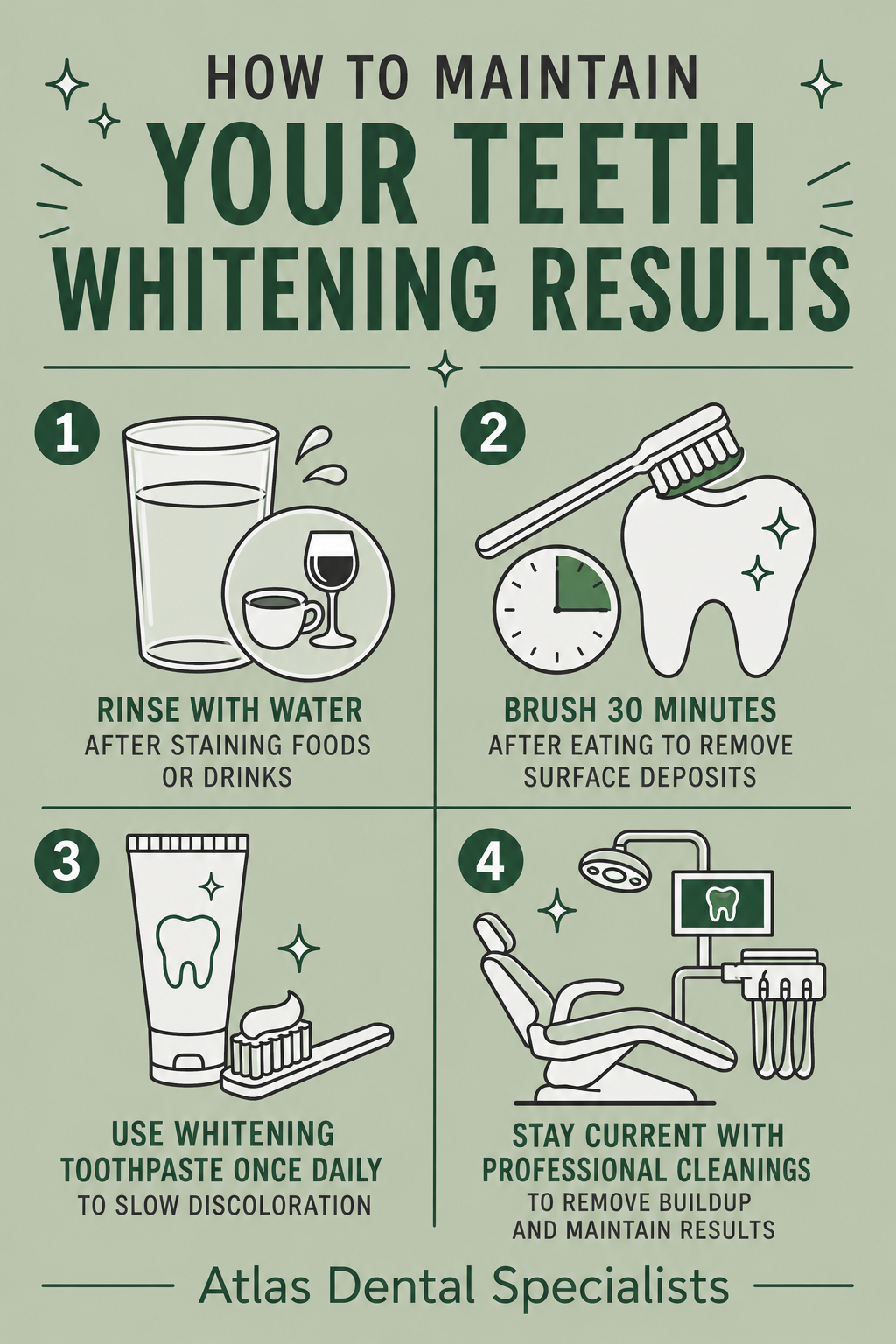
Brush and Rinse After Staining Foods

You do not need to swear off coffee forever. Rinsing your mouth with water immediately after consuming staining beverages helps minimize pigment absorption before it has a chance to set. Brushing about 30 minutes after eating or drinking gives enamel time to re-harden after any acid exposure while still removing surface deposits before they become stains.

Use a Whitening Toothpaste for Maintenance

A whitening toothpaste used once daily helps manage surface staining between professional treatments. It will not replicate the results of a professional session, but it does help slow the gradual return of discoloration. Look for options with mild abrasives or hydrogen peroxide, and avoid anything too abrasive that could wear down enamel over time.

Stay Current with Cleanings

Professional cleanings remove the tartar and surface buildup that dulls the appearance of teeth, even when no true staining is present. Staying on schedule with your cleanings at Atlas Dental Specialists means your smile always has a clean baseline to work from, and your hygienist can flag any early signs of staining before they become noticeable. If you are curious about how the whitening process works on a deeper level, the science behind professional teeth whitening is worth understanding.

When to Consider a Touch-Up

Most professional whitening results last anywhere from six months to well over a year, depending on lifestyle habits and the type of treatment used. Patients who are diligent about their maintenance routine tend to fall on the longer end of that range. When you do start to notice some return of discoloration, a touch-up treatment is typically much faster and more straightforward than the original session, as you are starting from a brighter baseline. Drs. Nicholas and Mara Mangini can recommend the right timing based on your individual results. Our Downtown Pittsburgh teeth whitening and Shadyside teeth whitening pages have more detail on the in-office options available at each location.

Patients interested in longer-lasting cosmetic improvements may also want to explore options like porcelain veneers, dental bonding, and the broader range of cosmetic dental services available at Atlas Dental Specialists. For patients exploring a full aesthetic refresh, a smile makeover consultation can bring whitening together with other treatments for a more complete result.

Keep Your Smile Bright with Atlas Dental Specialists

A whiter smile is worth protecting, and the team at Atlas Dental Specialists is here to help you do exactly that. Drs. Nicholas and Mara Mangini work with patients across both Pittsburgh locations to make sure whitening results last as long as possible, with maintenance plans designed around real life rather than a perfect set of circumstances.

If you are ready to schedule a whitening treatment or a touch-up consultation, reach out through the contact form, and we will get you set up at the location that works best for you.

Frequently Asked Questions About Maintaining Teeth Whitening Results

How long do professional teeth whitening results typically last?

Professional whitening results generally last between six months and well over a year, depending on daily habits and the type of treatment used. Patients who avoid heavily pigmented foods and beverages, maintain consistent oral hygiene, and attend regular professional cleanings tend to hold onto their results longer. Touch-up treatments are typically quick because patients are starting from a brighter baseline rather than from scratch.

What foods and drinks should I avoid after teeth whitening?

Coffee, tea, red wine, dark sodas, berries, tomato-based sauces, and soy sauce are among the biggest contributors to post-whitening staining. Tobacco use also accelerates discoloration significantly. The 48 hours immediately following a whitening treatment are the highest-risk window because enamel is most porous and susceptible to pigment absorption during that time. Limiting these items during that period makes a meaningful difference in how long results hold.

How soon after whitening can I eat and drink normally?

Most providers recommend following a white diet for the first 48 hours after treatment, sticking to foods and drinks that are light in color and low in pigment. After that window closes, normal eating and drinking can resume, though minimizing heavily pigmented foods on an ongoing basis will help extend results. Rinsing with water after consuming staining beverages and brushing about 30 minutes after meals continues to be beneficial long after the initial post-treatment period.

Is it safe to use whitening toothpaste every day?

Most whitening toothpastes are safe for daily use when used as directed, but it depends on the formulation. Options that rely on gentle abrasives or low concentrations of hydrogen peroxide are generally well tolerated. More abrasive formulas, used too frequently, can gradually wear down enamel over time. If you have sensitivity concerns or are unsure which product is appropriate, your dental team can recommend a formula that balances stain control with enamel protection.

When is the right time to schedule a whitening touch-up?

The right timing for a touch-up varies by patient, but a common indicator is when you notice a visible return of discoloration compared to how your smile looked right after treatment. For many patients this happens somewhere between six months and a year after the original session. Scheduling a touch-up before staining becomes significant means less treatment time is needed to restore the original result. Your dental team can help you identify the right interval based on your habits and how your specific results have held.

Failed Dental Implant? Here’s What You Need to Know About Replacement Options

A failed dental implant is more common than most people realize, and the good news is that it doesn’t have to be the end of the road. Implant failure can happen for a range of reasons, from infection and bone loss to poor healing or outside health factors, but in many cases, a replacement implant is not only possible but may succeed just as well as the first one.

If you’re dealing with a failed implant and wondering what comes next, our team at Atlas Dental Specialists in Pittsburgh is here to walk you through your options and help you move forward with a clear plan.

Why Dental Implants Fail

Understanding why an implant fails is the first step toward figuring out what to do next. Failures generally fall into two categories: early failures, which happen before the implant fully integrates with the jawbone, and late failures, which occur months or years after the implant was placed. Our dental implant services can address both scenarios.

Early Failure

Early failures typically stem from the implant not bonding properly with the bone, a process called osseointegration. Factors that may contribute include smoking, uncontrolled diabetes, certain medications that affect bone density, or insufficient bone volume at the placement site. Poor surgical technique or contamination during placement can also play a role, which is one reason working with a trained specialist from the outset matters for long-term outcomes.

Late Failure

Late failures are often tied to peri-implantitis, an infection of the tissue and bone surrounding the implant. Poor oral hygiene, a history of gum disease, and excessive bite pressure are among the more common contributors. A 2022 study published in the Journal of Periodontal & Implant Science found that early failure factors and systemic health conditions were significant contributors to cases requiring reimplantation, reinforcing the importance of a thorough evaluation before proceeding with replacement.

Warning Signs of Implant Failure

Recognizing the early signs of implant failure gives you the best chance of addressing the problem before it becomes more complex. Common warning signs include:

  • Pain or discomfort around the implant site that persists or worsens beyond the initial healing period
  • Implant mobility—any movement of the implant itself is abnormal and warrants immediate evaluation
  • Swelling, redness, or discharge around the gum tissue near the implant
  • Receding gum tissue around the implant, which can expose the implant body or abutment
  • Difficulty chewing or a change in bite that develops after the implant was initially functioning normally

If you experience any of these symptoms, prompt evaluation is important. Early intervention can sometimes save an implant that would otherwise fail completely if left untreated. The longer peri-implantitis progresses, for example, the more bone is lost—and the more complex any future replacement becomes.

What Happens After a Failed Implant?

Once an implant has failed, it typically needs to be removed. After removal, the site may require a healing period, and in some cases, a bone graft may be needed to rebuild the volume and density required to support a new implant. If you’ve been wondering whether you were a good candidate in the first place, reviewing the key factors that affect implant candidacy can provide useful context.

The timing for replacement varies. Some patients may be candidates for implant placement relatively soon after removal, while others need more time for healing and bone regeneration. Your anatomy, the cause of the initial failure, and any systemic health factors all influence this timeline. Your prosthodontist will outline a specific sequence of steps based on your evaluation.

Your Replacement Options

Not every patient who experiences implant failure will end up with a second implant. Depending on the condition of the jaw and your goals, there are a few directions worth considering:

  • Reimplantation: When bone health is adequate, the most common solution is to place a new dental implant at or near the original site. This often requires a bone graft to ensure the implant has sufficient support. Success rates for reimplantation are generally favorable when the underlying cause has been identified and addressed.
  • Implant-supported dentures: For patients who’ve experienced significant bone loss or who’ve had multiple implant failures, a fixed or removable implant-supported prosthetic may offer a more stable and practical long-term solution.
  • Full-mouth reconstruction: In cases where failure is part of a broader pattern of dental deterioration, a comprehensive treatment plan addressing all affected areas may provide the best long-term result.

The Role of a Prosthodontist in Implant Replacement

Working with the right provider makes a real difference when an implant has failed. Prosthodontists receive advanced training specifically focused on tooth replacement and the restoration of function, which means they’re well-positioned to evaluate what went wrong and what the best next step looks like. A prosthodontist can also manage the restorative side of treatment—coordinating the crown, abutment, and overall bite—in one place rather than requiring multiple referrals between providers.

This integrated approach is especially important when a failed implant has affected surrounding teeth or altered your bite. A specialist who understands both the surgical and restorative dimensions of the case can plan for the final outcome from the beginning, rather than treating the implant placement and the restoration as separate decisions made by different providers at different times.

Atlas Dental Specialists Can Help You Move Forward With Dental Implant Replacement

Atlas Dental Specialists has been serving patients across Pittsburgh for years, with locations in Shadyside and Downtown Pittsburgh. Drs. Nicholas and Mara Mangini take a patient-first approach to complex cases, including people who’ve been through a frustrating implant failure and want real answers about what comes next. From initial evaluation to final restoration, we handle the full scope of treatment in-house, so your care is coordinated and your outcomes are carefully tracked from start to finish.

If you’re dealing with a failed implant, don’t delay the evaluation. Contact us to schedule a consultation and let us help you understand exactly what happened and what your best path forward looks like.

Porcelain Veneers vs. Bonding: Which Cosmetic Treatment Should You Choose?

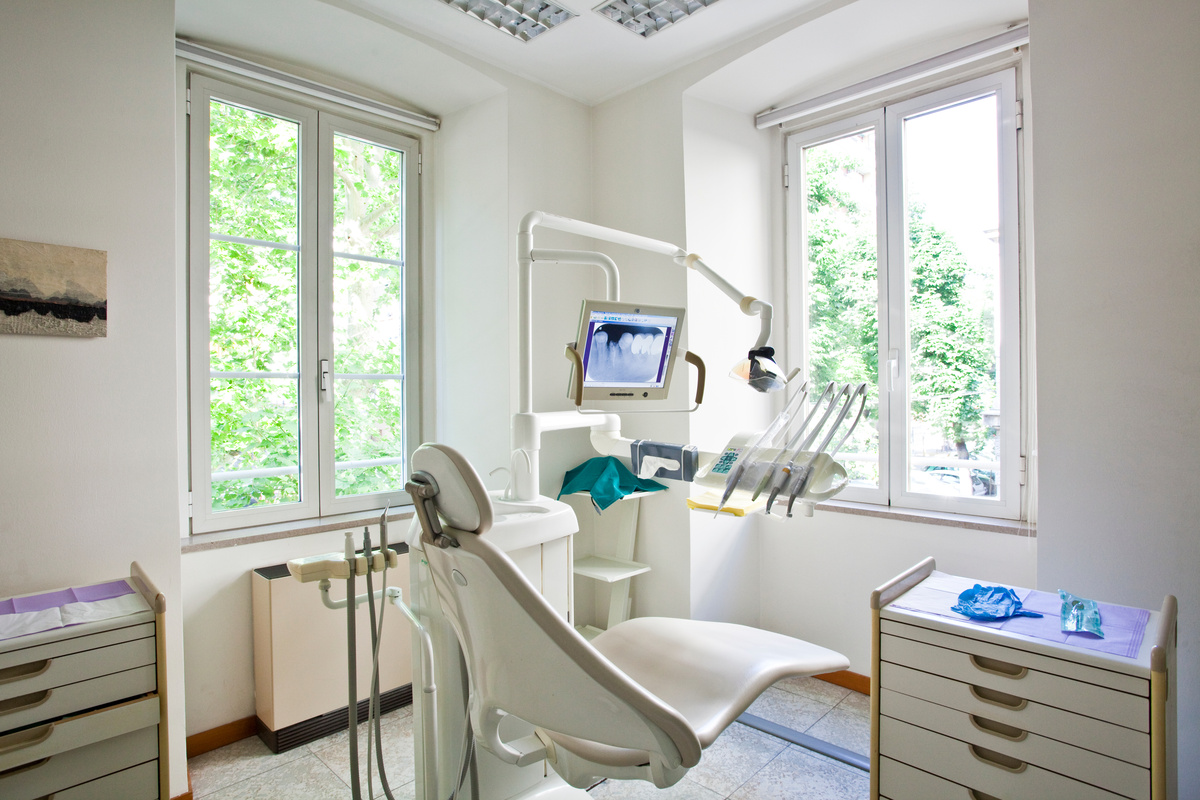
dentist office interior

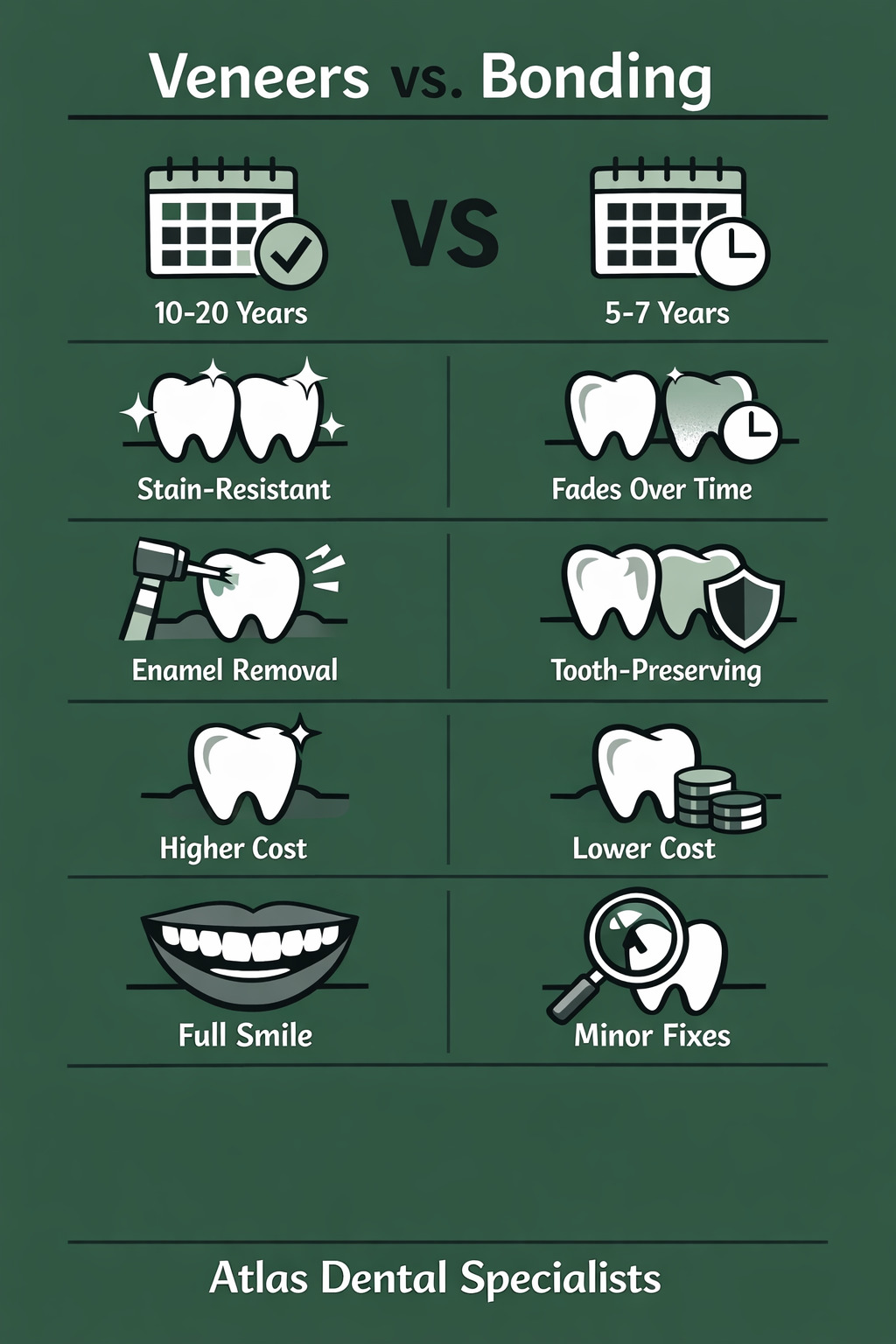
In truth, both porcelain veneers and dental bonding can dramatically improve the look of your smile, but they are not interchangeable. The right choice depends on the extent of the changes you want, how long you expect the results to last, and how much alteration you are comfortable making to your natural teeth.

At Atlas Dental Specialists, Drs. Nicholas and Mara Mangini work with patients every day who are weighing these two popular cosmetic treatments. As prosthodontists with over 25 years of combined experience serving Pittsburgh, they bring a depth of restorative knowledge that goes well beyond general cosmetic dentistry. If you are exploring your cosmetic dentistry options, understanding how these two treatments compare is the first step toward making a confident decision.

What Are Porcelain Veneers?

Porcelain veneers are ultra-thin, custom-fabricated shells bonded permanently to the front surface of your teeth. Each veneer is individually crafted in a dental lab to match your desired shade, shape, and size, making them one of the most tailored cosmetic options available. Because porcelain closely mimics the light-reflecting properties of natural enamel, veneers tend to look remarkably lifelike even under close inspection.

The process typically requires two appointments. First, a thin layer of enamel is removed from the tooth surface to ensure the veneer sits flush and does not feel bulky. Impressions are then taken and sent to the lab. At the second appointment, the custom veneers are permanently bonded in place. It is worth noting that because enamel removal is involved, this process is irreversible.

How Long Do Veneers Last?

Research published in PubMed Central found that porcelain veneers bonded to enamel showed survival rates above 93% at the ten-year mark, with strong long-term predictability when proper technique is followed. In everyday clinical terms, most patients can expect their veneers to last 10 to 20 years with consistent oral hygiene and routine dental visits. Porcelain is also non-porous, which makes it highly resistant to staining from coffee, wine, and other common culprits.

Porcelain veneers are best for patients looking to address multiple aesthetic concerns at once. These concerns could include deep discoloration, uneven spacing, misshapen teeth, or worn enamel. They are a cornerstone of comprehensive smile makeovers because they can deliver a consistent, dramatic transformation across multiple teeth simultaneously.

What Is Dental Bonding?

Dental bonding uses a tooth-colored composite resin applied directly to the tooth surface, sculpted by hand, and hardened with a curing light. The entire procedure can usually be completed in a single appointment and requires little to no removal of natural tooth structure. For patients looking to address a specific minor imperfection quickly and affordably, bonding is often an excellent fit.

Since the resin is matched to your existing tooth color and shaped chairside, bonding gives your dentist a high degree of flexibility in correcting small chips, closing minor gaps, or smoothing an uneven edge. There is no lab fabrication involved, which keeps both the timeline and the cost lower than veneers.

How Long Does Bonding Last?

Dental bonding generally has a lifespan of five to seven years before touch-ups or replacement become necessary. The composite resin material, while durable for everyday use, is more porous than porcelain and can absorb stains over time. It is also more susceptible to chipping under heavier bite forces, which is something to consider if you grind your teeth or have a more forceful bite.

Bonding works well for isolated, minor corrections. For patients with more significant cosmetic goals spanning multiple teeth, it may not offer the level of uniformity or longevity that veneers can provide.

Which Treatment Is Right for You?

Infographic Porcelain Veneers vs. Bonding Which Cosmetic Treatment Should You Choose - Atlas Dental Specialists

The decision between veneers and bonding comes down to a few key factors. The scope of your cosmetic goals, your timeline, your budget, and how you feel about permanent tooth alteration. Here is a quick breakdown to help clarify the differences:

  • Longevity: Porcelain veneers can last up to 10 to 20 years with proper care, while bonding typically requires replacement within five to seven years.
  • Appearance: Veneers offer superior color stability and a more lifelike finish; bonding resin can dull or stain over time.
  • Invasiveness: Bonding preserves nearly all of your natural tooth structure, while veneers require a small but permanent reduction of enamel.
  • Cost: Bonding is less expensive upfront, but veneers may offer better long-term value given their durability.
  • Best for: Bonding is ideal for minor, localized corrections; veneers are the stronger choice for comprehensive smile improvements.

Neither option is universally superior. The right treatment is the one that aligns with your individual goals, oral health, and lifestyle.

Ready to Explore Your Options in Pittsburgh? Contact Atlas Dental Specialists About Veneers and Bonding

Choosing between porcelain veneers and dental bonding is not a decision you have to make alone. Drs. Nicholas and Mara Mangini take the time to understand each patient’s goals and walk through the clinical factors that should guide the choice. Their background in prosthodontics means they look beyond aesthetics to consider the long-term health and function of your smile.

If you are ready to take the next step, contact Atlas Dental Specialists to schedule a consultation at our Downtown Pittsburgh or Shadyside location. We would love to help you find the cosmetic treatment that fits your smile and your life.

Can Invisalign Fix My Bite? Understanding Complex Orthodontic Cases

Happy senior woman smiling at male dentist during dental checkup appointment in modern clinic

Invisalign can fix many bite problems, and for mild to moderate cases, it often does so with impressive results. Whether you’re dealing with an open bite, a deep bite, or a crossbite, clear aligner therapy has evolved considerably over the past two decades, expanding its range well beyond simple crowding and spacing issues. The real question isn’t whether Invisalign works, but rather whether it’s the right fit for the specific complexity of your case.

If you’ve been wondering where to start, Invisalign treatment at Atlas Dental Specialists is provided exclusively by Dr. Mara Mangini, a prosthodontist whose background in full-mouth restoration gives her a uniquely comprehensive view of how bite function and smile aesthetics intersect. Understanding what Invisalign can and cannot do, and what makes a case “complex,” is the first step toward making a confident, informed decision.

What Makes a Bite Case Complex?

Not all bite problems are created equal. A simple case might involve minor crowding or a slight overjet. In contrast, a complex case could involve significant skeletal discrepancies, severe misalignment, or multiple overlapping concerns that require precise, sequential tooth movement.

Common Bite Issues Invisalign Can Address

-

Dentists and orthodontists categorize bite problems in a few primary ways, including the following, and Invisalign has demonstrated effectiveness across several of them:

  • Open bite: A condition where the upper and lower front teeth don’t meet when the mouth is closed. A 2025 systematic review and meta-analysis confirmed that clear aligner therapy is effective for anterior open bite correction in adults, with measurable improvements across multiple cephalometric outcomes.
  • Deep bite: When the upper front teeth overlap the lower front teeth excessively in a vertical direction. Clear aligners have shown meaningful results here, though overcorrection planning and refinement phases are often necessary.
  • Crossbite: When one or more upper teeth sit inside the lower teeth rather than outside. Invisalign can effectively address dental crossbites, though skeletal crossbites may require additional intervention.
  • Class II malocclusion: When the upper jaw sits further forward than the lower jaw. Invisalign can help manage mild to moderate cases, often in combination with attachments or elastics.

It’s worth noting that the more severe and skeletal the underlying cause, the more likely a case will need a collaborative or multi-phase approach.

When Invisalign May Have Limitations

Clear aligners can do a lot, but they’re not always the best fit for every type of bite problem. When the issue comes from the jaw bones rather than just tooth position, such as with skeletal misalignment, treatment may need to involve orthodontic appliances, surgery, or a combination approach where Invisalign is only one part of the plan.

More complex cases, like severe bite discrepancies, major tooth rotations, or teeth that need significant vertical movement, can also be harder to correct with aligners alone and may require additional refinement stages along the way. Patients who experience jaw joint discomfort alongside their bite concerns may benefit from an evaluation that includes TMJ treatment as part of a broader care plan.

The Role of Attachments and Customization

One of the reasons Invisalign’s range has expanded so significantly is the advancement of attachment technology. These are small, tooth-colored composite “handles” bonded to specific teeth. These handles provide the aligners with better grip and leverage for more complex movements. Without attachments, an aligner is largely limited to tipping teeth in a predictable direction. With them, rotation, torque, and intrusion become far more achievable.

Digital treatment planning through ClinCheck software also plays a meaningful role. It allows the treating provider to map out every stage of movement before a single aligner is made, giving patients a clear picture of the projected outcome and giving the clinician precise control over sequencing. That said, it’s important to understand digital predictions can sometimes overestimate tooth movement. This is why experienced providers build in overcorrection and monitor progress closely. Patients new to clear aligner therapy will find a helpful starting point in our overview of why patients choose Invisalign over traditional braces.

What to Expect During a Bite-Focused Invisalign Case

A smile makeover that involves bite correction with Invisalign typically follows a structured, phased approach. Before designing a personalized treatment plan for your bite, your provider will use digital scans, photographs, and X-rays. The correction will progress through staged movements, with each set of aligners worn for one to two weeks.

Treatment duration can vary widely depending on the complexity. Mild cases may wrap up in six to twelve months, while moderate to complex bite cases may take eighteen months or longer. Mid-course refinements are normal. They’re not a sign that something went wrong, but rather an adjustment to keep tooth movement on track. Clear aligner therapy requires strong patient compliance, particularly consistent wear of 20 to 22 hours per day, to achieve the planned result.

Talk to Atlas Dental Specialists About Your Bite

Atlas Dental Specialists in Pittsburgh offers a full range of restorative and cosmetic dental services under one roof, meaning bite evaluations here go beyond orthodontics. Dr. Mara Mangini brings her prosthodontic background to every Invisalign consultation, assessing not only alignment but also how your bite functions, how your teeth wear over time, and what outcome will best serve your long-term oral health. That kind of comprehensive lens matters, particularly when bite issues are complex. You can explore treatment options at our Downtown Pittsburgh Invisalign or Shadyside Invisalign pages.

We accept MetLife, Cigna, Principal, Ameritas, and UnitedHealthcare, and we offer flexible financing options so cost doesn’t have to stand between you and a functional, comfortable bite. If you’re ready to find out whether Invisalign is the right solution for your case, contact us to schedule a consultation with Dr. Mara.

Frequently Asked Questions About Invisalign for Bite Correction

Can Invisalign fix an overbite or underbite?

Invisalign can address mild to moderate overbites and underbites, often using a combination of attachments and elastics to guide tooth movement. More severe cases, particularly those rooted in skeletal discrepancies rather than tooth position, may require a combined approach that includes surgery or other orthodontic appliances. A comprehensive evaluation is the only way to determine how much of the bite correction Invisalign alone can achieve in a specific case.

How long does Invisalign take for bite correction?

Treatment duration depends heavily on the severity of the bite issue. Mild cases may be completed in six to twelve months, while moderate to complex bite corrections often take eighteen months or longer. Mid-course refinements are a normal part of the process and do not indicate something went wrong. Consistent wear of 20 to 22 hours per day is essential to staying on schedule.

What bite problems is Invisalign not well suited to fix?

Bite problems that originate from skeletal jaw discrepancies rather than tooth position are generally beyond what clear aligners can fully correct on their own. Severe underbites, large skeletal crossbites, and significant vertical jaw discrepancies often require orthognathic surgery or other interventions. In these cases, Invisalign may still play a role as part of a broader treatment plan, but it would not be the sole solution.

What are Invisalign attachments and why are they used for complex bite cases?

Attachments are small tooth-colored composite shapes bonded to specific teeth before aligner wear begins. They act as grip points that allow the aligner to apply more targeted forces, enabling movements like rotation, torque, and intrusion that would be difficult or impossible with a smooth aligner surface alone. For bite correction cases, attachments significantly expand what clear aligner therapy can accomplish.

How does Invisalign compare to traditional braces for correcting bite issues?

Traditional braces generally have an advantage for highly complex bite corrections because brackets and wires can apply continuous force in multiple directions simultaneously. Invisalign has closed much of that gap with attachment technology and improved aligner materials, and for mild to moderate bite issues it achieves comparable results with the benefit of being removable and nearly invisible. For patients with complex bite needs, the right tool depends on the specifics of the case.

Failed Dentures? How All-on-4 Solves Your Tooth Replacement Problems

3d render of all on 4 dental implants treatment over white

If your dentures slip, cause sore spots, or leave you avoiding entire categories of food, you are not alone. All-on-4 dental implants are a fixed, permanent solution that addresses the core limitations of removable dentures, giving patients a way to eat, speak, and smile with real confidence again.

Traditional dentures rest on top of the gum tissue and rely on suction or adhesive to stay in place. Over time, the jawbone that once held teeth begins to shrink, and a denture that once fit well may no longer stay secure. That shifting creates discomfort, difficulty chewing, and the kind of social anxiety that comes from worrying about your teeth moving at the wrong moment. For many patients, these frustrations build until the denture becomes more of a burden than a solution.

For patients who are ready to move beyond removable options, advanced tooth replacement in Pittsburgh provides a path to a full, fixed set of teeth that functions more like natural ones.

Why Dentures Fail Over Time

Traditional dentures can work well initially, but they are not designed to prevent bone loss. Once teeth are missing, the jawbone no longer receives the stimulation it needs to maintain its density. This resorption gradually changes the shape of the jaw, causing dentures to loosen over time. The longer a patient has been without implants, the more pronounced these fit changes become.

Beyond the physical changes, there is an emotional toll. Many patients begin limiting what they eat, avoiding social situations, and losing confidence in their appearance. These are not small inconveniences. Failed dentures affect quality of life in meaningful ways, and many patients do not realize that a more permanent solution is available to them.

How All-on-4 Works

All-on-4 is an implant-supported restoration. Four titanium implants are placed into the jaw at precise angles, and a full arch of fixed teeth is attached to them. Because the implants fuse with the bone over time, they stimulate the jaw the same way natural tooth roots do, helping preserve bone density and maintain facial structure.

This approach offers several advantages that removable dentures cannot match:

  • No slipping or clicking during meals or conversation
  • No adhesives or nightly removal required
  • Improved chewing function compared to traditional dentures
  • A fixed smile that looks and feels more like natural teeth
  • Long-term protection against further bone loss

Because All-on-4 is a surgical procedure, patients need to be in reasonable overall health and have adequate bone to support the implants. A thorough consultation and imaging will determine whether it is a good fit for your situation.

Who May Be a Good Candidate

Patients who have experienced significant tooth loss and are tired of dealing with uncomfortable or unstable dentures are often strong candidates for All-on-4. Those who are missing all or most of their teeth in one or both arches tend to benefit most. However, patients who may not yet need full-arch replacement might be better served by a dental bridge restoration or another fixed option, depending on how many teeth are involved.

Patients with bone loss may need a bone graft before implant placement to ensure there is enough material to anchor the implants securely. This adds time to the overall process but makes the eventual result more stable. Not every patient will require this step, and an evaluation will clarify exactly what your case calls for.

What to Expect From the Process

Most All-on-4 cases involve placing the implants and attaching a temporary arch on the same day. A permanent, final restoration is placed after the implants have fully integrated with the jaw, which typically takes a few months. During the healing period, patients follow dietary guidelines and attend follow-up appointments to ensure everything is progressing properly.

The process requires commitment, but patients who complete it consistently report that the change in daily life is substantial. Eating a full range of foods, speaking without hesitation, and smiling freely are things many patients had not experienced in years before their All-on-4 procedure.

Find Out if All-on-4 Is Right for You at Atlas Dental Specialists

Dr. Nicholas Mangini is a prosthodontist, a dental professional with advanced training focused specifically on restoring and replacing teeth. Prosthodontists are among the most qualified providers for complex tooth replacement cases, including those involving failed dentures and significant bone loss. At Atlas Dental Specialists, patients can have their full All-on-4 treatment managed in-house, without needing referrals to outside providers.

If you have been struggling with poorly fitting or uncomfortable dentures and are ready to explore a fixed solution, our team is here to help. We offer flexible financing options, including CareCredit, Cherry, and SunBit, to make treatment more accessible. To find out whether All-on-4 may be right for you, schedule your consultation with our team today.

How Long Do Implant-Supported Dentures Last?

full dental implant showing fixed gum-supported prosthesis. 3D illustration

Implant-supported dentures can last well over a decade with proper care. The titanium implants anchored in the jaw tend to be the most durable component, and many patients keep them for 15 years or longer. The denture portion itself typically needs to be replaced or refitted at some point, but the implants often remain functional far beyond that first set.

This longevity makes implant-supported dentures a strong option for patients who want more stability than traditional removable dentures offer but are not ready to commit to a fully fixed restoration. The key to getting the most out of them comes down to how well they are maintained, both at home and through consistent professional care.

What Affects How Long They Last

Several factors influence the lifespan of implant-supported dentures, and most of them are within a patient’s control. Bone density, overall health, oral hygiene habits, and how frequently patients come in for check-ups all play a role. Patients who maintain good home care and attend regular professional cleanings tend to see better long-term outcomes than those who do not.

Systemic conditions can also be a factor. Diabetes, for example, may affect how well implants integrate with the jaw and how predictably the surrounding tissue heals over time. Similarly, conditions like osteoporosis can affect bone quality, which matters for the long-term stability of the implants themselves. This does not mean patients with these conditions cannot have implant-supported dentures, but it does mean those factors are worth discussing during the planning process.

The Difference Between the Implants and the Prosthesis

One of the most common sources of confusion is the distinction between the implant posts and the denture that attaches to them. These two components have different lifespans, and it helps to think of them separately.

The implants are small titanium posts placed into the jaw. Once fully integrated, they behave similarly to natural tooth roots, stimulating the bone and helping preserve jaw structure over time. With good maintenance, they may last a lifetime without needing replacement.

The denture that snaps or attaches onto those implants is a different story. Daily wear, chewing forces, and gradual changes in jaw shape over the years mean the denture prosthesis will eventually need to be relined or replaced. How long this takes varies by patient, but five to ten years is a reasonable range before some type of adjustment or replacement is needed.

What Proper Maintenance Looks Like

Caring for implant-supported dentures is not complicated, but it does require consistency. Patients should clean the denture and the attachment areas daily, since plaque and bacteria can still accumulate around the implants and cause gum tissue problems over time. Most removable implant-supported dentures should be taken out at night, cleaned thoroughly, and stored properly.

Regular professional visits are just as important as home care. Professional dental cleanings allow the team to monitor the health of the tissue around the implants and check the attachment mechanisms for wear. Catching small issues early, such as a loose attachment or slight tissue inflammation, prevents those issues from becoming bigger problems down the road.

The habits that support long-term success include:

  • Cleaning the denture and attachment areas after meals when possible
  • Removing and soaking the denture nightly with a recommended solution
  • Attending professional cleanings and check-ups at recommended intervals
  • Avoiding extremely hard or sticky foods that can put excess stress on the attachments
  • Notifying the dental team promptly if the denture feels loose or uncomfortable

These steps are not dramatically different from caring for natural teeth, but they do matter significantly for how long the restoration holds up. A detailed look at routine care is available in our guide on caring for implant-supported dentures.

Implant-Supported vs. Conventional Dentures

Traditional removable dentures rest on top of the gums and rely on suction and the shape of the jaw for retention. As the jaw changes over time due to bone loss, fit problems develop. Implant-supported dentures address this directly because the implants anchor the prosthesis, reducing slippage and providing better chewing function. They also help slow down the bone resorption process that makes conventional dentures progressively harder to wear comfortably. Patients who want the stability of implant anchoring in a removable format may also want to explore snap-in dentures as a related option.

Schedule a Consultation at Atlas Dental Specialists

Dr. Nicholas Mangini is a prosthodontist with advanced training in tooth replacement and restorative care. Prosthodontists are the dental professionals most focused on restoring missing and damaged teeth, which makes our team particularly well-suited to guide patients through the full range of implant-supported options. Whether you have existing dentures that are no longer fitting well or teeth that need to be extracted and replaced, we work with patients at every stage of the process.

We also offer flexible financing through CareCredit, Cherry, and SunBit to help make treatment more accessible. If you are ready to find out whether implant-supported dentures are the right fit for your situation, contact our office to schedule your consultation.

Frequently Asked Questions About Implant-Supported Denture Longevity

How long do the implant posts themselves typically last?

The titanium posts placed into the jawbone are the most durable component of the system. With consistent home care and regular professional monitoring, implants can remain functional for 15 to 20 years or longer, and many patients keep their original implants indefinitely. Bone health and oral hygiene consistency are the two biggest factors in determining whether implants remain stable over the long term.

How often does the denture prosthesis need to be replaced or relined?

The denture that attaches to the implants typically requires some form of adjustment, relining, or replacement within five to ten years. Daily chewing forces and gradual changes in jaw shape over time account for most of that wear. Routine professional check-ups allow the dental team to identify early signs of wear on the attachments and prosthesis before they require more significant intervention.

What daily habits help extend the life of implant-supported dentures?

Cleaning the denture and the attachment areas daily, removing and soaking the denture each night, avoiding extremely hard or sticky foods, and attending professional cleanings at recommended intervals are the core habits that protect the restoration long term. Consistent home care paired with scheduled professional visits gives implant-supported dentures the best chance of performing well for many years.

Can health conditions affect how long implants last?

Systemic conditions such as poorly controlled diabetes or osteoporosis can influence how well implants integrate with the jawbone and how the surrounding tissue responds over time. Patients with these conditions are not automatically excluded from implant-supported options, but those health factors are an important part of the planning conversation. Well-managed overall health generally supports better long-term implant outcomes.

How do implant-supported dentures compare to All-on-4 in terms of durability?

Both systems rely on titanium implants as their foundation, so the implant component of each can last for decades with proper care. The key difference is the prosthetic: All-on-4 uses a fixed arch that cannot be removed, while implant-supported overdentures are removable. Fixed arches and removable prostheses have different wear characteristics and maintenance requirements, which is one reason a thorough evaluation helps identify which approach fits a given patient’s situation best.

All-on-4 Recovery: Your Complete Guide to Healing and Aftercare

Mandibular prosthesis all on 4 system supported by implants over white background

Recovering from an all-on-4 procedure is far more manageable than many patients expect, and knowing what to do in the days and weeks ahead makes all the difference. The surgery places four implants to support a full arch of teeth, but the long-term success of that work depends on how well the healing phase is respected. From pain management to dietary choices, what happens after placement matters just as much as the procedure itself.

At Atlas Dental Specialists, Drs. Nicholas and Mara Mangini guide patients through every step of all-on-4 treatment from day one. As prosthodontists with roots in Pittsburgh going back over 35 years, they provide full-service dental implant care entirely in-house, meaning you never need to be referred elsewhere for any stage of treatment.

The First 48 hours After Placement

The first two days after your procedure set the tone for the entire recovery, and following post-operative instructions during this window can minimize discomfort and support smooth healing. Dr. Nicholas Mangini outlines the core steps: take prescribed medication before the numbness fully wears off, apply ice in 20-minute intervals for the first 24 hours, keep your head elevated with extra pillows for a few nights, avoid strenuous activity, and hold off on vigorous rinsing. Gentle prescribed rinses begin shortly after.

It is also helpful to know what to expect physically. Patients commonly experience swelling, mild bleeding in the first 24 hours, bruising, temporary speech changes, and some tightness or pressure. These are all normal and tend to ease with rest. “Serious complications are uncommon when treatment is properly planned,” says Dr. Mangini. “We monitor closely and provide detailed post-operative instructions to make sure patients feel confident and cared for.”

What to Eat During Recovery

One of the most important aspects of recovery is protecting the implants while they fuse with the jawbone, a process that takes a few months. What you eat directly influences whether that process goes smoothly, which is why dietary restrictions are taken seriously throughout healing. Skipping ahead too quickly on food textures is one of the most common mistakes patients make.

Recovery nutrition follows a phased approach:

  • Phase 1 (first one to two weeks): Liquids and very soft foods such as soups, yogurt, smoothies, and scrambled eggs.
  • Phase 2 (up to three to four months): Soft, non-chewy foods. Hard, crunchy, and sticky items should be avoided.
  • After final restoration: A gradual return to a normal diet, though Dr. Mangini advises permanently avoiding extremely hard foods like chewing ice.

“The temporary phase is critical,” says Dr. Mangini. “Respecting it ensures long-term success.” Research on long-term implant outcomes confirms that patient compliance during the healing period is a key factor in lasting implant success.

Caring for Your Prosthesis

Oral hygiene looks a little different with an all-on-4 prosthesis, and the routine shifts depending on which stage of recovery you are in. During the healing phase, gentle brushing with a soft brush, antimicrobial rinses as directed, and a water flosser on a low setting once approved form the foundation of daily care. After your final restoration is placed, daily brushing, water flossing around the implants, and regular professional maintenance visits become the long-term standard.

“Proper hygiene is non-negotiable,” Dr. Mangini says. “Even though implants don’t decay, the surrounding tissue must remain healthy.” This principle applies to all implant-based restorations, whether you are maintaining an all-on-4 prosthesis or exploring other advanced tooth replacement options. Consistent care at home is what protects the investment for years to come.

Warning Signs to Watch for

Most patients heal without any significant issues, but knowing the difference between normal discomfort and something that warrants attention helps remove the guesswork. Mild swelling, minor oozing, and temporary soreness are all expected and should ease gradually over the first few days with rest and proper care.

Contact the office right away if you notice excessive bleeding that does not slow, severe or worsening pain after a few days, fever, sudden movement of the prosthesis, or signs of infection such as significant swelling, pus, or a foul taste. “If a patient is unsure, I always prefer they call,” says Dr. Mangini. “Early evaluation prevents small issues from becoming larger ones.”

Recover With Confidence at Atlas Dental Specialists

All-on-4 recovery is a straightforward process when patients have clear guidance and a dedicated team available throughout. At Atlas Dental Specialists, Drs. Nicholas and Mara Mangini are trained prosthodontists who manage both the surgical and restorative phases of all-on-4 care entirely in-house. Our comprehensive dental implant guide and hands-on post-operative support are part of every patient’s experience from the first visit onward.

Whether you have questions about recovery or are ready to explore your tooth replacement options, we are here to help. Our Pittsburgh practice accepts MetLife, Cigna, Principal, Ameritas, and UnitedHealthcare, and flexible payment options are also available. Contact us to schedule a consultation.

What to Expect During Your All-on-4 Treatment at Atlas Dental Specialists

Mandibular prosthesis all on 4 system supported by implants over white background The decision to move forward with full-arch tooth replacement is rarely made overnight. For most people, it comes after years of dealing with failing teeth, repeated dental work, or dentures that never quite felt right. By the time all-on-4 treatment enters the conversation, the question is no longer whether something needs to change. It’s whether the procedure itself is worth the commitment.


At Atlas Dental Specialists, we work with patients throughout Pittsburgh who are exactly at that crossroads. With locations in Downtown Pittsburgh and Shadyside, our team of prosthodontists and dental implant specialists handles every phase of all-on-4 treatment under one roof, so you never have to navigate the process alone or piece together care from multiple providers. Here’s a clear look at what the experience actually involves, from your first consultation to your final restoration.

The All-on-4 Concept Explained

All-on-4 is a full-arch dental implant solution that uses just four strategically placed implants to support a complete, fixed prosthesis for either the upper or lower jaw. The two rear implants are angled to maximize contact with available bone, which means many patients can proceed with treatment even if they’ve experienced some degree of bone loss. Research published in the International Journal of Implant Dentistry found that all-on-4 treatment produces strong long-term survival rates across both the upper and lower jaw, making it a clinically reliable choice for full-arch restoration.


Unlike traditional dental implants that replace individual teeth one at a time, all-on-4 restores an entire arch with a fixed prosthesis designed to look and function like natural teeth. It’s also significantly more stable and permanent than conventional dentures, which can shift, slip, or require ongoing adjustments over time.

Your Consultation and Treatment Planning

The first step is a thorough consultation with one of our prosthodontists. During this appointment, we take detailed 3D scans and imaging to evaluate your bone density, jaw structure, and overall oral health. This information guides every aspect of your treatment plan, including implant positioning and the design of your final prosthesis. We take time to walk you through your specific case, answer your questions, and set clear expectations well before any treatment begins.

For patients who require tooth extractions or bone-related preparation, those steps are coordinated ahead of the implant placement appointment. Because our team handles all phases of care in-house, the process stays streamlined and your care remains consistent from start to finish.

Atlas Feb Blog Graphic What to - Atlas Dental Specialists

The Day of Your Procedure

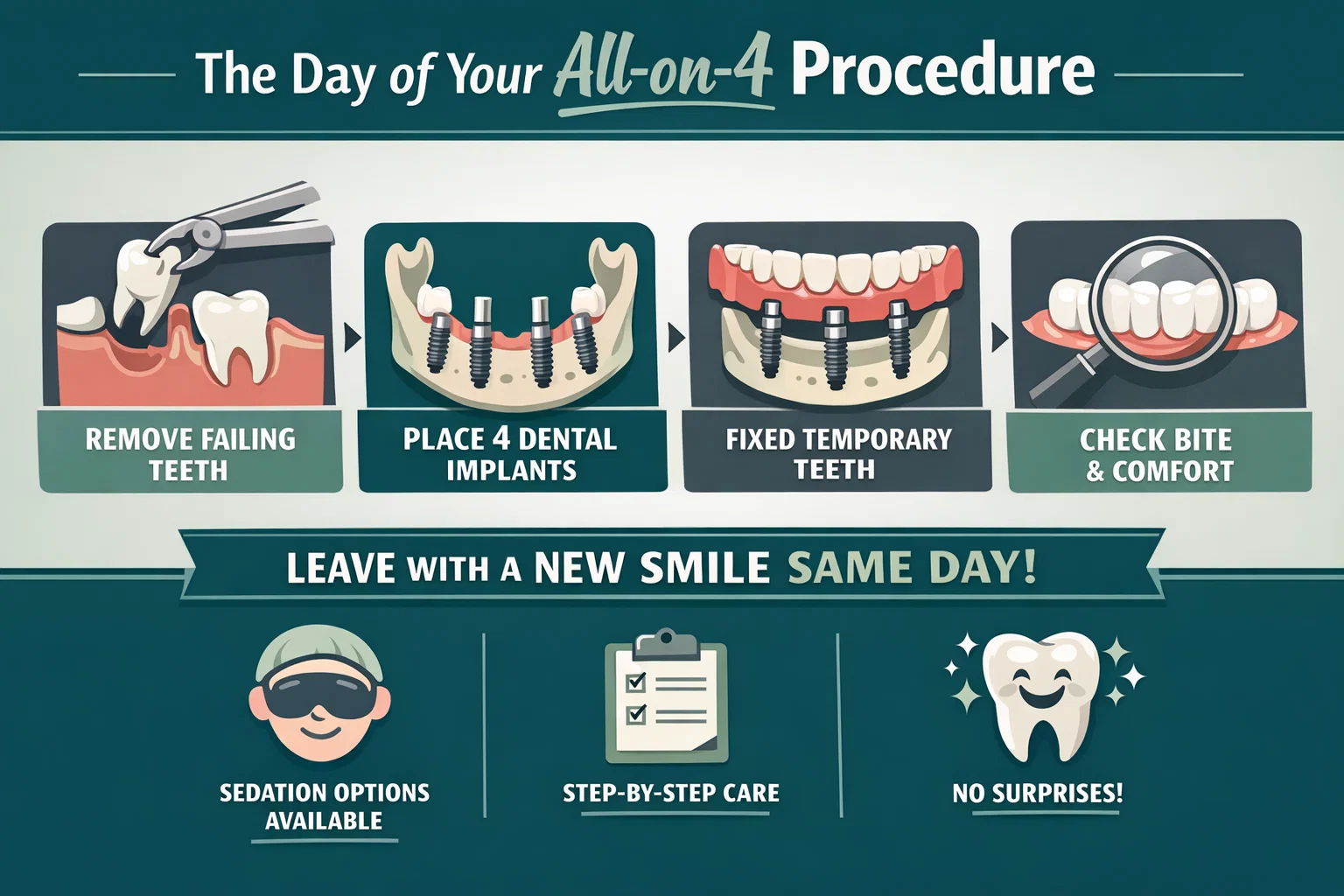
On placement day, any remaining failing teeth are removed and the four implants are placed directly into the jawbone. From there, your care team works through a few key steps before you leave:

  • Placement of the four implants, including the two angled rear implants
  • Attachment of a fixed provisional prosthesis to the implants the same day
  • A final review of your bite and comfort before you go

You leave our office with a full set of functional teeth that same day. We offer a variety of sedation options to keep you comfortable throughout the procedure, and our team walks you through exactly what to expect so there are no surprises.

Healing, Recovery, and Your Final Restoration

The healing phase typically spans a few months as the implants integrate with the jawbone, a process called osseointegration. During this time, your temporary prosthesis allows you to eat and speak normally while your mouth heals. You’ll return for check-in appointments so we can monitor your progress and make sure everything is on track.

Once osseointegration is complete, your provisional prosthesis is replaced with your final, custom restoration. For patients who need a broader approach to rebuilding their smile, all-on-4 integrates naturally into a comprehensive full mouth reconstruction plan designed to restore function and aesthetics across the entire mouth.

Take the Next Step With Atlas Dental Specialists

Our team at Atlas Dental Specialists includes experienced prosthodontists and dental implant specialists who collaborate closely on complex cases like all-on-4. We take a thorough, patient-first approach to every treatment plan, and because we handle everything in-house from initial imaging to final restoration, your care stays coordinated and convenient throughout the entire process.

If you’re ready to explore whether all-on-4 is the right fit for your situation, we invite you to schedule a consultation with our team. We’ll review your specific case, walk you through your options, and tailor a plan to help you get where you want to be.

Retirement-Ready Smiles: How All-on-4 Improves Quality of Life for Seniors

Happy active senior couple outdoors

Retirement is supposed to be the chapter where you finally get to enjoy things: meals with family, travel, social dinners, and all the moments you spent decades working toward. But for seniors living with failing teeth, loose dentures, or significant tooth loss, even the simplest pleasures, like ordering freely at a restaurant or laughing without hesitation, can become sources of daily stress. The good news is that this doesn’t have to be permanent, and for many patients, it doesn’t take nearly as long to fix as they expect.

At Atlas Dental Specialists in Pittsburgh, Dr. Nicholas Mangini and the team work with seniors every day who are ready to reclaim those moments. As prosthodontists with over 35 years of combined history serving the Pittsburgh community, we take a full-service approach to All-on-4 implants, meaning patients can have their implants and final restoration completed all in one place, with no need to see multiple specialists at separate offices.

What Patients Say They Get Back

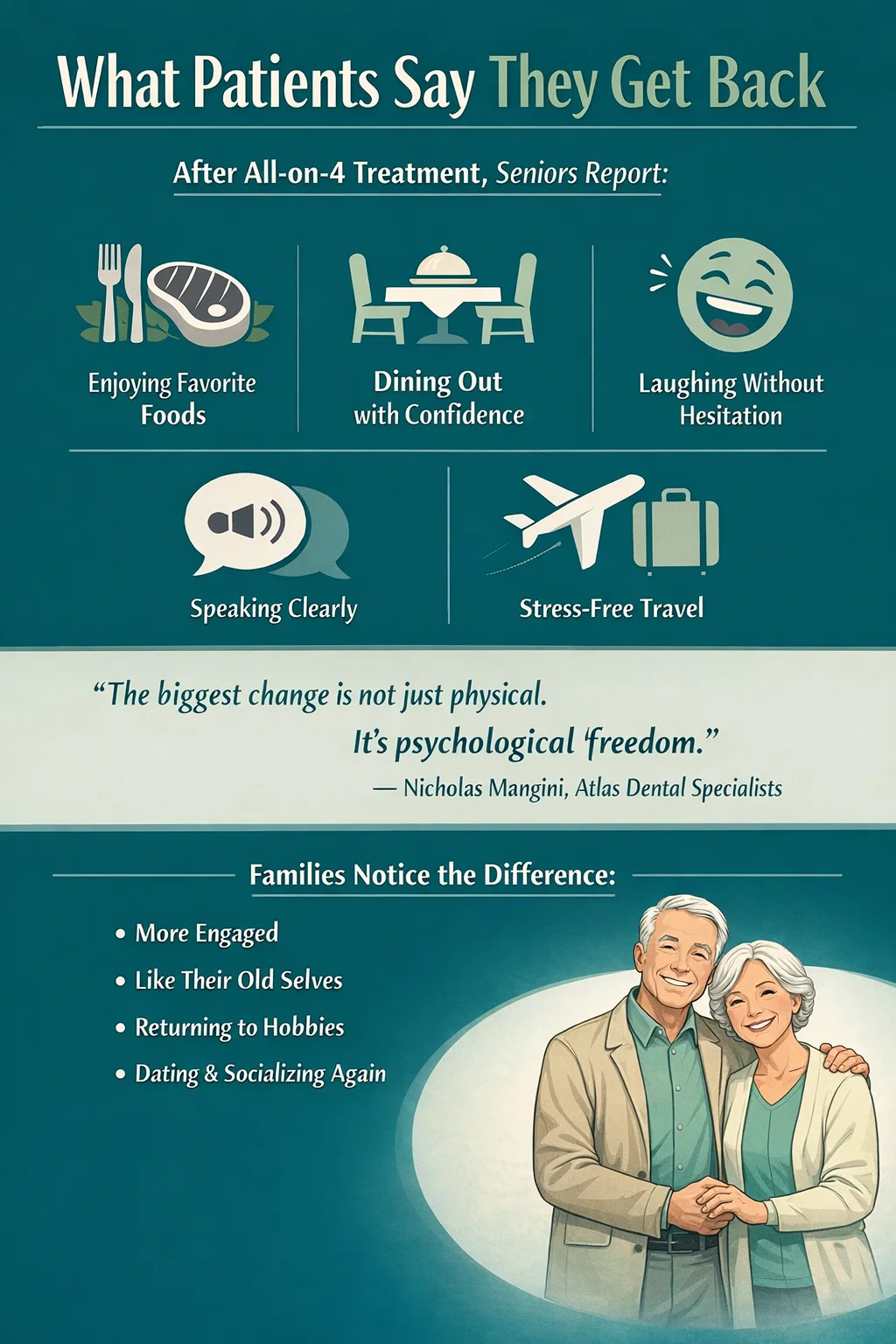
The list of things seniors report being able to enjoy again after all-on-4 treatment is consistent from patient to patient.

“Patients frequently tell me they can eat foods they haven’t enjoyed in years, dine out without anxiety, laugh freely without covering their mouth, speak more clearly, and travel without denture adhesives or soaking solutions,” says Dr. Mangini. “The biggest change is not just physical. It’s psychological freedom.”

That psychological shift is something families notice, too. Dr. Mangini regularly hears from relatives who say their parent or spouse seems “like themselves again,” more engaged, more present, and more willing to show up to the moments that matter. Some patients return to public-facing roles or hobbies they had quietly stepped away from. Others start dating again. The changes extend well beyond the mouth.

Addressing the Cost Concern

One of the most common things Dr. Mangini hears from senior patients considering all-on-4 is some version of: “I’m too old to spend that much money on my teeth.” His response is direct and consistent.


“If you’re 65, you may have 20 to 30 vibrant years ahead,” Dr. Mangini explains. “Those years include meals with family, travel, celebrations, and daily enjoyment. Teeth affect how you eat, speak, and smile every single day. This isn’t cosmetic vanity. It’s quality of life.” He encourages patients to think about value, not just cost, and notes that many tell him later it was one of the best decisions they ever made for themselves.

Research supports this perspective. A 2022 systematic review published on PubMed found that oral health-related quality of life and patient satisfaction were consistently high among patients rehabilitated with the all-on-4 concept, across studies with follow-up periods ranging from three months to seven years.

Atlas Feb Blog Graphic What Seniors Get Back - Atlas Dental Specialists


What Recovery Actually Looks Like


Many seniors are surprised to learn how manageable the recovery process tends to be. In most cases, we place a fixed provisional prosthesis the same day as surgery, so patients leave with teeth.

The typical experience in the days that follow looks like this:

  • Mild to moderate swelling for three to five days
  • Bruising that may occur occasionally
  • Soreness that is manageable with prescribed medication
  • Temporary diet modification during the initial healing period

Healing continues over several months as the implants integrate, but patients often adapt to their new teeth faster than they anticipated. “Most are pleasantly surprised,” says Dr. Mangini. “They adapt quickly.” For patients interested in understanding each stage of what to expect, our dental implant guide walks through the full process in plain terms.

Why Fixed Solutions Work Better for Active Retirees

For seniors with active retirement lifestyles, the practical advantages of a fixed solution over removable options add up quickly. There is no adhesive to apply, no soaking container to travel with, no removal routine at night, and no anxiety about movement during meals.

Daily maintenance involves brushing, water flossing, and routine professional cleanings, much like natural teeth. For patients who travel frequently or are simply done managing the logistics that come with removable dentures, the consistency and reliability of a fixed full-arch restoration make a meaningful difference. Those who have tried both options tend to say the same thing: they wish they had made the switch sooner.

Schedule Your Consultation at Atlas Dental Specialists

Dr. Mangini and the team at Atlas Dental Specialists bring prosthodontic training and decades of experience to every full-arch case. With offices in both Shadyside and Downtown Pittsburgh, we provide a warm, family-centered environment where patients can get honest answers, a thorough evaluation, and a clear picture of what treatment may be able to offer them. Patients can also explore full-mouth reconstruction options as part of a comprehensive plan.

If you’re ready to find out whether all-on-4 is the right fit for your retirement years, we’d love to hear from you. Schedule your consultation with Atlas Dental Specialists today.