
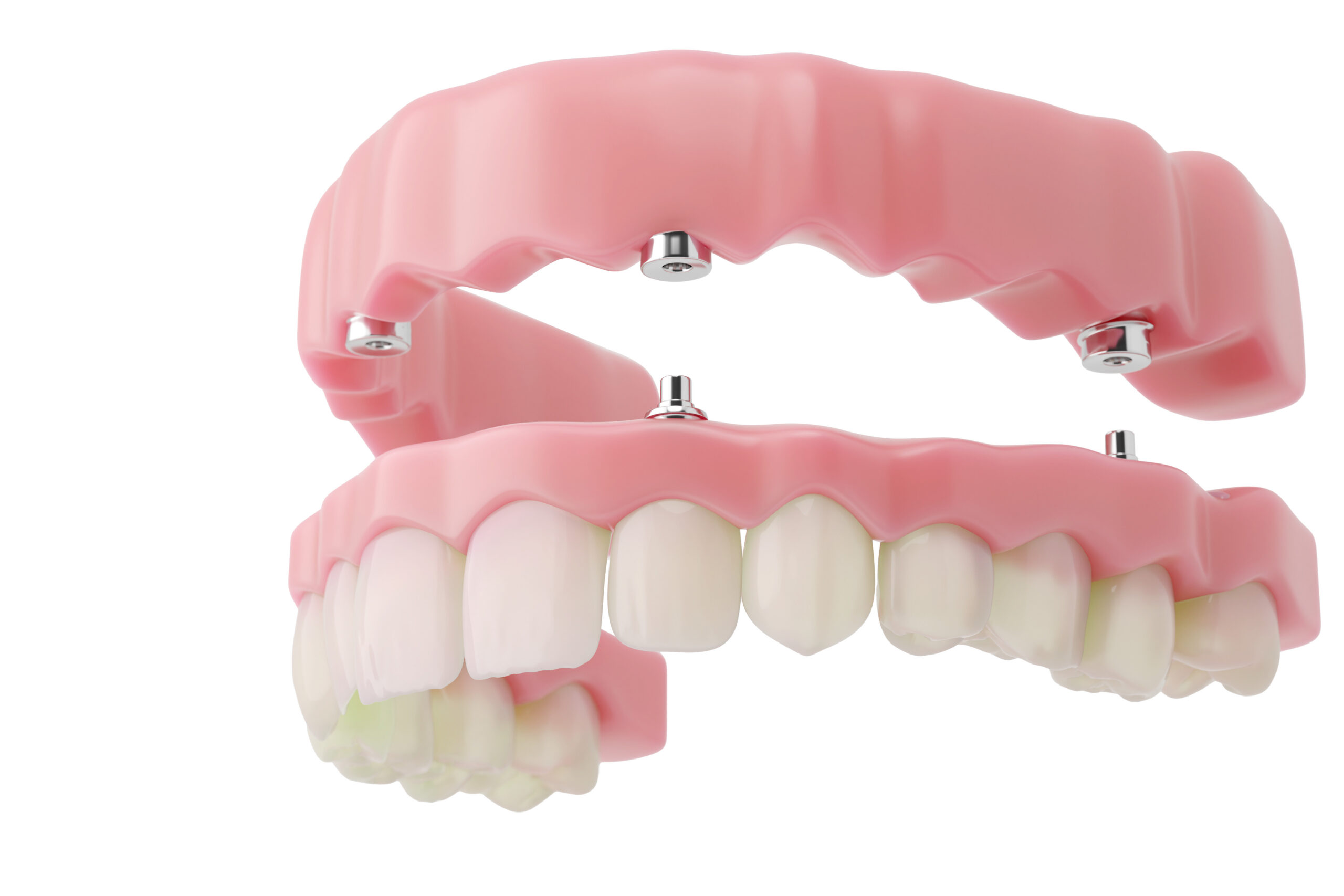
Implant-supported dentures can last well over a decade with proper care. The titanium implants anchored in the jaw tend to be the most durable component, and many patients keep them for 15 years or longer. The denture portion itself typically needs to be replaced or refitted at some point, but the implants often remain functional far beyond that first set.
This longevity makes implant-supported dentures a strong option for patients who want more stability than traditional removable dentures offer but are not ready to commit to a fully fixed restoration. The key to getting the most out of them comes down to how well they are maintained, both at home and through consistent professional care.
What Affects How Long They Last
Several factors influence the lifespan of implant-supported dentures, and most of them are within a patient’s control. Bone density, overall health, oral hygiene habits, and how frequently patients come in for check-ups all play a role. Patients who maintain good home care and attend regular professional cleanings tend to see better long-term outcomes than those who do not.
Systemic conditions can also be a factor. Diabetes, for example, may affect how well implants integrate with the jaw and how predictably the surrounding tissue heals over time. Similarly, conditions like osteoporosis can affect bone quality, which matters for the long-term stability of the implants themselves. This does not mean patients with these conditions cannot have implant-supported dentures, but it does mean those factors are worth discussing during the planning process.
The Difference Between the Implants and the Prosthesis
One of the most common sources of confusion is the distinction between the implant posts and the denture that attaches to them. These two components have different lifespans, and it helps to think of them separately.
The implants are small titanium posts placed into the jaw. Once fully integrated, they behave similarly to natural tooth roots, stimulating the bone and helping preserve jaw structure over time. With good maintenance, they may last a lifetime without needing replacement.
The denture that snaps or attaches onto those implants is a different story. Daily wear, chewing forces, and gradual changes in jaw shape over the years mean the denture prosthesis will eventually need to be relined or replaced. How long this takes varies by patient, but five to ten years is a reasonable range before some type of adjustment or replacement is needed.
What Proper Maintenance Looks Like
Caring for implant-supported dentures is not complicated, but it does require consistency. Patients should clean the denture and the attachment areas daily, since plaque and bacteria can still accumulate around the implants and cause gum tissue problems over time. Most removable implant-supported dentures should be taken out at night, cleaned thoroughly, and stored properly.
Regular professional visits are just as important as home care. Professional dental cleanings allow the team to monitor the health of the tissue around the implants and check the attachment mechanisms for wear. Catching small issues early, such as a loose attachment or slight tissue inflammation, prevents those issues from becoming bigger problems down the road.
The habits that support long-term success include:
- Cleaning the denture and attachment areas after meals when possible
- Removing and soaking the denture nightly with a recommended solution
- Attending professional cleanings and check-ups at recommended intervals
- Avoiding extremely hard or sticky foods that can put excess stress on the attachments
- Notifying the dental team promptly if the denture feels loose or uncomfortable
These steps are not dramatically different from caring for natural teeth, but they do matter significantly for how long the restoration holds up. A detailed look at routine care is available in our guide on caring for implant-supported dentures.
Implant-Supported vs. Conventional Dentures
Traditional removable dentures rest on top of the gums and rely on suction and the shape of the jaw for retention. As the jaw changes over time due to bone loss, fit problems develop. Implant-supported dentures address this directly because the implants anchor the prosthesis, reducing slippage and providing better chewing function. They also help slow down the bone resorption process that makes conventional dentures progressively harder to wear comfortably. Patients who want the stability of implant anchoring in a removable format may also want to explore snap-in dentures as a related option.
Schedule a Consultation at Atlas Dental Specialists
Dr. Nicholas Mangini is a prosthodontist with advanced training in tooth replacement and restorative care. Prosthodontists are the dental professionals most focused on restoring missing and damaged teeth, which makes our team particularly well-suited to guide patients through the full range of implant-supported options. Whether you have existing dentures that are no longer fitting well or teeth that need to be extracted and replaced, we work with patients at every stage of the process.
We also offer flexible financing through CareCredit, Cherry, and SunBit to help make treatment more accessible. If you are ready to find out whether implant-supported dentures are the right fit for your situation, contact our office to schedule your consultation.
Frequently Asked Questions About Implant-Supported Denture Longevity
How long do the implant posts themselves typically last?
The titanium posts placed into the jawbone are the most durable component of the system. With consistent home care and regular professional monitoring, implants can remain functional for 15 to 20 years or longer, and many patients keep their original implants indefinitely. Bone health and oral hygiene consistency are the two biggest factors in determining whether implants remain stable over the long term.
How often does the denture prosthesis need to be replaced or relined?
The denture that attaches to the implants typically requires some form of adjustment, relining, or replacement within five to ten years. Daily chewing forces and gradual changes in jaw shape over time account for most of that wear. Routine professional check-ups allow the dental team to identify early signs of wear on the attachments and prosthesis before they require more significant intervention.
What daily habits help extend the life of implant-supported dentures?
Cleaning the denture and the attachment areas daily, removing and soaking the denture each night, avoiding extremely hard or sticky foods, and attending professional cleanings at recommended intervals are the core habits that protect the restoration long term. Consistent home care paired with scheduled professional visits gives implant-supported dentures the best chance of performing well for many years.
Can health conditions affect how long implants last?
Systemic conditions such as poorly controlled diabetes or osteoporosis can influence how well implants integrate with the jawbone and how the surrounding tissue responds over time. Patients with these conditions are not automatically excluded from implant-supported options, but those health factors are an important part of the planning conversation. Well-managed overall health generally supports better long-term implant outcomes.
How do implant-supported dentures compare to All-on-4 in terms of durability?
Both systems rely on titanium implants as their foundation, so the implant component of each can last for decades with proper care. The key difference is the prosthetic: All-on-4 uses a fixed arch that cannot be removed, while implant-supported overdentures are removable. Fixed arches and removable prostheses have different wear characteristics and maintenance requirements, which is one reason a thorough evaluation helps identify which approach fits a given patient’s situation best.