
In truth, both porcelain veneers and dental bonding can dramatically improve the look of your smile, but they are not interchangeable. The right choice depends on the extent of the changes you want, how long you expect the results to last, and how much alteration you are comfortable making to your natural teeth.
At Atlas Dental Specialists, Drs. Nicholas and Mara Mangini work with patients every day who are weighing these two popular cosmetic treatments. As prosthodontists with over 25 years of combined experience serving Pittsburgh, they bring a depth of restorative knowledge that goes well beyond general cosmetic dentistry. If you are exploring your cosmetic dentistry options, understanding how these two treatments compare is the first step toward making a confident decision.
What Are Porcelain Veneers?
Porcelain veneers are ultra-thin, custom-fabricated shells bonded permanently to the front surface of your teeth. Each veneer is individually crafted in a dental lab to match your desired shade, shape, and size, making them one of the most tailored cosmetic options available. Because porcelain closely mimics the light-reflecting properties of natural enamel, veneers tend to look remarkably lifelike even under close inspection.
The process typically requires two appointments. First, a thin layer of enamel is removed from the tooth surface to ensure the veneer sits flush and does not feel bulky. Impressions are then taken and sent to the lab. At the second appointment, the custom veneers are permanently bonded in place. It is worth noting that because enamel removal is involved, this process is irreversible.
How Long Do Veneers Last?
Research published in PubMed Central found that porcelain veneers bonded to enamel showed survival rates above 93% at the ten-year mark, with strong long-term predictability when proper technique is followed. In everyday clinical terms, most patients can expect their veneers to last 10 to 20 years with consistent oral hygiene and routine dental visits. Porcelain is also non-porous, which makes it highly resistant to staining from coffee, wine, and other common culprits.
Porcelain veneers are best for patients looking to address multiple aesthetic concerns at once. These concerns could include deep discoloration, uneven spacing, misshapen teeth, or worn enamel. They are a cornerstone of comprehensive smile makeovers because they can deliver a consistent, dramatic transformation across multiple teeth simultaneously.
What Is Dental Bonding?
Dental bonding uses a tooth-colored composite resin applied directly to the tooth surface, sculpted by hand, and hardened with a curing light. The entire procedure can usually be completed in a single appointment and requires little to no removal of natural tooth structure. For patients looking to address a specific minor imperfection quickly and affordably, bonding is often an excellent fit.
Since the resin is matched to your existing tooth color and shaped chairside, bonding gives your dentist a high degree of flexibility in correcting small chips, closing minor gaps, or smoothing an uneven edge. There is no lab fabrication involved, which keeps both the timeline and the cost lower than veneers.
How Long Does Bonding Last?
Dental bonding generally has a lifespan of five to seven years before touch-ups or replacement become necessary. The composite resin material, while durable for everyday use, is more porous than porcelain and can absorb stains over time. It is also more susceptible to chipping under heavier bite forces, which is something to consider if you grind your teeth or have a more forceful bite.
Bonding works well for isolated, minor corrections. For patients with more significant cosmetic goals spanning multiple teeth, it may not offer the level of uniformity or longevity that veneers can provide.
Which Treatment Is Right for You?
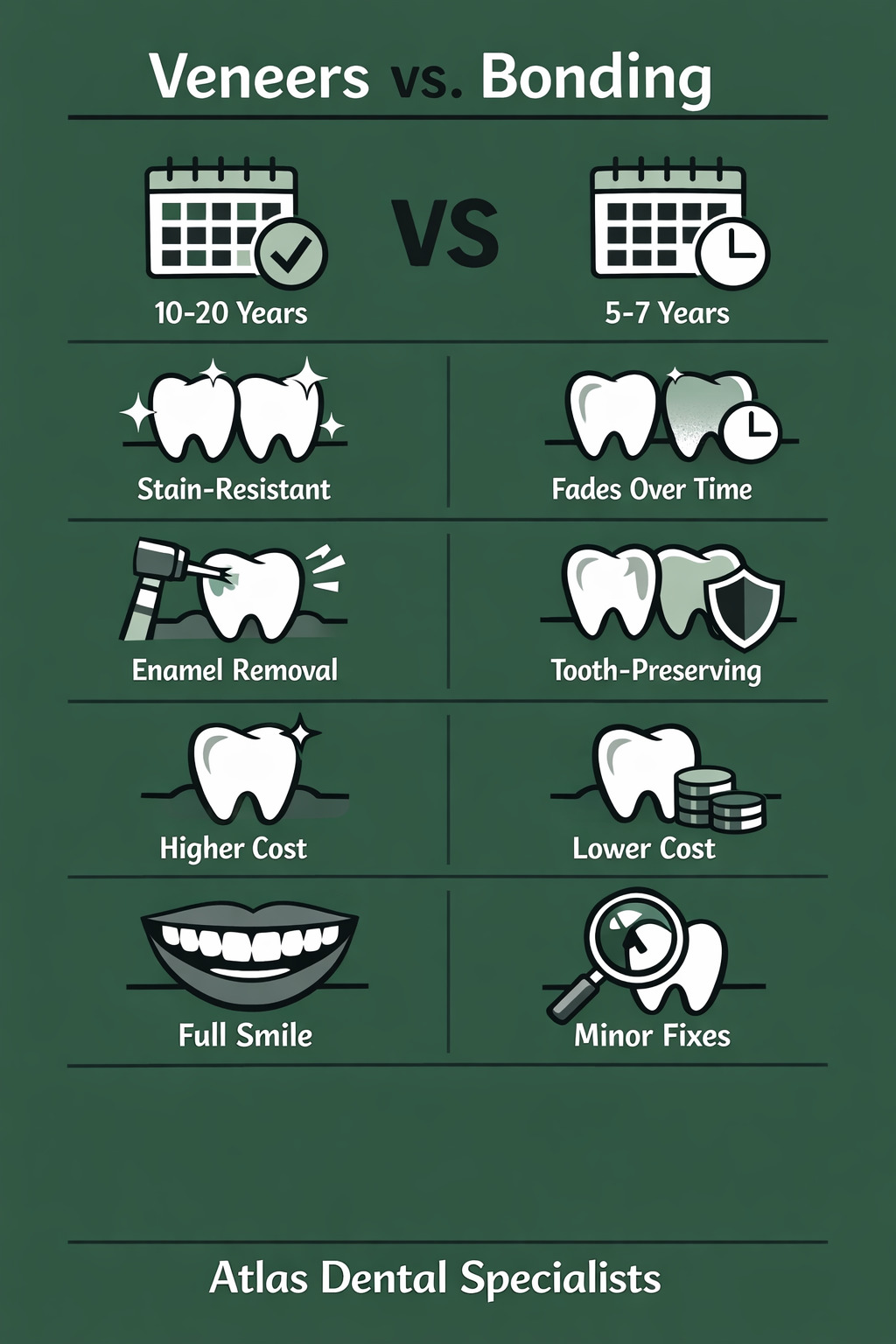
The decision between veneers and bonding comes down to a few key factors. The scope of your cosmetic goals, your timeline, your budget, and how you feel about permanent tooth alteration. Here is a quick breakdown to help clarify the differences:
- Longevity: Porcelain veneers can last up to 10 to 20 years with proper care, while bonding typically requires replacement within five to seven years.
- Appearance: Veneers offer superior color stability and a more lifelike finish; bonding resin can dull or stain over time.
- Invasiveness: Bonding preserves nearly all of your natural tooth structure, while veneers require a small but permanent reduction of enamel.
- Cost: Bonding is less expensive upfront, but veneers may offer better long-term value given their durability.
- Best for: Bonding is ideal for minor, localized corrections; veneers are the stronger choice for comprehensive smile improvements.
Neither option is universally superior. The right treatment is the one that aligns with your individual goals, oral health, and lifestyle.
Ready to Explore Your Options in Pittsburgh? Contact Atlas Dental Specialists About Veneers and Bonding
Choosing between porcelain veneers and dental bonding is not a decision you have to make alone. Drs. Nicholas and Mara Mangini take the time to understand each patient’s goals and walk through the clinical factors that should guide the choice. Their background in prosthodontics means they look beyond aesthetics to consider the long-term health and function of your smile.
If you are ready to take the next step, contact Atlas Dental Specialists to schedule a consultation at our Downtown Pittsburgh or Shadyside location. We would love to help you find the cosmetic treatment that fits your smile and your life.