By the time most people reach their 50s and 60s, their teeth have already put in decades of steady work. Fillings placed years ago, crowns from old root canals, years of grinding at night, and gums that have slowly pulled back all add up quietly. None of it tends to hurt until something finally gives out, which is why so many dental problems in this age group get caught later than they should.
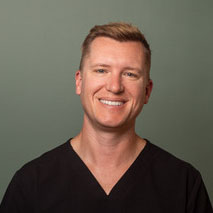
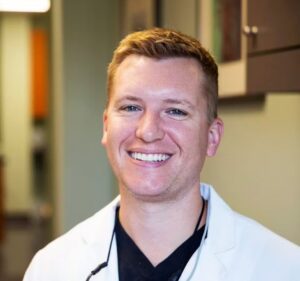
At Atlas Dental Specialists, prosthodontist Dr. Nicholas Mangini sees this pattern often in his Pittsburgh patients. We sat down with him to talk through what actually changes in the mouth after 50, how conditions like osteoporosis and diabetes affect treatment decisions, and what signs mean it may be time for a more thorough evaluation.
What Changes in Your Mouth After 50
“What I see most often isn’t one sudden age-related change,” Dr. Mangini says. “It’s the cumulative effect of decades of function.” He explains teeth “may have been chewing for 50 or 60 years” and “may have large fillings, older crowns, previous root canals, cracks, or wear from grinding.” Salivary flow can also decrease due to medications, which he says “can significantly increase the risk of decay.”
“We also start seeing more exposed root surfaces as gums recede,” he adds. “Those surfaces are more vulnerable to decay and sensitivity than enamel.” Evaluating an older patient, Dr. Mangini says, means thinking “about which teeth and restorations are likely to remain predictable for the next 10, 15, or 20 years.” Data from the National Institute of Dental and Craniofacial Research backs this up: seniors 65 and older retain an average of 21 teeth, though about 15 percent have lost all their natural teeth.
How Your Overall Health Shapes Treatment Planning
“The medical history becomes increasingly important as patients get older,” Dr. Mangini says. “Diabetes, cardiovascular disease, immune conditions, cancer treatment, anticoagulant or antiplatelet therapy, and medications that affect bone metabolism can all influence how we plan dental treatment.”
He also points to a factor often overlooked: dry mouth. “Many commonly prescribed medications reduce salivary flow, and saliva is one of the mouth’s natural protective mechanisms,” he says. “When it decreases, decay can progress very rapidly.” On osteoporosis, Dr. Mangini notes it “doesn’t automatically mean someone cannot have an implant.” The details of the condition and the medications involved matter most, he adds.
Signs It May Be Time to See a Specialist
Dr. Mangini points to a few clear patterns worth watching for. In his words, it may be time for a more comprehensive evaluation if you notice:
- Repeatedly breaking teeth or restorations
- The bite changing or teeth becoming increasingly mobile
- Chewing becoming difficult
- Several teeth failing at the same time
- A recommendation for multiple extractions, numerous implants, or a full-mouth reconstruction
“Those decisions have long-term consequences,” Dr. Mangini says. “Before removing teeth or committing to extensive treatment, it’s valuable to have someone evaluate the entire mouth as one system.” As he puts it, “A prosthodontic consultation doesn’t necessarily mean more treatment. Sometimes its greatest value is determining what doesn’t need to be done.”
How a Prosthodontist Can Help
“Many of the patients I see don’t have one isolated problem,” Dr. Mangini says. “They may have missing teeth, failing crowns, significant wear, periodontal issues, implants, and changes in their bite all at the same time.” His role, as he describes it, is to “step back and develop a comprehensive plan.”
That plan can include preserving and rebuilding existing teeth, replacing select teeth with dental implants, combining teeth and implants, removable prostheses, implant-supported dentures, or a more involved full-mouth reconstruction. “The most sophisticated treatment isn’t necessarily the treatment with the most implants or crowns,” Dr. Mangini says. “The best treatment is the one that appropriately balances biology, function, esthetics, predictability, maintenance, the patient’s health, and what the patient actually wants.”
Schedule a Visit With Atlas Dental Specialists
Dr. Mangini’s advice for anyone in their 50s or 60s is simple: waiting until something hurts is usually the most expensive way to manage dental health. He recommends using this stage of life to take inventory, checking for worn restorations, gum disease, or dry mouth before any of it becomes painful. Preserving a healthy tooth is almost always better than replacing one later.
Dr. Mangini and Dr. Mara Mangini bring that same whole-mouth approach to every evaluation at our practice. If anything above sounds familiar, contact us to schedule a visit with Atlas Dental Specialists.