Getting a crown used to mean two appointments spread across several weeks. You would sit through a physical impression, leave with a temporary crown that always felt slightly off, and wait while your case traveled to a lab and back before you could return for the permanent restoration.
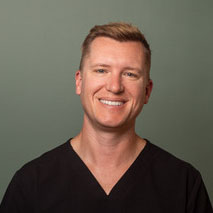
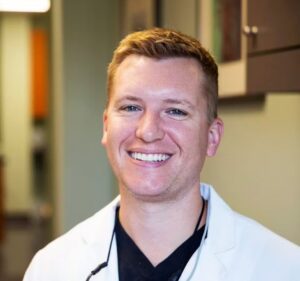
At Atlas Dental Specialists, we sat down with Dr. Nicholas Mangini, one of our prosthodontists, to talk through the digital workflow that has closed that gap for many of our patients. What follows is drawn directly from that conversation.
What Happens During a Same-Day Crown Appointment
We asked Dr. Mangini to walk us through what changes for a patient once the drill work is done. His answer traced the whole shift from impressions to digital scanning.
“With a traditional crown, we would prepare the tooth, take a physical impression, make a temporary crown, send everything to a laboratory, and then have the patient return a couple of weeks later,” he said. “With our digital workflow, we’ve condensed much of that process into a single visit. After I prepare the tooth, we take a highly detailed digital scan rather than a conventional impression. From that scan, we design the restoration digitally, mill it here in the office, characterize and finish it, and then try it in and bond or cement it.” For you, that means no impression material, no temporary crown to manage for two weeks, and no second visit just to have the final piece seated.
Why Building Restorations In-House Matters for Fit
Sending a case to an outside laboratory can still produce excellent results, and skilled lab technicians do fine work. We asked Dr. Mangini what changes when that work happens in the same building as the exam chair instead.
“The biggest advantage is control,” he explained. “As a prosthodontist, I’m looking at much more than whether a crown simply fits over a tooth. I’m evaluating the margins, contacts, contours, emergence profile, occlusion, material thickness, esthetics, and how that restoration functions as part of the patient’s entire bite. If I see something during the design that I don’t like, I can modify it immediately.” That kind of real-time adjustment is a direct result of his prosthodontist training, which focuses on how restorations fit within the whole system of teeth, implants, and bite.
Why Invest in Scanning, 3D Imaging, and In-Office Milling
Not every practice builds out this kind of digital setup, so we asked what drove the decision. Dr. Mangini traced it back to the type of cases prosthodontists typically handle.
“For me, the investment wasn’t about having technology for technology’s sake. It was about building a digital workflow around the type of dentistry I do,” he said. “Prosthodontics frequently involves complex cases where we’re thinking about the entire system, teeth, implants, bone, soft tissue, esthetics, and the bite. Digital scanning, 3D imaging, digital design, printing, and milling allow us to bring those pieces together.” A recent systematic review of CAD/CAM materials in restorative dentistry found that this kind of digital integration has meaningfully changed how restorations are designed and produced, which lines up with what Dr. Mangini described.
A Case Where the Technology Made a Real Difference
We wanted a concrete example, so we asked Dr. Mangini to describe a case where the workflow changed the outcome for a patient.
He pointed to fractured front teeth first: “A good example is a patient who fractures a highly visible tooth or restoration. With our digital workflow, I can scan the patient’s existing teeth, capture their anatomy and bite, and use that information to begin designing the replacement almost immediately.” Depending on the case, that can mean a few different paths:
- A same-day crown or provisional restoration for a fractured or heavily damaged tooth
- Digital implant planning that maps out the final tooth before the implant is placed
- Coordinated surgical and restorative planning for dental implant or full-mouth cases
Across all three, his approach stays consistent. As he put it, “I don’t want to place an implant and then figure out how to make a tooth fit on it. Whenever possible, I want to determine where the final tooth belongs first and then plan the implant around that restorative goal.”
Where Dr. Mangini Sees This Technology Heading Next
We closed by asking where he expects this to go over the next few years. He described a more connected digital picture of the patient.
“I think we’re moving toward an increasingly integrated digital patient, where the scan of the teeth, 3D imaging, photographs, facial information, jaw relationships, and restorative design can all be evaluated together,” he said. “Artificial intelligence will also become increasingly useful in areas like diagnostics, design, and quality control. But I don’t see AI or automation replacing the clinician. I see them giving us better information and better tools.” That kind of forward planning is something Dr. Mangini brings to every restoration he designs, whether he’s working chairside or mapping out a case from the very start.
Same-Day Care at Atlas Dental Specialists
If a cracked tooth, a worn-out crown, or a missing tooth has you weighing your options, this digital workflow may be able to shorten the distance between your first visit and a finished result. Same-day restorations are not the right fit for every case, but where they apply, they can save you a return trip and a few weeks of waiting.
To find out whether same-day treatment fits your situation, reach out to our team, and we will walk you through what a visit could look like.