Implant-Supported Dentures for Active Seniors: Maintaining Your Lifestyle

Happy active senior couple outdoors

Staying active as you age shouldn’t mean worrying about your teeth slipping or shifting during your favorite activities. Implant-supported dentures offer a permanent solution that lets you focus on what matters most, whether you’re playing golf, hiking, or simply enjoying meals with family and friends.

At Atlas Dental Specialists, we help active seniors restore both function and confidence with secure, natural-feeling tooth replacement options. Dr. Nicholas Mangini and Dr. Mara Mangini work with patients throughout Pittsburgh to design custom implant-supported dentures that fit seamlessly into your active lifestyle.

What Makes Implant-Supported Dentures Different

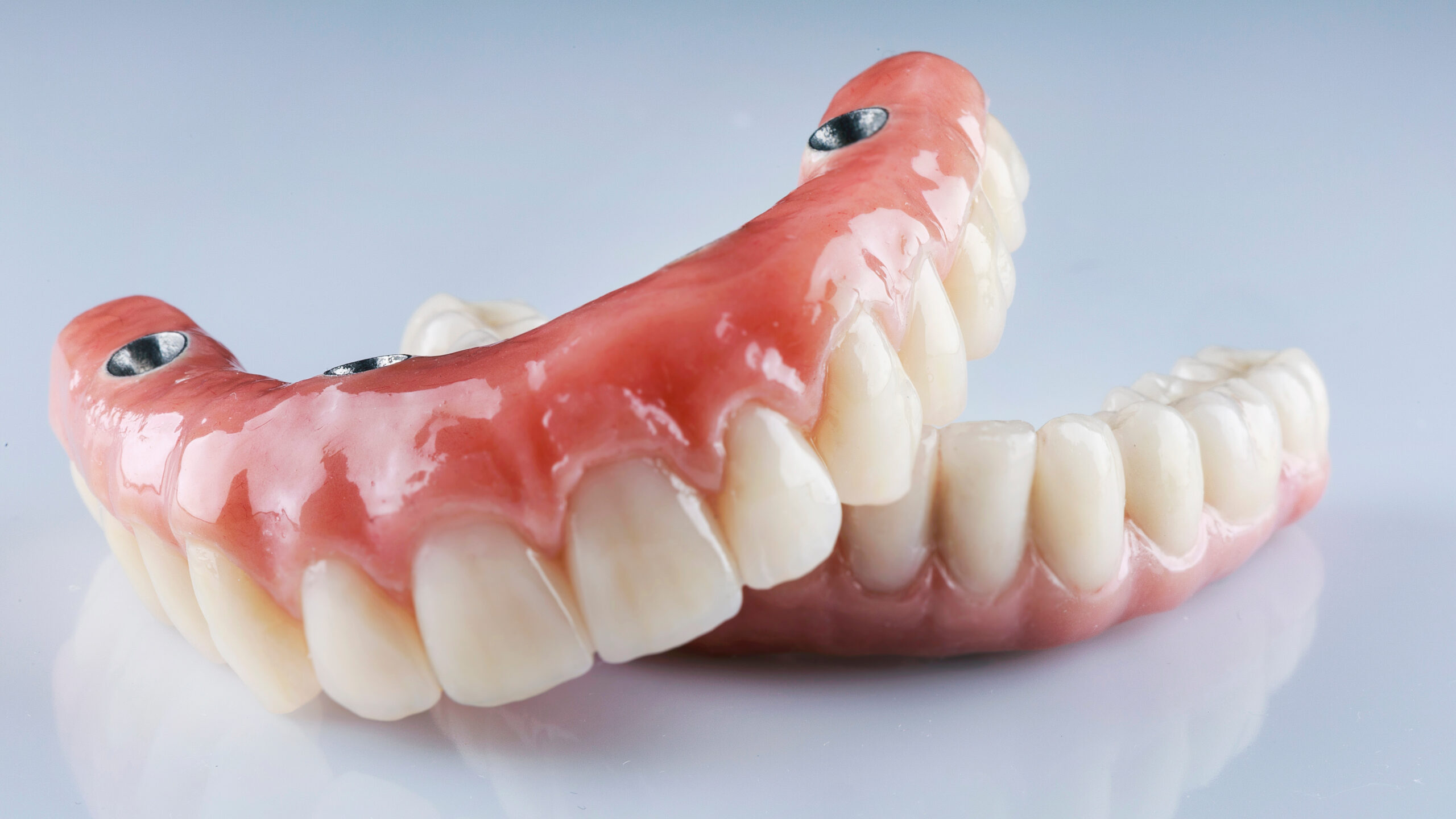
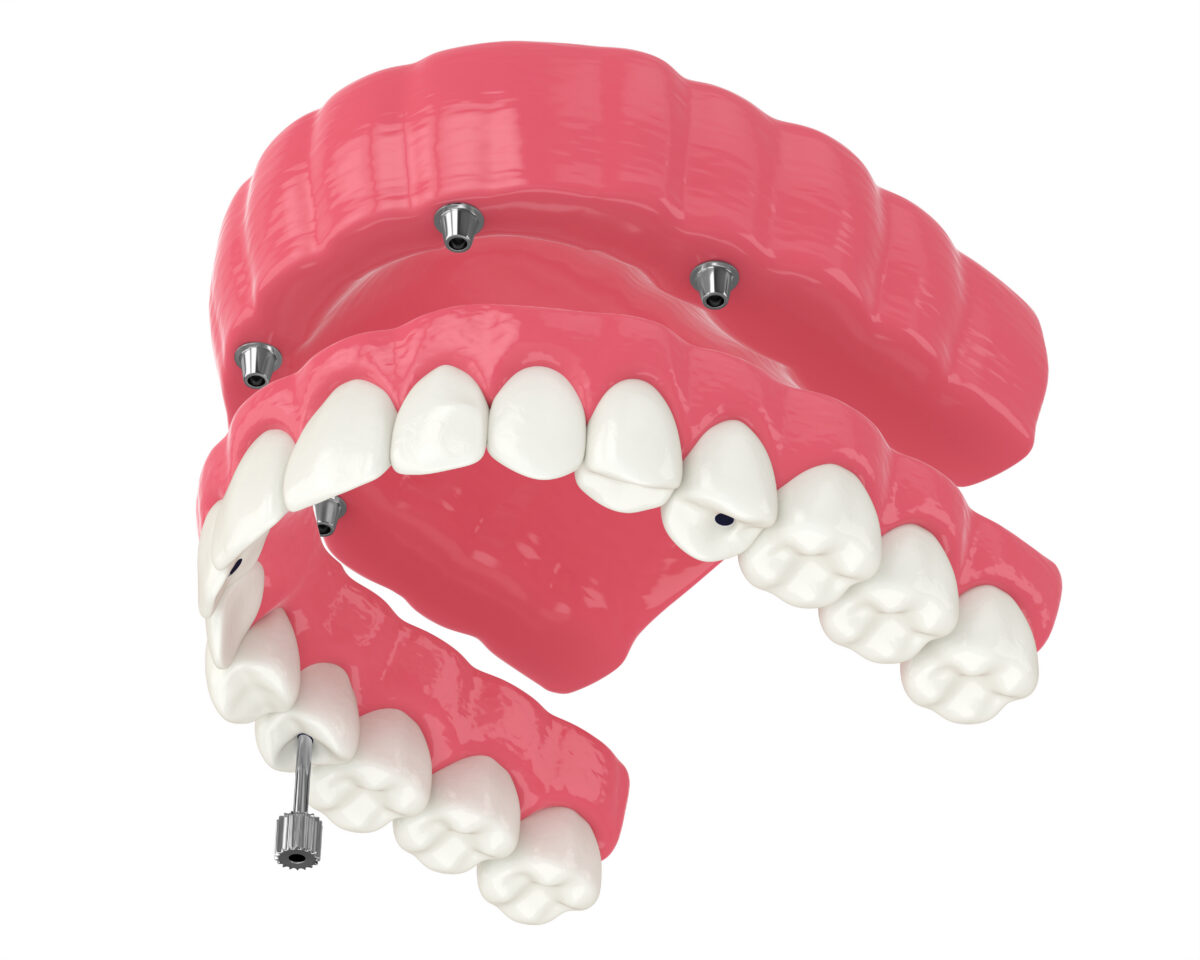
Traditional removable dentures rest on your gums and rely on adhesives or suction to stay in place. Implant-supported dentures attach to dental implants surgically placed in your jawbone, creating a stable foundation that mimics natural tooth roots.

This design offers several advantages. The implants fuse with your bone through a process called osseointegration, providing strength comparable to natural teeth. You can eat foods that might be difficult with traditional dentures, and you don’t need to remove your dentures for cleaning each night.

How the Treatment Works

The process typically occurs in stages. First, titanium implants are placed in strategic positions along your jaw. After a healing period of several months, custom dentures are attached to these implants using special connectors.

Some patients can receive their implants and temporary dentures on the same day, while others may benefit from a more gradual approach. Your treatment timeline depends on factors like bone density, overall health, and the number of implants needed.

Benefits for Active Lifestyles

Implant-supported dentures eliminate many concerns that limit seniors with traditional dentures. You can speak clearly without worrying about dentures slipping during conversation. Physical activities become easier when you’re not concerned about dentures shifting position.

The stability also supports better nutrition. You can bite into apples, enjoy steaks, and eat corn on the cob without hesitation. This improved diet can contribute to better overall health and energy levels.

Bone preservation is another vital benefit. Natural teeth and implants both stimulate your jawbone through chewing forces. The American Dental Association notes that implants help maintain bone structure in ways that traditional dentures cannot, potentially slowing the facial changes that sometimes occur after tooth loss.

Types of Implant-Supported Dentures

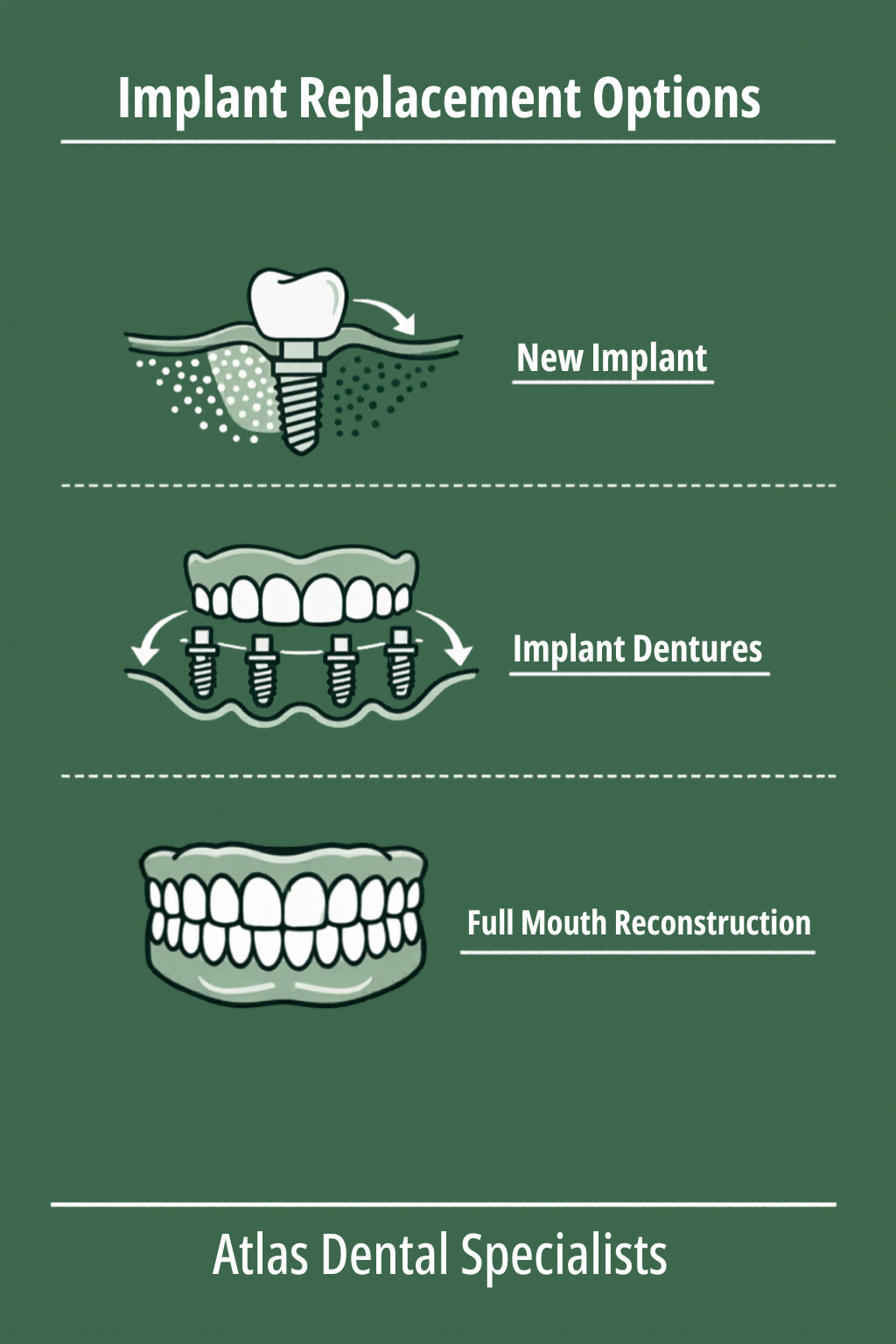
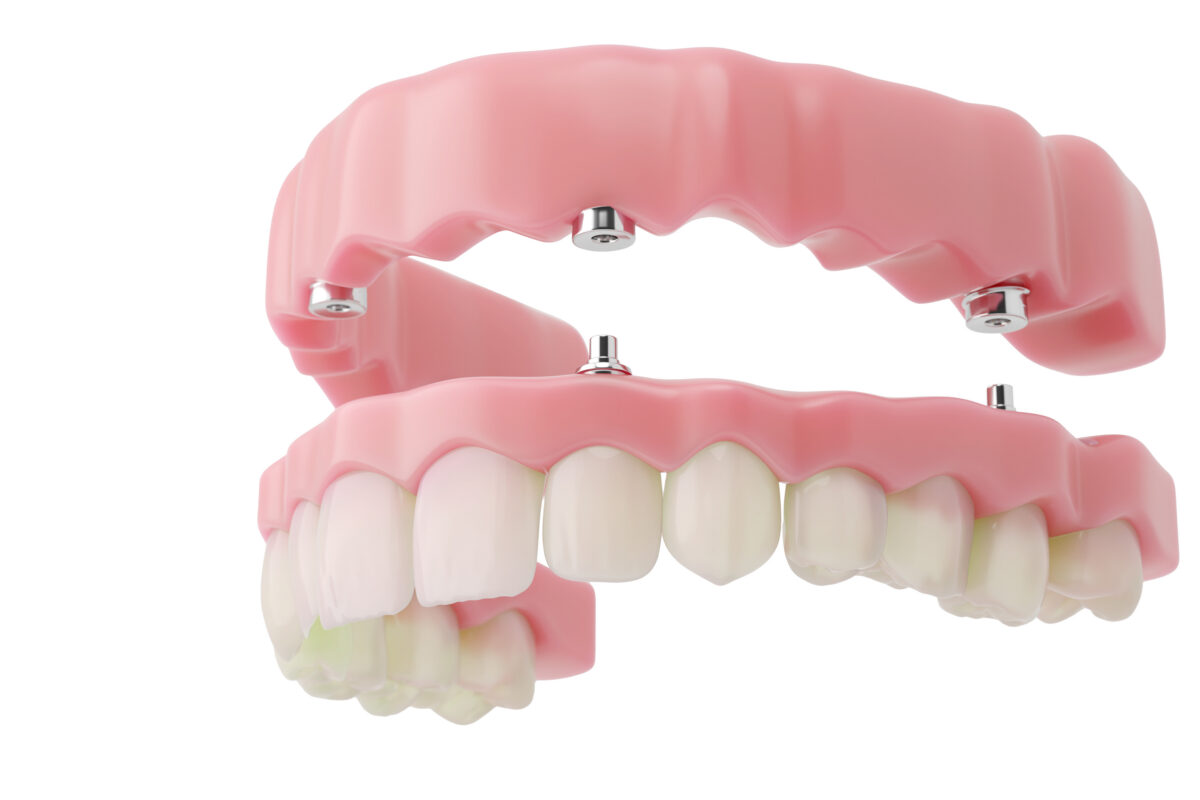
Two main options exist for implant-supported dentures. Fixed dentures attach permanently to your implants and can only be removed by your dentist during checkups. These function most like natural teeth and typically require four to six implants per arch.

Removable implant-supported dentures snap onto two to four implants but can be taken out for cleaning. This option costs less than fixed dentures while still providing more stability than traditional removable dentures.

Your choice depends on several factors:

  • Lifestyle preferences: Fixed dentures eliminate the need for nightly removal but require professional cleaning. Removable options offer easier at-home maintenance.
  • Bone density: Patients with significant bone loss may need bone grafting to support fixed dentures, while removable options sometimes work with fewer implants.
  • Budget considerations: Removable implant dentures typically cost less upfront and may fit better with insurance coverage or payment plans.
  • Maintenance comfort: Some patients prefer cleaning dentures outside their mouth, while others appreciate the convenience of permanent restoration.

Each option offers substantial improvements over traditional dentures in terms of stability and comfort.

Maintaining Your Implant-Supported Dentures

Daily care for implant-supported dentures resembles caring for natural teeth. Brush twice daily with a soft-bristled toothbrush, paying attention to where the dentures meet your gums. Use an antimicrobial mouth rinse to reduce bacteria around the implant sites.

Regular dental visits remain important. Professional cleanings remove buildup from hard-to-reach areas and allow your dentist to check implant stability. Most patients need checkups every six months, though some may benefit from more frequent visits during the first year.

Avoid habits that could damage your restoration. Don’t chew on hard objects like ice or pen caps. If you play contact sports, wear a mouthguard designed for implant-supported dentures.

Restore Your Active Lifestyle With Atlas Dental Specialists

Implant-supported dentures can help you maintain the active, fulfilling lifestyle you’ve worked hard to build. The stability and functionality they provide may open doors to activities and foods you’ve avoided with traditional dentures. At Atlas Dental Specialists, we bring together the skills of both general and specialty dentistry to create tooth replacement solutions tailored to your needs.

Our team uses advanced imaging and planning techniques to design your treatment for optimal results. We also offer flexible financing options to make this investment in your quality of life more accessible. If you’re ready to explore implant-supported dentures, contact our team to schedule a consultation at our Shadyside or Downtown Pittsburgh location.

Eating with Confidence: How All-on-X Improves Function

Beautiful young african woman eating fresh salad with cherry tomatoes. Portrait of happy smiling woman in diet isolated on blue background. Cheerful brazilian girl with curly hair eating fresh vegetable while looking at camera with copy space.

All-on-x treatment replaces a full arch of missing or failing teeth with a permanent prosthetic anchored by just four to six dental implants. This approach restores your ability to bite into firm foods, chew comfortably, and eat without restrictions that traditional dentures impose. You can stop cutting your food into tiny pieces and avoiding restaurants. All-on-x gives you back the confidence to eat what you want, when you want.

At Atlas Dental Specialists, our prosthodontists provide all-on-x solutions for patients throughout downtown Pittsburgh and Shadyside who want to regain full dental function.

Why Traditional Dentures Limit Your Diet

Traditional dentures sit on your gums and rely on suction or adhesives to stay in place. This creates multiple problems when you try to eat. The dentures shift and move as you chew, making it hard to apply proper biting force. You end up avoiding crunchy vegetables, chewy meats, and sticky foods because they either dislodge your dentures or get stuck underneath them.

The lack of stability also means you can’t generate the same chewing power you had with natural teeth. Studies show traditional denture wearers retain only about 20% of their original biting force. This limitation forces you to change your diet, often leading to poor nutrition and avoiding social meals.

How All-on-X Restores Full Chewing Function

Full mouth reconstruction with all-on-x creates a fixed prosthetic permanently attached to dental implants in your jawbone. The implants act as artificial tooth roots, transferring chewing forces directly into the bone just like natural teeth. This gives you approximately 80% of your original bite strength back.

The prosthetic doesn’t move when you eat. You can bite down firmly on an apple, tear into a steak, or crunch through raw vegetables without worry. The stability comes from strategically placing four to six implants per arch at angles to maximize support and evenly distribute pressure across your jaw.

Foods You Can Eat Again

All-on-x opens up your diet in ways traditional dentures never could. You regain the ability to enjoy meals without constant anxiety about your teeth.

  • Crunchy foods: Raw carrots, apples, nuts, and crispy salads become manageable again without fear of denture damage or slippage.
  • Chewy proteins: Steak, chicken, pork chops, and other meats you can bite and chew normally instead of cutting into small pieces.
  • Sticky foods: Caramel, peanut butter, and chewy bread no longer pose a threat to your denture stability or comfort.

These improvements occur because your new teeth are locked in place and can withstand the same forces that natural teeth do.

The Treatment Process

The process begins with a consultation, during which your prosthodontist examines your jaw and takes 3D scans. These images show bone density and aid in planning implant placement. If your bone has deteriorated, you may need a bone graft before the procedure.

Surgery typically happens in one appointment under sedation. Your dentist places four to six implants per arch at precise angles to maximize support. In many cases, you receive a temporary prosthetic the same day, so you never go without teeth. This immediate-loading approach lets you eat soft foods right away while your implants heal and fuse to the bone over three to six months. Once healing is complete, your final prosthetic attaches to the implants, restoring full chewing function.

Long-Term Benefits Beyond Eating

The benefits extend beyond just being able to eat normally again. All-on-x prevents the bone loss that traditional dentures cause. When implants transfer chewing forces into your jawbone, the bone stays stimulated and maintains its density. This preserves your facial structure and prevents the sunken appearance many denture wearers develop.

Maintenance is straightforward. You brush twice daily and floss around the implants, just like you do with natural teeth. Regular dental checkups every six months help keep everything healthy. The prosthetic typically lasts 10 to 15 years before needing replacement, while the implants themselves can last a lifetime with proper care.

Regain Your Eating Confidence at Atlas Dental Specialists

If missing or failing teeth are preventing you from enjoying meals and limiting your diet, all-on-x offers a permanent solution. Our team provides full-service dental implant care, handling both the implant placement and prosthetic creation in one location. As prosthodontists with advanced training in dental implants and implant prosthetics, we focus on complex cases such as full arch replacement. Named after the mighty Atlas statues outside our windows, our family-owned practice has served downtown Pittsburgh for over 25 years.

Ready to eat with confidence again? Contact Atlas Dental Specialists today to schedule a consultation at our downtown Pittsburgh or Shadyside location.

Solving Denture Slippage: How Implant Support Restores Confidence

Photo portrait of granny blonde hair pointing at white teeth healthy smile dental whitening veneers isolated on bright blue color background.

Denture slippage happens when your dentures don’t stay in place like they should, causing them to shift, slide, or even fall out at the worst possible moments. You might find yourself avoiding certain foods, speaking less in social situations, or constantly worrying about embarrassing moments. The fix involves adding dental implants to anchor your dentures securely in your jaw, restoring the stability and confidence you need to eat, speak, and smile without worry.

At Atlas Dental Specialists, our prosthodontists provide implant-supported denture solutions for patients throughout downtown Pittsburgh and Shadyside. We handle both the implant placement and the creation of your custom dentures, eliminating the need to visit multiple offices for treatment.

Why Dentures Slip in the First Place

Your jawbone needs stimulation from tooth roots to maintain its shape and density. When you lose teeth, the bone begins to shrink through a process called bone resorption. This happens gradually but continuously. As the bone recedes, the ridge supporting your dentures becomes flatter and smaller, creating gaps between your gums and the denture base.

Traditional dentures sit directly on your gums and rely on suction to stay put. When your jaw shape changes, the suction weakens. The result is dentures that move when you chew, click when you talk, or slip at random moments throughout the day.

How Implant Support Solves the Problem

Dental implants act as artificial tooth roots placed directly into your jawbone. These titanium posts fuse with the bone through osseointegration, creating a permanent anchor point. When dentures attach to these implants, they stay locked in place rather than floating on your gums.

The difference is dramatic. Implant-supported dentures stay exactly where they belong. You can bite into an apple, laugh without worry, and speak clearly without feeling your dentures shift. The implants transfer chewing forces directly to the jawbone, helping preserve bone density and maintain your facial structure.

Types of Implant-Supported Dentures

You have options for how your dentures connect to implants. Each approach offers different benefits depending on your needs, budget, and lifestyle preferences.

  • Removable implant-supported dentures: Snap onto the implants but can be taken out for cleaning, working well if you want the convenience of removing your dentures at night while still enjoying stability during the day.
  • Fixed implant-supported dentures: Attach permanently to the implants and provide the closest experience to natural teeth, though they require more implants per arch.
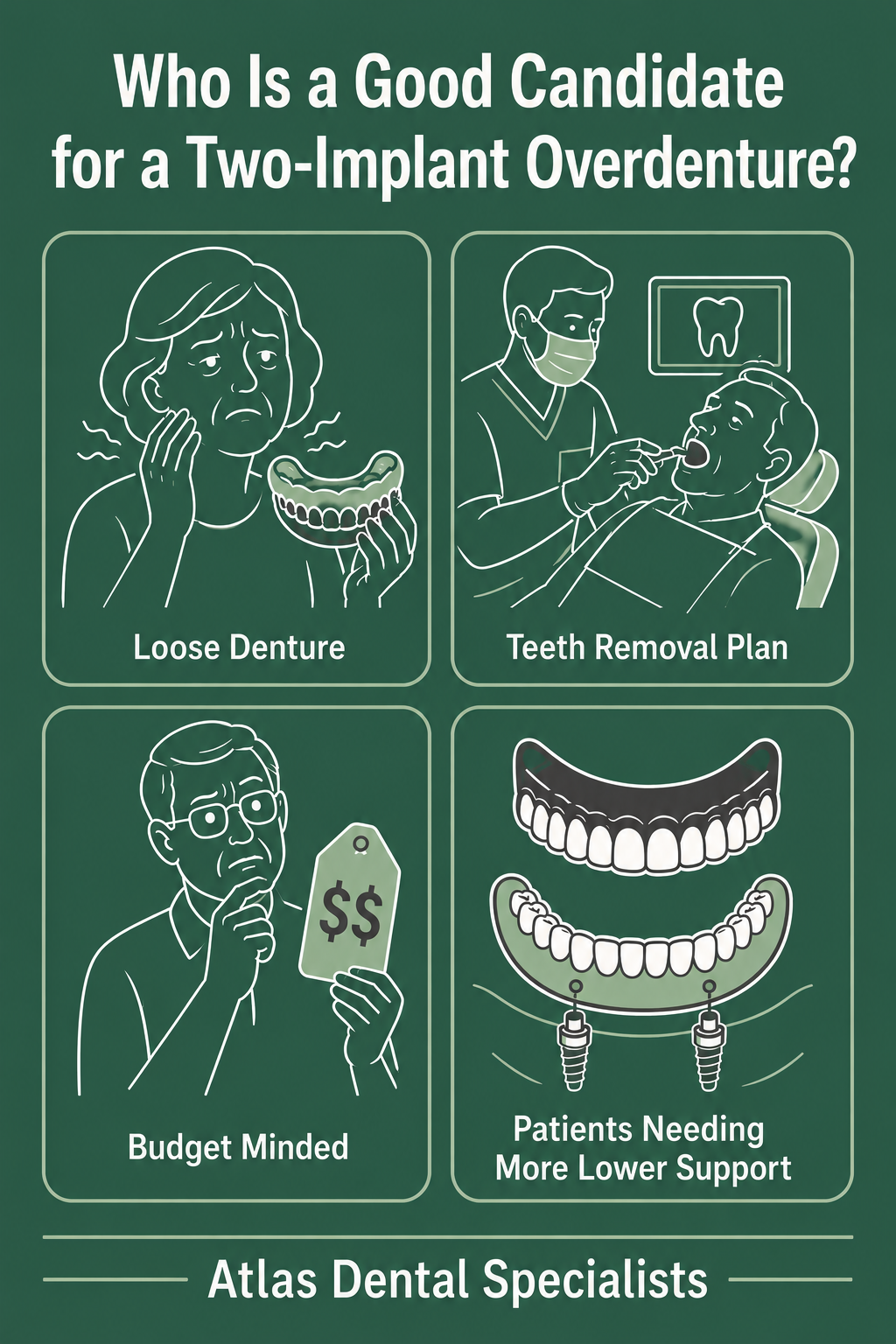
  • Overdentures: This middle-ground option attaches to just two implants on the lower jaw or four on the upper jaw, making them more affordable than full-fixed solutions while still providing excellent stability.

The process begins with a consultation, during which your prosthodontist examines your jawbone and takes 3D scans. These images show bone density and help determine the number and position of implants you need. If your bone has receded significantly, you may need bone grafting before implant placement.

Implant surgery happens under local anesthesia or sedation, depending on your preference and the number of implants being placed. The procedure takes a few hours, and most patients experience only mild discomfort afterward. You’ll wear a temporary denture during the healing period while the implants integrate with your bone, which typically takes three to six months. Once healing is complete, your final denture attaches to the implants.

Life After Getting Implant-Supported Dentures

Your daily routine becomes simpler and more comfortable. You can eat foods once off-limits with traditional dentures. Crunchy vegetables, chewy meats, and sticky foods become manageable again. Speaking feels natural because your dentures don’t move or make clicking sounds.

Maintenance is straightforward. Removable versions are available for cleaning, just like traditional dentures. You brush them with a denture brush and soak them overnight. Fixed versions require brushing and flossing around the implant sites, just as with natural teeth. Regular dental checkups every six months help ensure everything stays healthy and functioning properly.

Get Your Confidence Back at Atlas Dental Specialists

If denture slippage is holding you back from living your life to the fullest, implant-supported dentures offer a proven solution. Our team of prosthodontists brings advanced training in dental implants and implant prosthetics, giving you access to full-service care in one location. Named after the mighty Atlas statues outside our windows, our family-owned practice has served downtown Pittsburgh for over 25 years.

Ready to stop worrying about your dentures? Contact Atlas Dental Specialists today to schedule a consultation at our downtown Pittsburgh or Shadyside location.

Caring for Your Implant-Supported Dentures: Maintenance Made Simple

Smiling senior woman with new dental implants sitting in the dental office and looking at the mirror

Implant-supported dentures have completely changed the way you can experience tooth replacement, offering unprecedented stability while maintaining the convenience of removable dentures. Unlike traditional dentures that rest on your gums and may slip or cause discomfort, implant-supported dentures anchor securely to dental implants surgically placed in your jawbone. This advanced solution gives you confidence in your smile while requiring specific care routines to ensure long-term success.

At Atlas Dental Specialists, we understand the importance of proper maintenance for your dental implant investment. Our experienced team has guided countless patients through the care process, helping them preserve both their implants and dentures for years to come. With the right maintenance routine, you can enjoy your implant-supported dentures while protecting your oral health and maximizing your investment.

How to Care for Your Implant-Supported Dentures

Proper care of your implant-supported dentures requires a comprehensive approach that addresses both daily maintenance and long-term strategies. With the following easy maintenance strategies, you can ensure your investment provides years of comfortable function and confident smiles:

Daily Cleaning Routines

Your daily cleaning routine forms the foundation of implant-supported denture care. Remove your dentures each morning and evening to clean both the prosthetic and your mouth thoroughly. Rinse the dentures under cool running water to remove loose food particles and debris. Use a soft-bristled toothbrush specifically designed for dentures, along with a non-abrasive denture cleanser. Avoid regular toothpaste, which contains abrasives that may scratch the denture surface and create areas for bacteria to accumulate.

Pay special attention to the areas where the denture connects to the implant attachments. These connection points require gentle but thorough cleaning to prevent bacteria buildup that could lead to inflammation or infection around the implant sites.

Caring for Your Implant Sites

Proper care of your implant sites requires focused attention beyond standard denture cleaning. Use a small brush or a specialized cleaning tool to effectively reach the attachment areas, ensuring you remove all debris without excessive pressure. After cleaning your dentures, focus on your mouth and implant sites by brushing your remaining natural teeth and gently cleaning around the implant abutments with a soft-bristle toothbrush. Rinse with an antimicrobial mouthwash to help control bacteria levels in your mouth and keep your gums healthy.

Professional Maintenance and Regular Checkups

Regular professional maintenance plays a crucial role in the longevity of your implant-supported dentures. Schedule appointments with us every three to six months for professional cleaning and examination. During these visits, your dentist will evaluate the condition of your implants, check the fit of your dentures, and assess your overall oral health.

Professional cleaning removes buildup that home care may miss, particularly around the implant sites and denture attachments. We will also inspect the implant attachments for wear and damage, and make any necessary adjustments to ensure a proper fit and function. These regular appointments allow for early detection of potential issues, such as changes in implant stability, denture wear, or signs of infection around the implant sites.

Long-Term Care Strategies

Successful long-term care involves protecting your investment through smart lifestyle choices and consistent habits, including the following:

  • Avoid hard, sticky, or extremely hot foods that may damage your dentures or put excessive stress on the implant sites.
  • When not wearing your dentures overnight, store them in  clean water to prevent drying and warping.
  • Avoid smoking, which significantly increases the risk of implant complications and delays healing.
  • Maintain good nutrition to support healthy gums and bone tissue around your implants.
  • Replace worn cleaning tools regularly, including toothbrushes and specialized denture brushes, as old brushes become less effective and may harbor bacteria.
  • Keep backup cleaning supplies available to maintain your routine even when traveling or during busy periods

With proper care and maintenance, dental implants demonstrate excellent long-term outcomes, with research showing high success rates when patients follow recommended care protocols.

Schedule a Consultation at Atlas Dental Specialists to Discover If Implant-Supported Dentures Are Right for You

Proper maintenance of your implant-supported dentures ensures years of comfortable function and confident smiles. Following these guidelines, combined with regular professional care, maximizes the lifespan of both your implants and dentures while protecting your oral health. Our team at Atlas Dental Specialists has over 25 years of experience helping Pittsburgh patients achieve optimal outcomes with our dental implant treatments and flexible financing options, including an in-house membership.

As prosthodontists, Drs. Nicholas and Mara Mangini bring advanced training and expertise to implant dentistry, offering comprehensive care from implant placement to prosthetic design and ongoing maintenance. We serve as your full-service implant provider, meaning you can receive both your implants and crowns in one convenient location without multiple referrals to different specialists. Contact our experienced team to schedule your implant-supported denture consultation and learn how we can help you maintain your smile for years to come.

Making the Switch: Transitioning from Traditional Dentures to Implant-Supported Dentures

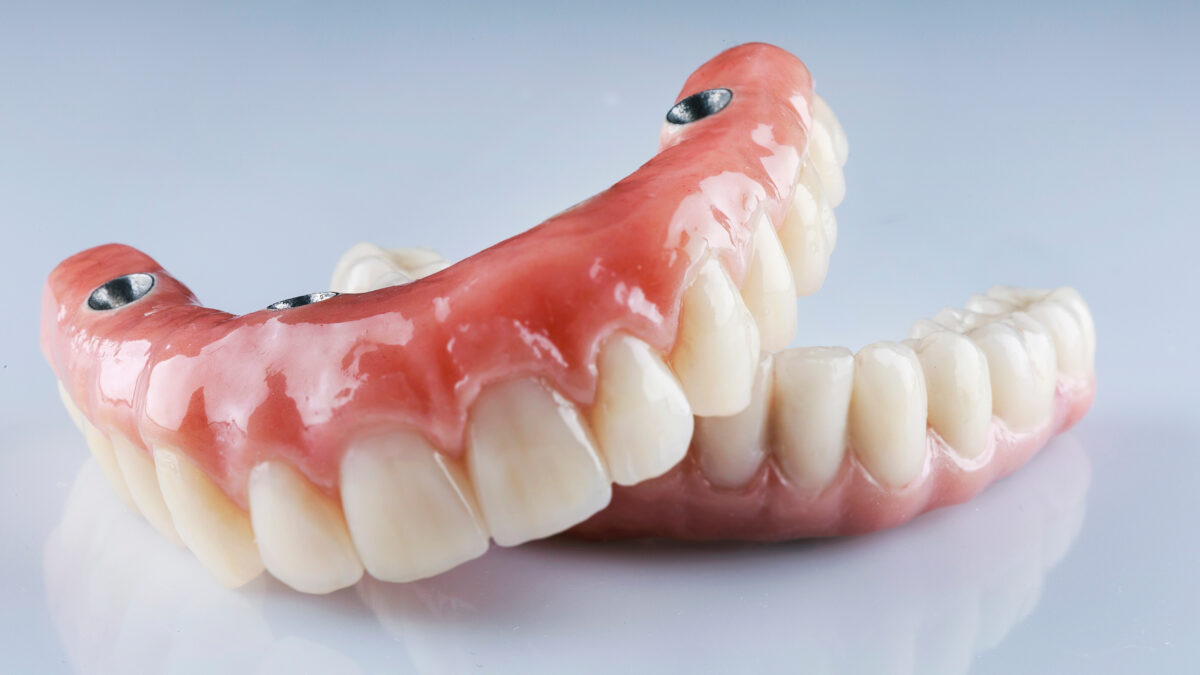
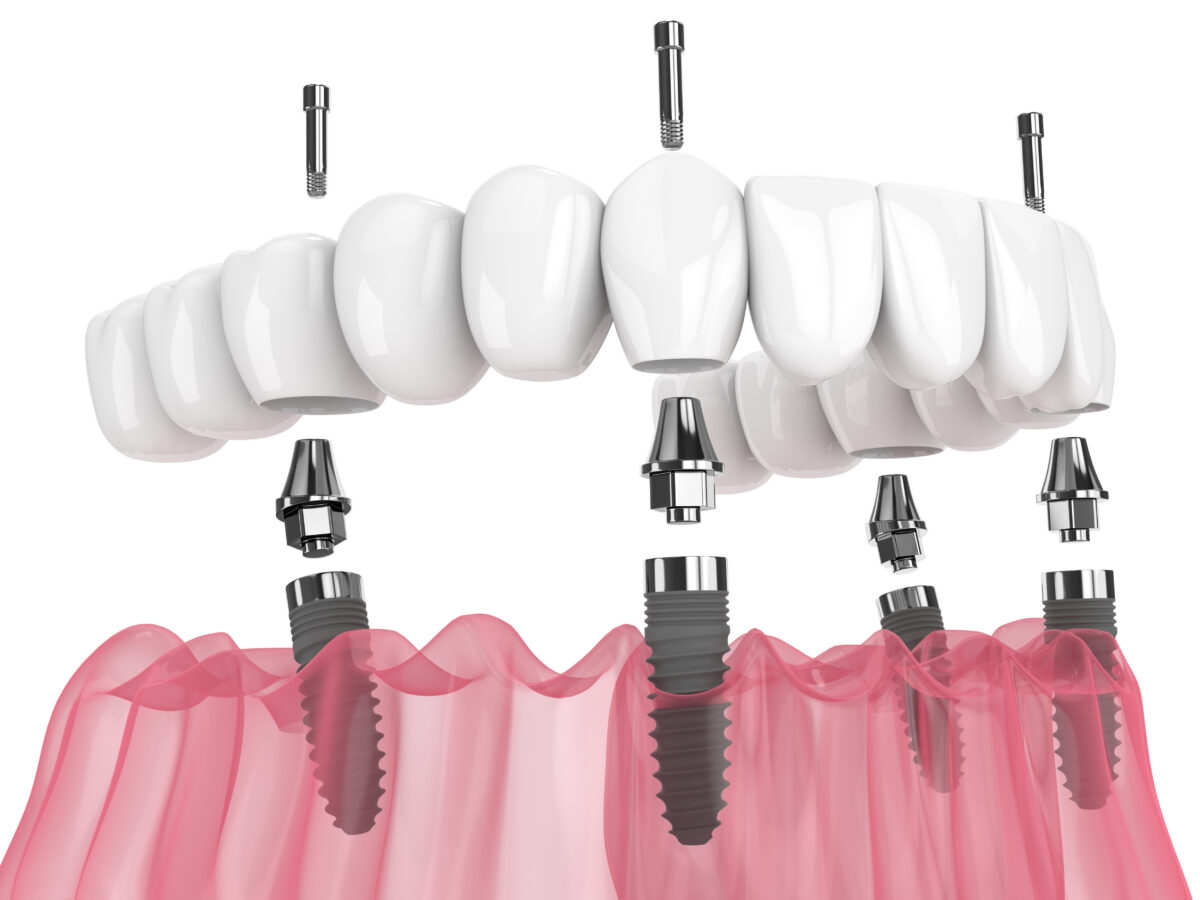
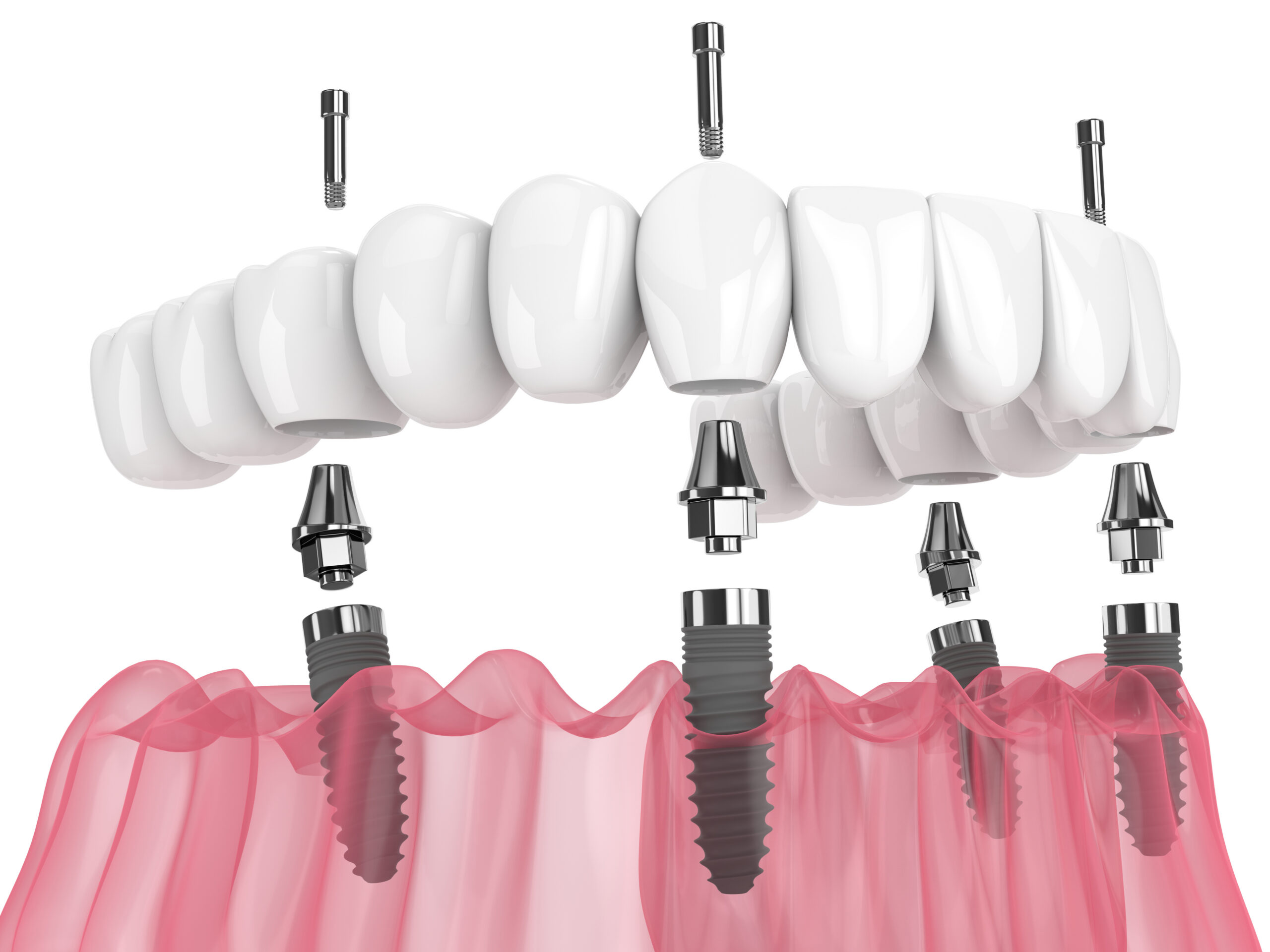
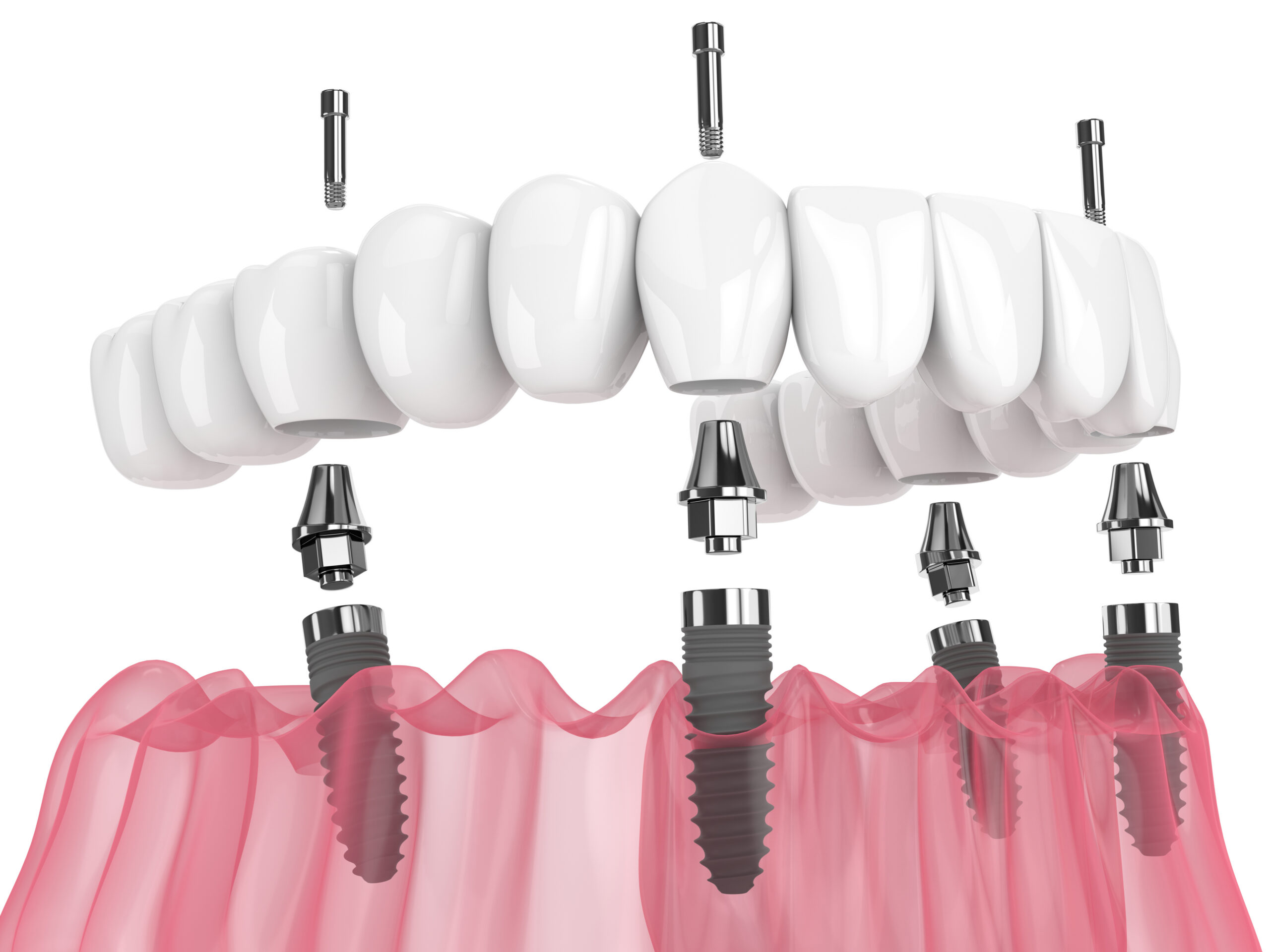
Mandibular prosthesis console based on 4 implants. Medically accurate 3D illustration of human teeth and dentures concept

If you have traditional dentures that feel loose and slip during meals, leaving you feeling insecure and self-conscious, you have other options to restore your smile. Switching from traditional dentures to implant-supported dentures transforms how you eat, speak, and experience daily life. This modern treatment provides a stable and comfortable solution, securely anchored to your jawbone through dental implants.

At Atlas Dental Specialists, we help patients in Pittsburgh make this transition smoothly. As trained prosthodontists, Drs. Nicholas and Mara Mangini specialize in dental implants and implant prosthetics, including implant-supported dentures, a core service offered at both our Downtown and Shadyside locations. We understand the unique needs of patients considering this upgrade and provide full-service care from implant placement to final restoration, so you can focus on the excitement of transforming your smile.

Why People Transition to Implant-Supported Dentures

Traditional dentures sit on your gums and rely on suction or adhesives to stay in place. Over time, you may find this approach frustrating. Dentures can slip when eating certain foods, limit your diet to softer options, and cause sore spots where they rub against your gums.

Implant-supported dentures eliminate these problems by using dental implants as anchors. These titanium posts integrate with your jawbone, providing a secure foundation for dentures that snap into place. You can remove them for cleaning, but during daily activities, they function more like natural teeth. Patients often describe the difference as life-changing. They regain confidence in social situations, expand their food choices, and no longer worry about embarrassing slips or clicks.

Another key benefit of implant-supported dentures is jawbone preservation. When you lose teeth, the jawbone in those areas begins to deteriorate because it no longer receives stimulation from tooth roots. Traditional dentures can’t prevent this bone loss, which causes facial sagging and makes dentures fit poorly over time. Dental implants stimulate the jawbone just like natural tooth roots, helping maintain bone density and facial structure. This makes implant-supported dentures an investment in your long-term oral health.

The Transition Process from Traditional to Implant-Supported Dentures

Moving from traditional dentures to implant-supported dentures happens in stages. During your first visit to our prosthodontic practice, we evaluate your oral health, jawbone density, and overall medical condition. Some patients need bone grafting before implant placement if bone loss has occurred, though many people qualify for immediate implant placement.

The actual transition begins with surgically placing implants in your jawbone. Most patients receive between two and four implants per arch, depending on their specific needs and treatment plan. We perform this procedure using local anesthesia to ensure your comfort. The implants then need a few months to integrate with your bone through a process called osseointegration.

During the healing process, you will continue to wear your existing traditional dentures with any necessary modifications. Once the implants have fully integrated, we attach abutments to them and create your custom implant-supported dentures. Using CAD/CAM technology, 3D printing, and milling, we craft dentures tailored to your mouth’s unique needs and shape. The dentures click securely onto the implants but remain removable for easy cleaning.

What to Expect After Your Transition

The adjustment period for implant-supported dentures tends to be shorter than the initial adaptation to traditional dentures. Because implant-supported dentures don’t cover as much of your palate, you may notice improved taste and temperature sensation when eating. Speech often improves as well because the dentures stay firmly in place.

You’ll need to maintain good oral hygiene by removing your dentures daily to clean both the dentures and the implant attachments. Regular dental visits help us monitor your implants and ensure everything functions properly. With proper care, implant-supported dentures can last many years.

Take the First Step Toward a Secure Smile With Implant-Supported Dentures at Atlas Dental Specialists

If you’re ready to move beyond the limitations of traditional dentures, our team at Atlas Dental Specialists offers the comprehensive care you need. We’re a full-service provider of dental implants, which means you can get your implants and prosthetics all in one place. Our prosthodontists bring advanced training specifically in tooth replacement and complex restorative dentistry, and we use the latest technology, including same-day dentistry capabilities for many procedures.

We participate with many insurance companies, including MetLife, Cigna, Principal, Ameritas, and UnitedHealthcare, and we offer financing options to help make your treatment accessible. Whether you’re currently wearing traditional dentures or exploring your tooth replacement options, contact our office to schedule a consultation and learn how implant-supported dentures can improve your quality of life.

What to Expect During All-on-X Treatment

Revolutionize Your Smile with All-On-X Permanent Teeth: Stunning Photos for Adobe Stock

If you’re facing extensive tooth loss like an estimated 40 million other Americans, the prospect of full-mouth restoration can feel overwhelming. All-on-x treatment offers a transformative solution that replaces an entire arch of teeth with just a few strategically placed implants, providing a permanent, natural-looking smile in a remarkably efficient process. This advanced approach eliminates the discomfort and inconvenience of traditional dentures while restoring full function to your smile.

At Atlas Dental Specialists, we’ve helped countless Pittsburgh patients regain their confidence through dental implants and full-arch restoration. As trained prosthodontists, Drs. Nicholas and Mara Mangini combine advanced technologies, such as CAD/CAM technology, 3D printing, and in-office milling, with personalized care to make your treatment as comfortable and efficient as possible.

6 Steps of the All-on-X Process

Our trusted team works closely with you from the beginning of your smile transformation journey, helping you understand each phase of treatment so you can prepare for what lies ahead and set realistic expectations. The all-on-x process unfolds over a few months, with each step building toward your final, beautiful result.

Initial Consultation and Treatment Planning

Your treatment begins with a comprehensive evaluation of your oral health. We’ll take detailed 3D scans and digital images to assess your jawbone density, remaining teeth, and overall oral structure. During this visit, we’ll discuss your goals, review your medical history, and create a customized treatment plan. This consultation allows us to determine the optimal number and placement of implants needed for your specific situation, whether it’s four, five, or six implants per arch.

Preparatory Procedures

If you still have teeth that need extraction, we’ll coordinate the procedure with your implant placement. Some patients may require bone grafting if the jawbone density is insufficient; however, the angled placement technique used in all-on-x treatment often eliminates this need. We’ll also take impressions and measurements to fabricate your custom prosthetic, ensuring it fits perfectly and matches your facial structure and aesthetic preferences.

Implant Placement Surgery

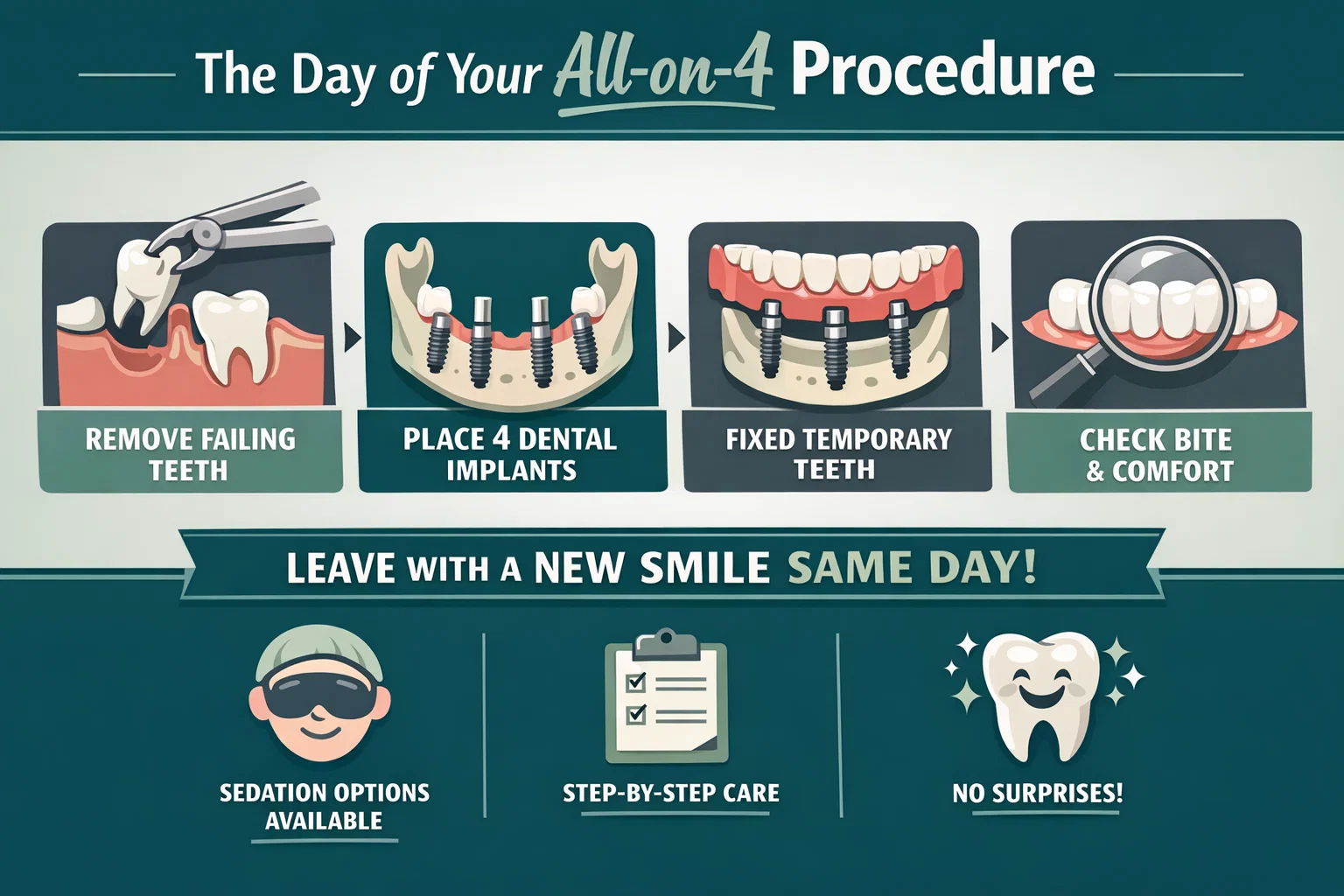
On implant placement surgery day, we’ll place titanium implants at strategic angles in your jawbone to maximize support and stability. The all-on-x technique typically uses four to six implants per arch, positioned to take advantage of the densest bone areas. We perform this procedure under appropriate sedation to keep you comfortable the entire time.

Immediate Prosthetic Placement

One of the most appealing aspects of all-on-x treatment is the ability to leave our office with a brand-new smile. Immediately after implant placement, we can often attach a temporary prosthetic that restores your smile right away. This temporary set allows you to eat soft foods and speak normally while your implants integrate with your jawbone. Having immediate functionality means you can return to your daily life without the embarrassment or inconvenience of being without teeth.

Healing and Integration Period

Over the next few months, your implants will undergo osseointegration, a process in which they fuse with your jawbone. During this time, you’ll wear your temporary prosthetic and attend regular follow-up appointments, allowing us to monitor your healing progress. We’ll provide detailed instructions on caring for your temporary teeth and maintaining proper oral hygiene around your implants.

Final Prosthetic Placement

Once osseointegration is complete, typically after three to six months, we’ll replace your temporary prosthetic with your permanent restoration. We fabricate most crowns and prosthetics right here in our office using advanced CAD/CAM technology, ensuring a precise fit and exceptional aesthetics. We design your final prosthetic to be durable, natural-looking, and perfectly matched to your facial features and preferences.

What Makes All-on-X Different Than Other Tooth Replacement Options?

Unlike traditional dentures that rest on your gums and can slip or cause discomfort, all-on-x prosthetics are securely anchored to your implants. This eliminates the need for adhesives, prevents slippage during eating or speaking, and helps preserve your jawbone by providing the necessary stimulation. The all-on-x approach also differs from individual implant replacement by requiring fewer implants and offering a more efficient treatment timeline, making it an excellent option for comprehensive restoration without extended treatment periods.

Proper care of your all-on-x restoration involves regular brushing, flossing with specialized tools, and routine professional cleanings. While your prosthetic can’t decay like natural teeth, maintaining excellent oral hygiene protects your gum tissue and implants. Many patients find caring for their all-on-x restoration simpler than managing traditional dentures or extensive bridgework. Our team will provide thorough instructions on maintaining your prosthodontic work for long-term success.

Learn How Full-Service Dental Implants at Atlas Dental Specialists Can Transform Your Smile

At Atlas Dental Specialists, you’ll receive comprehensive care from start to finish at our convenient Pittsburgh locations. As a full-service provider, we handle everything from initial consultation and implant placement to the fabrication and placement of your final prosthetic, eliminating the need to visit multiple specialists.

Our family-owned practice has served downtown Pittsburgh for over 25 years, and with locations in both Downtown Pittsburgh and Shadyside, we make quality dental care accessible. Drs. Nicholas and Mara Mangini bring extensive prosthodontic training and experience to every case, ensuring you receive the highest standard of care. If you’re ready to explore how all-on-x treatment can transform your smile and quality of life, contact our team to schedule your consultation today.

Why Should You Choose Invisalign to Straighten Your Teeth?

Woman holding invisalign transparent retainers with a box on the table, flatlay top view. Selective focus.

Crooked teeth can affect your confidence, make cleaning difficult, and even impact your bite function over time. Traditional metal braces have long been the standard solution, but many adults hesitate to commit to years of visible metal brackets and wires. The thought of smiling for photos or speaking in important meetings with a mouth full of metal can feel overwhelming for professionals and image-conscious individuals.

Invisalign offers a revolutionary alternative to traditional braces, using clear, removable aligners to gradually straighten teeth without the aesthetic concerns of metal orthodontics. At Atlas Dental Specialists, Dr. Mara Mangini provides comprehensive Invisalign treatment at our downtown Pittsburgh and Shadyside locations. This innovative treatment allows you to achieve the straight smile you’ve always wanted while maintaining your professional appearance and lifestyle throughout the process.

The Clear Advantage of Invisalign

The most obvious benefit of Invisalign is its near-invisible appearance. The clear plastic aligners fit snugly over your teeth, making them virtually undetectable to others. Most people won’t even realize you’re undergoing orthodontic treatment, which makes Invisalign particularly appealing for adults who want to improve their smile discreetly.

Unlike traditional braces that remain fixed to your teeth for the entire treatment period, Invisalign aligners are completely removable. You can take them out for important meetings, special events, or photos when you want to show your natural smile. This flexibility gives you control over your appearance while still making consistent progress toward straighter teeth.

The smooth plastic material eliminates the mouth irritation common with metal braces. There are no sharp brackets or protruding wires to cut your cheeks or lips, making Invisalign significantly more comfortable throughout treatment. Many patients report adjusting to their aligners within just a few days of starting treatment.

Maintaining Your Lifestyle During Treatment

One of the biggest advantages of Invisalign is how little it disrupts your daily routine. You can remove your aligners for meals, which means no food restrictions like those required with traditional braces. You can continue enjoying corn on the cob, sticky candies, nuts, and other foods that would be problematic with metal orthodontics.

Oral hygiene remains simple with Invisalign since you can remove the aligners to brush and floss normally. This ease of cleaning helps prevent tooth discoloration and gum problems sometimes associated with traditional braces. You simply brush your teeth as usual, clean your aligners, and put them back in place.

Most patients wear their clear aligners for 20-22 hours per day, only removing them for meals and oral hygiene. This schedule allows for flexibility in your routine while ensuring treatment progresses as planned. The predictable treatment timeline helps you plan for important events and milestones in your life.

Advanced Technology for Precise Results

Invisalign uses advanced 3D imaging technology to map out your entire treatment plan before you even receive your first aligner. You can see a virtual representation of how your teeth will move throughout treatment and what your final results should look like. This preview helps you understand the process and stay motivated throughout treatment.

Each aligner is custom-made specifically for your teeth using precise digital measurements. As you progress through the series of aligners, each one moves your teeth slightly closer to their ideal positions. The computer-planned movements are more predictable than traditional wire adjustments, often leading to more efficient treatment.

The technology also allows for better treatment monitoring. Dr. Mara can track your progress and make adjustments to your treatment plan if needed, ensuring you achieve the best possible results in the most efficient timeframe.

Addressing Common Concerns About Clear Aligners

Many patients worry about losing or damaging their aligners, but Invisalign provides backup sets and replacement options. The durable plastic material withstands normal daily use, and proper care keeps it clear and odor-free throughout each wearing period.

Some people question whether Invisalign can address their specific orthodontic issues. Modern Invisalign technology can treat a wide range of problems, including crowding, spacing, overbites, underbites, and crossbites. Dr. Mara evaluates each case individually to determine if Invisalign is the right choice for your particular situation.

Cost concerns often arise when considering Invisalign treatment. While the investment varies based on treatment complexity, many patients find the benefits of discretion, comfort, and convenience justify the cost. The cost for Invisalign varies and is largely dependent on the extent and complexity of each individual patient.  We can often make monthly payments as low as $238 per month using CareCredit.

The Importance of Choosing the Right Provider

Success with Invisalign depends heavily on choosing an experienced provider who understands the intricacies of clear aligner treatment. As a trained prosthodontist, Dr. Mara brings advanced knowledge of tooth movement, bite relationships, and facial aesthetics to your Invisalign treatment planning.

Her expertise ensures your treatment addresses not just tooth alignment but also considers how your bite will function after treatment. This comprehensive approach leads to better long-term results and reduces the likelihood of needing additional treatment later.

The combination of advanced training and experience with Invisalign technology gives Dr. Mara the tools to handle complex cases and achieve excellent results for her patients. Regular monitoring throughout treatment ensures you stay on track and achieve the smile transformation you’re seeking.

Transform Your Smile Discreetly with Dr. Mara at Atlas Dental Specialists

Don’t let concerns about traditional braces prevent you from achieving the straight, confident smile you deserve. Invisalign offers a modern solution that fits seamlessly into your lifestyle while delivering excellent orthodontic results. The combination of discretion, comfort, and effectiveness makes it an ideal choice for busy professionals and image-conscious individuals.

Dr. Mara Mangini is the only dentist at Atlas Dental Specialists who provides Invisalign treatment, ensuring you receive focused attention from an experienced provider. Our family-owned practice has served the Pittsburgh community for over 25 years, combining the personal touch of a neighborhood practice with the advanced capabilities of a specialty center. We accept various insurance plans and offer flexible financing options to make your dream smile achievable. Contact our team today to schedule your Invisalign consultation with Dr. Mara and discover how clear aligners can transform your smile without disrupting your life.

Why Dental Implants Are the Gold Standard for Tooth Replacement After 50

Portrait of smiling african american senior woman standing with

Losing teeth after age 50 doesn’t mean sacrificing your smile or quality of life. Dental implants have emerged as the premier solution for replacing missing teeth because they provide the closest thing to natural tooth function available today.

At Atlas Dental Specialists, our prosthodontists focus on complex tooth replacement and understand the unique challenges adults face when dealing with tooth loss. Whether you’re missing one tooth or several, dental implants offer stability, longevity, and appearance that traditional options like dentures simply cannot match.

Why Adults Over 50 Experience More Tooth Loss

Several factors contribute to increased tooth loss as we age. Decades of wear and tear on natural teeth create microscopic cracks and weaken enamel. Gum disease becomes more prevalent, as adults over age 50 are more susceptible to periodontal issues leading to tooth loss. Medical conditions common in this age group, such as diabetes, can also compromise oral health.

Previous dental work may begin to fail after years of service. Old fillings can crack, crowns may loosen, and root canals might become infected. When these situations arise, extraction sometimes becomes the most viable option to preserve overall oral health.

How Dental Implants Preserve Your Jawbone

Unlike dentures or bridges, dental implants actually prevent bone loss in your jaw. When you lose a tooth, the jawbone in the area begins to deteriorate because it no longer receives stimulation from chewing. Within the first three months after tooth loss, you can lose up to 25% of the bone in the area.

A titanium implant acts as an artificial tooth root, providing the stimulation your jawbone needs to maintain its structure. This preservation of bone density helps maintain your facial shape and prevents the sunken appearance often associated with long-term tooth loss.

The Superiority of Implant Function

Traditional dentures can slip, click, or cause embarrassment during eating or speaking. Dental implants eliminate these concerns entirely. Once the implant integrates with your bone through a process called osseointegration, it becomes a permanent part of your mouth.

You can eat all your favorite foods without worry. Corn on the cob, apples, and steak are back on the menu. The chewing force of implants closely matches natural teeth, allowing you to maintain proper nutrition during your golden years. This functional advantage makes a significant difference in your daily quality of life.

Longevity Makes Implants Cost-Effective

While the initial investment in dental implants may seem higher than other options, their longevity makes them economically sensible. Dental implants maintain high success rates and can last for decades with proper care. Many patients find their implants serve them for life.

Traditional dentures typically need replacement every 5-7 years, and dental bridges may require replacement every 10-15 years. When you calculate the long-term costs, implants often prove more economical over time. The initial higher investment pays dividends through years of reliable service.

Same-Day Convenience at Atlas Dental

Modern technology has revolutionized the implant process. At our Pittsburgh locations, we utilize CEREC CAD/CAM technology and in-office milling to create your implant crown the same day in many cases. This means fewer appointments and faster results for busy adults.

We place the implant and attach the permanent crown during the same visit, eliminating the need for temporary teeth or multiple procedures. Our prosthodontic training allows us to handle even complex cases general dentists might refer elsewhere.

Why Choose Prosthodontists for Implant Treatment

Prosthodontists receive three additional years of training beyond dental school, focusing on tooth replacement and restoration. This advanced education covers complex implant cases, full-mouth reconstruction, and the intricate relationships between oral function, comfort, and appearance.

When you choose prosthodontic care for your implants, you benefit from this advanced training. We can evaluate your entire mouth as a system, ensuring your implants work harmoniously with your remaining teeth and bite pattern.

Atlas Dental Specialists: Your Complete Pittsburgh Implant Solution

Atlas Dental Specialists serves as your complete implant provider. You won’t need referrals to multiple offices or appointments at different locations. From initial consultation through final restoration, everything happens under one roof at our Downtown Pittsburgh and Shadyside locations.

Our family-owned practice has served Pittsburgh for over 25 years, with roots reaching back 35 years to the original practice of Dr. Kathryn Duncan Friedman. Drs. Nicholas and Mara Mangini combine decades of prosthodontic experience with cutting-edge technology to deliver exceptional implant outcomes. As a full-service provider, you can receive both your implant and crown in one convenient location, streamlining your entire treatment experience. Contact our office today to schedule your implant consultation and discover how dental implants can restore your smile and confidence. Call our Downtown Pittsburgh office at (412) 281-9411 or our Shadyside location at (412) 730-2560 to get started.

The Prosthodontist Approach to Smile Makeovers for Patients Over 50

Smiling senior woman with new dental implants sitting in the dental office and looking at the mirror

After decades of putting family, career, and everyone else’s needs first, many people over 50 find themselves looking in the mirror with regret about their smile. Years of wear, old dental work, and gradual changes have taken their toll, leaving them feeling self-conscious about their appearance. Yet many hesitate to pursue a smile makeover, questioning whether it’s worth the investment at this stage of life.

The truth is that patients over 50 represent one of the most rewarding demographics for smile transformation. At Atlas Dental Specialists, our Pittsburgh prosthodontists understand that comprehensive smile makeovers require specialized knowledge of aging dentition, facial support, and long-term functionality. We help patients over 50 achieve beautiful, lasting results through carefully planned treatments designed for their unique needs.

A Specialized Approach for Mature Patients

Smile makeovers for patients over 50 require a fundamentally different approach than treatments for younger individuals. Dr. Nicholas Mangini explains this distinction: “We approach smile makeovers for older patients with a long-term, functional, and aesthetic mindset. We evaluate not just teeth, but also facial support, bite dynamics, existing restorations, and long-term wear.”

This comprehensive evaluation considers how decades of function have affected oral structures. Facial changes, bite relationships, and existing dental work all influence treatment planning. The goal extends beyond creating an attractive smile to ensuring long-term stability and function.

“Our goal is to create restorations that age gracefully, enhancing both function and appearance,” Dr. Mangini notes. This philosophy recognizes that smile makeovers for mature patients must withstand years of continued use while maintaining their aesthetic appeal.

The prosthodontic approach considers factors like jaw joint health, muscle function, and facial support that general cosmetic treatments might overlook. This thorough evaluation ensures treatments address underlying functional issues alongside aesthetic concerns.

Common Concerns Driving Smile Makeover Decisions

Patients over 50 typically present with specific concerns that reflect decades of dental history. Dr. Mangini frequently encounters these issues: “Many over-50 patients come to us with concerns such as tooth wear, staining or discoloration, old dental work that’s failing, missing teeth, and lack of confidence in social settings.”

These problems often develop gradually, making patients feel powerless to address them. Years of grinding, acidic foods, and natural aging create cumulative effects that suddenly become impossible to ignore. Failed crowns, worn enamel, and shifting teeth can dramatically impact both appearance and function.

The psychological impact of these changes shouldn’t be underestimated. Many patients describe avoiding social situations, covering their mouths when speaking, or feeling embarrassed about their appearance in photos. “Often times they’ve put others first for years — and now they’re ready to do something for themselves,” Dr. Mangini observes.

This shift in priorities often coincides with major life transitions like retirement, grandchildren, or renewed focus on personal well-being. Patients finally feel ready to invest in themselves after years of prioritizing others’ needs.

Comprehensive Treatment Options for Every Situation

The beauty of modern cosmetic dentistry lies in its flexibility to address varying degrees of dental concerns. Dr. Mangini emphasizes this individualized approach: “A smile makeover is completely dependent on the circumstances the patient walks in with. It may be as simple as whitening their natural teeth.”

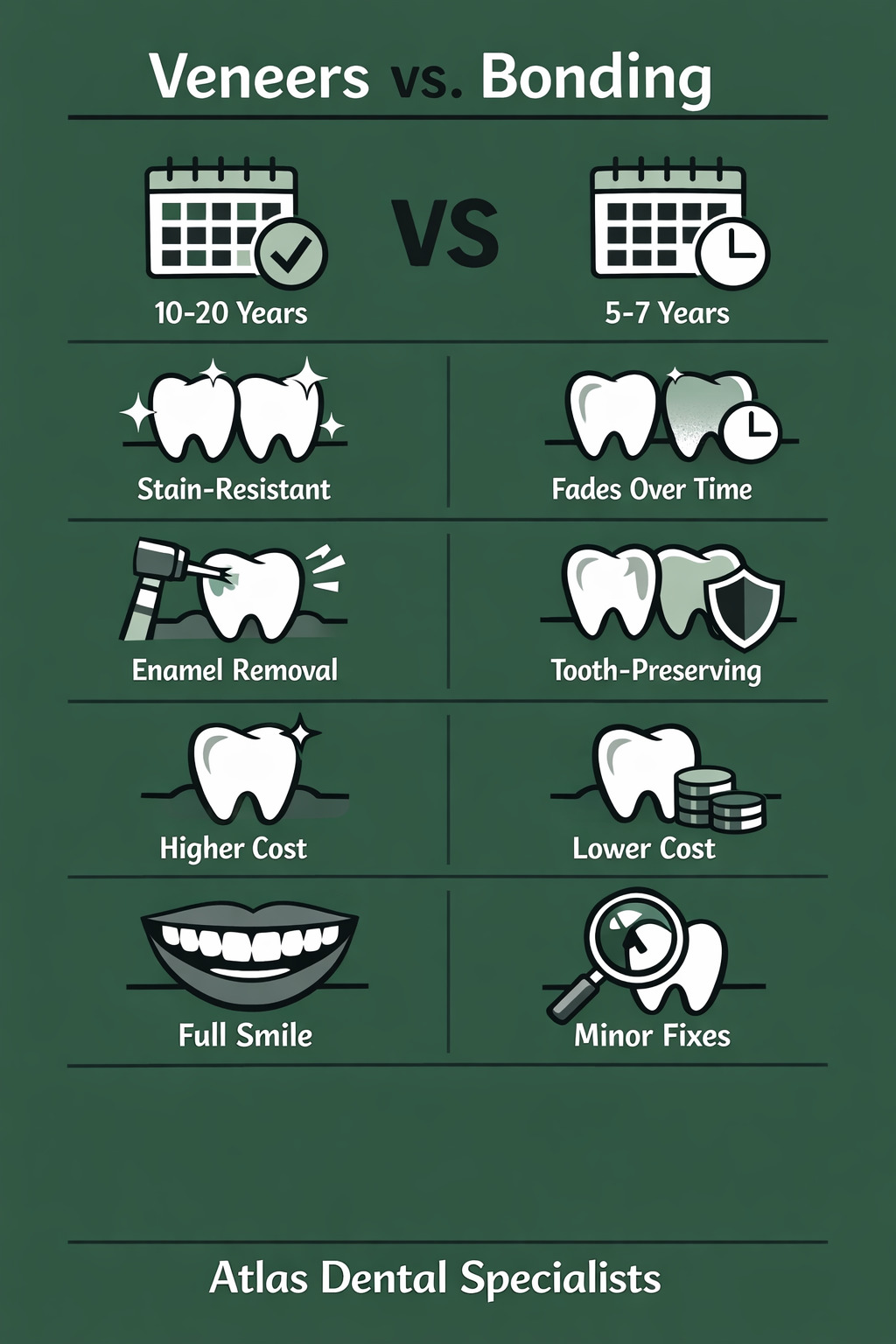
Conservative treatments can achieve dramatic results for patients with healthy underlying structures. Professional whitening, minor reshaping, or strategic bonding might be sufficient to restore confidence and appearance. These approaches preserve natural tooth structure while addressing specific aesthetic concerns.

More complex cases require comprehensive solutions. “It may include providing back teeth that were maybe removed decades ago,” Dr. Mangini explains. Missing posterior teeth affect both facial support and chewing function, making their replacement crucial for complete smile restoration.

The most extensive cases involve full-mouth reconstruction. “Some patients, due to a variety of reasons, may need more extensive work, such as a new arch of teeth due to cavities, wear, or trauma,” Dr. Mangini notes. These comprehensive makeovers typically combine dental implants, crowns, and other restorative techniques to completely rebuild oral function and aesthetics.

Realistic Timelines and Treatment Prioritization

Understanding treatment timelines helps patients plan appropriately for their smile transformation. Dr. Mangini outlines typical expectations: “Depending on complexity, a makeover may take a few weeks to several months. We always start by addressing urgent needs — like decay, missing teeth, or bite instability — and build from there.”

The phased approach ensures patients remain comfortable throughout treatment while addressing the most critical issues first. Emergency concerns like infections or failing restorations receive immediate attention, followed by foundational work like implant placement or bite correction.

“A phased approach ensures the patient feels comfortable and supported throughout,” Dr. Mangini explains. This methodology allows patients to adjust gradually to changes while maintaining function during treatment. It also spreads financial investment over time, making comprehensive treatment more manageable.

Advanced techniques like same-day crowns and digital treatment planning help minimize treatment time while maximizing comfort and precision.

Transform Your Smile at Atlas Dental Specialists

If you’ve been considering a smile makeover but questioning whether it’s worthwhile at your age, Dr. Mangini has encouraging words: “You’ve worked hard and cared for others — now is your time. A smile makeover is an investment in your health, your confidence, and your joy. Our patients over 50 consistently tell us, ‘I wish I did this years ago.'” The benefits extend beyond appearance alone, as proper function enables patients to maintain nutrition and social enjoyment of meals throughout their golden years.

At Atlas Dental Specialists, Drs. Nicholas and Mara Mangini bring over 25 years of combined prosthodontic training to every smile makeover case. Our comprehensive approach means you receive all necessary treatments in one convenient location, from porcelain veneers to complex reconstructions. We accept major insurance plans, including MetLife, Cigna, Principal, and Ameritas, with flexible financing options to make your dream smile accessible. Ready to invest in yourself and transform your smile? Contact us today at (412) 281-9411 for our Downtown Pittsburgh location or (412) 730-2560 for our Shadyside office, or schedule your personalized consultation online.

Dental Implant Options for Patients with Bone Loss

Anatomy of healthy teeth and tooth dental implant in human dentura. 3d illustration

Being told you’re not a candidate for dental implants can feel devastating, especially when you’re hoping to restore your smile and regain confidence in eating and speaking. Many patients who receive this disappointing news from other dental offices assume their options are limited to removable dentures or simply living with missing teeth. However, bone loss doesn’t automatically disqualify you from implant treatment.

At Atlas Dental Specialists, our Pittsburgh prosthodontists help patients overcome complex challenges that other practices may consider impossible. We use advanced diagnostic technology and proven techniques to provide dental implant solutions even when significant bone loss is present, giving hope to patients who thought their chance for permanent tooth replacement had passed.

Understanding Bone Loss and Modern Assessment Methods

Jawbone loss occurs through several mechanisms, with tooth loss being the primary culprit. Dr. Nicholas Mangini explains the process: “Bone loss in the jaw is typically caused by tooth loss, periodontal disease, or trauma. When teeth are missing, the bone isn’t stimulated and begins to resorb.” This natural remodeling process means that areas without tooth roots gradually lose volume and density over time.

The key to successful implant treatment lies in the accurate assessment of remaining bone structure. Traditional X-rays often provide incomplete information about three-dimensional bone architecture. “At Atlas Dental Specialists, we use advanced imaging like CBCT scans to assess bone volume, density, and determine whether grafting or alternative implant options are needed,” Dr. Mangini notes.

CBCT (Cone Beam Computed Tomography) technology creates detailed 3D images that reveal bone quality and quantity from every angle. This comprehensive view allows our prosthodontists to identify viable implant sites that might be missed with conventional imaging methods.

Surprising Discoveries Through Advanced Imaging

Many patients arrive at our practice believing they lack sufficient bone for implants, only to discover otherwise through proper evaluation. Dr. Mangini frequently encounters this scenario: “Some patients who have been told by their previous dentist that ‘they dont have enough bone for implants’ are often surprised to find out that when we take a CBCT scan, they do in fact have an adequate volume of bone.”

This revelation highlights the importance of seeking evaluation from practitioners experienced in complex implant cases. What appears inadequate through limited assessment methods may actually provide a sufficient foundation for successful implant placement when evaluated properly.

When bone deficiency does exist, multiple treatment options can address the problem. “We offer multiple different techniques to rebuild the patient’s native bone,” Dr. Mangini explains. These approaches include targeted bone grafting procedures and strategic implant placement techniques.

Advanced Techniques for Complex Cases

Patients with insufficient bone height in the upper jaw often benefit from sinus lift procedures. “In certain cases, we perform what is known as a ‘sinus lift’ to increase vertical bone,” Dr. Mangini describes. This technique creates additional space for bone development by gently elevating the sinus membrane and introducing bone graft material.

Strategic implant positioning represents another valuable approach for patients with uneven bone loss. “We also have strategies such as angling implants to utilize existing bone rather than the areas where it may be deficient,” Dr. Mangini notes. This technique maximizes the use of available bone while avoiding areas of significant deficiency.

The combination of advanced planning software and prosthodontic training allows our team to identify optimal implant positions even in challenging anatomical situations. This comprehensive approach often reveals solutions where others see only obstacles.

The Bone Grafting Process and Recovery

When bone grafting becomes necessary, patients can expect a well-established, predictable procedure. Dr. Mangini reassures patients about the process: “Bone grafting is a predictable, routine procedure where donor or synthetic bone is placed into deficient areas. Patients typically experience mild discomfort, which is manageable with standard post-op care.”

The healing timeline varies based on the extent of grafting required. “Healing takes 3–6 months, depending on the site and extent, after which implants can be placed,” Dr. Mangini explains. During this period, the grafted material integrates with existing bone, creating a solid foundation for implant placement.

Modern bone grafting materials and techniques have significantly improved both comfort and outcomes. Most patients find the recovery process more manageable than anticipated, with appropriate pain management protocols ensuring minimal disruption to daily activities.

Exceptional Success Rates and Timeline Expectations

Patients often worry that bone grafting procedures might compromise implant success rates. However, research demonstrates otherwise. “Implants placed after bone grafting have very high success rates, comparable to those placed in native bone—typically over 95%,” Dr. Mangini confirms.

The complete treatment timeline requires patience but delivers lasting results. “The full process may take 4–9 months, but many patients say the result is well worth the wait for a permanent, natural-looking solution,” Dr. Mangini notes. This timeframe includes both bone healing and implant integration phases.

The extended timeline allows for proper biological healing at each stage, ultimately contributing to the exceptional long-term success rates. Patients appreciate that this methodical approach prioritizes lasting stability over speed.

Hope for Complex Cases at Atlas Dental Specialists

If you’ve been discouraged by previous consultations, don’t give up on your implant dreams. Dr. Mangini offers hope to these patients: “Being told you’re not a candidate somewhere else doesn’t mean it’s the end of the road. At Atlas, we handle complex, full-mouth and implant cases, and we’ve helped many patients others have turned away. With digital planning, grafting, and customized approaches, there’s almost always a solution.”

As prosthodontists, Drs. Nicholas and Mara Mangini bring advanced training in complex dental reconstruction to every case. Our full-service approach means you receive both implant placement and custom restorations in one convenient location. We accept major insurance plans, including MetLife, Cigna, Principal, and Ameritas, with flexible financing options available. Ready to explore your implant options despite bone loss concerns? Call us today at (412) 281-9411 for our Downtown Pittsburgh location or (412) 730-2560 for our Shadyside office, or schedule your comprehensive consultation online.